Life as an “Anti-Group”
Having explored the needs underlying my anti-group psychology, I want to paint a clearer picture of how this manifests in day-to-day life and thought. It’s one thing to list principles, but what is it like internally to be this way? Three key features define my experience: high boundary sensitivity, a habit of inverting groupthink (inside-out thinking), and a strongly forged internal identity that acts as my compass.
First, my boundary sensitivity is off the charts. By “boundaries” I mean that sense of where I end and others begin. What people can ask of me, how close they can get, and how much influence they’re allowed to have. For a long time I didn’t have words for this, I only had reactions. Now I can say: I maintain very firm boundaries and I notice immediately when they’re even slightly encroached upon. It’s like having tripwire alarms set all around my personal space. When a boundary is violated, whether it’s someone pressuring me to share a secret, or a friend assuming I’ll join in an activity without asking, I have a visceral emotional reaction. My heart rate spikes, I feel anger or panic welling up, and I go into what I call defensive mode. In defensive mode, I might withdraw (go quiet, physically leave) or I might push back (say “no,” assert my discomfort, even if with a shaking or quiet voice). This can surprise or even offend people who didn’t realize they touched a nerve. I’ve had to work on communicating my boundaries proactively so that others don’t stumble over the tripwires unknowingly. One pattern I noticed is that I respond to any hint of coercion or expectation with a kind of reflexive defiance. It’s not always rationally calibrated, it can show up as a knee-jerk “Don’t tell me what to do!” even if what’s being asked is minor. As mentioned, this is classic psychological reactance, and it correlates with how important the threatened freedom is to you. Since personal autonomy is paramount to me, any attempt to strip it away feels like a major threat, hence major reactance. I used to think this just meant I was stubborn (and I am), but it’s more nuanced: it’s about preserving my sense of self. When I explained earlier how I would sabotage relationships by refusing to do expected couple things, that was boundary sensitivity in action. My psyche read those innocent expectations as demands, as attempts to cross into my autonomy zone, and sounded the alarm.
Over time, I’ve learned to manage this better. I practice articulating my boundaries before reaching a boiling point. For instance, I now openly tell new friends or partners about my need for explicit consent in activities and my discomfort with certain social rituals. I’ll say, semi-jokingly, “I have a rebellious streak, if I have to do something, I probably won’t do it. So instead, let’s find a way where I want to do it.” Framing it in positive terms helps. I also choose environments that don’t constantly test my boundaries. Still, the sensitivity remains a defining trait. It’s not unlike someone with a past injury who is always careful and quick to pull away if something even might hurt that spot again. My past “injuries” were those feelings of being cornered, or of losing myself in someone else’s expectations. Thus, I react quickly to prevent a repeat.
Next, the mental inversion of groupthink: this is basically the cognitive side of what I described emotionally above. Whenever I hear a prevailing opinion or see a group consensus, my brain instinctively flips to consider the opposite. It’s as if I have a built-in devil’s advocate living in my head. This can be a strength! It makes me a critical thinker, often spotting flaws or alternative perspectives that others miss. But it can also alienate people (“the contrarian” I’ve been called). I don’t always voice my contrary thoughts, but they’re usually there. It’s not contrarianism for ego’s sake; it’s almost a compulsive analytical exercise. If everyone says, “X is clearly true,” my mind starts poking “Is it though? What if X is false or only half-true? What about Y?” I think this habit formed as a defense against groupthink. I saw early on how people could get swept up in collective delusions or simply go along with bad ideas because of social proof. I never wanted to be caught in that tide, so I trained myself to automatically step out of the tide and look at it from the shore. This inversion impulse means I often play skeptic in discussions. If I were in a radical group, I’d likely be the one constantly asking, “But what if we’re wrong?” which, suffice to say, doesn’t make one an ideal extremist. Indeed, extremist groups often enforce conformity and discourage questioning; I would not last long. In my own life, this mental habit has kept me from joining any one ideology wholeheartedly. I can’t even fully join subcultures I’m adjacent to. Take the asexual community: I’m grateful for it, I participate to a degree, but I also question some group narratives within it, and I refrain from aligning on every issue. Similarly, I might admire a political movement’s goals, but I’ll simultaneously critique their methods or rhetoric. I exist in a perpetual gray zone of “yes, but…”. For the most part, I’ve made peace with this. I value truth and complexity over the comfort of agreement. An interesting side effect is that I’m often seen as impartial or able to mediate, because I can see multiple sides. Friends come to me for an outsider’s perspective precisely because I’m not swept up in their group’s mindset. That feels like a positive use of my contrarian brain. On the flip side, in situations that actually call for unity and quick consensus (say, a crisis where everyone just needs to follow one plan), I have to consciously shut up the voice that’s saying “but maybe a different plan would also work…”. There’s a time and place for endless questioning, and I’ve learned sometimes it’s okay to just go with the flow for practicality. As long as it’s a choice and not blind obedience.
Finally, the strong internal identity I carry is both a refuge and a guiding star. I touched on how I pieced together my sense of self deliberately. I want to delve into how this internal identity interacts with the world. Because I have a clear picture of who I am (idiosyncrasies and all), I have a kind of internal leader or mentor to consult: my principles and past experiences personified. When I’m in a moral dilemma, I don’t think “What would my group do?” but rather “What aligns with my personal values and the person I want to be?” I often introspect and almost have a dialogue with myself, weighing options against the core tenets I hold (like honesty, autonomy, cognitive empathy). This might sound like what everyone does to a degree, but I suspect people who strongly identify with a group often think in terms of that group’s values (“What would a good Christian do?” or “What’s best for the party?”). I think, “What can I live with and feel true to myself doing?” Having this internal compass has helped me resist peer pressure more easily. Even in trivial situations, if a group of friends suggests an activity I’m uncomfortable with, I don’t feel that pang of “Oh no, I’ll be judged if I say no.” My sense of self is solid enough that I prioritize not betraying myself over pleasing others. In practical terms, this meant I got a bit of a reputation as someone who does their own thing. Usually said admiringly, but sometimes with frustration. Importantly, my internal identity isn’t static; it evolves as I learn. I have, over time, adjusted who I think I am, adding new facets as I explored and found they fit, and shedding others that were never truly mine. This continuous self-authorship is a lifelong project, one that I find deeply satisfying. It’s my version of a quest: to more and more become the person who reflects my true values. In a way, that is my cause. A radicalized person might devote themselves to remaking the world in their ideology’s image; I devote myself to remaking myself in my own image, over and over, closer and closer to what I envision. It’s a quieter revolution, but it’s still a kind of revolution of the self. And it’s never violent (except perhaps metaphorically, when I have to “kill” some internalized societal voice). The stronger my internal identity has grown, the less tempted I am by any group promises. Why join some external crusade when I have an internal Everest to climb? My challenge and reward is right here: become the best version of me. Of course, this can tip into self-absorption. I must be careful not to dismiss others’ input just because it’s external. I remind myself that being independent doesn’t mean I’m infallible or all-knowing. I can still learn from others (and I do, constantly), without having to be them or join them.
To sum up, living as an anti-group, autonomy-driven person means I have my shields (high boundaries), my filters (inversion of groupthink), and my anchor (internal identity). These shape how I interact with everything from a casual invite to a life-changing decision. It’s certainly not the mainstream way to be, and it comes with loneliness at times. But it’s authentically mine. And authenticity, to me, is worth the trade-offs. Addictive Independence There’s an interesting paradox in my life that took me a while to notice: even as I avoid “losing myself” in groups, I have a tendency to lose myself in other ways. Namely, I have an addictive personality when it comes to intellectual and emotional pursuits. I latch onto fascinations and dive deep, sometimes to the point of obsession. It’s like my psyche said, “Alright, you won’t get absorbed by a cult or a community? Then we’ll find our ecstasies in solo quests instead.” In other words, I can become so absorbed in a personal interest that it mimics some of the all-consuming quality a group might have, albeit self-chosen. My independence is always intact in theory (I can stop whenever I want… I think?), but practically, these hyperfixations grip me powerfully.
A prime example, as I’ve hinted, is my pursuit of understanding sexuality and kink from an outsider’s perspective. Being a sex-averse asexual person, I could have just said “not my world, don’t care.” But instead, something about human sexuality fascinates me, perhaps precisely because I’m not personally driven by it. In my research paper, I called myself a “voyeur of human kink, not in the literal sense… but in eagerly observing and researching the myriad ways humans find pleasure and forge intimacy”. Years ago, I embarked on what became an epic self-study project on kink. It started innocently: I wanted to know more about BDSM and other subcultures, mostly out of curiosity about why people find erotic power dynamics or such psychologically intriguing. I mainly played a text-based adventure, adult game I found that was discussed (in euphemisms and “if you know, you know”s) on Reddit. Well, that project snowballed. In hindsight, I see how easily this mirrored addiction. I’d say, “just one more quest,” like an alcoholic with “just one more drink.” My curiosity and imagination were so engaged that I was riding a rollercoaster purely constructed of information and fantasy. It’s wild what the mind can do.
One might ask: why on earth would I, who is so boundary-conscious, allow myself to be “taken over” by an interest like that? The key is: it felt safe and autonomous. I was in full control of my exploration. I could pause, speed up, avoid certain content, etc., at will. None of it involved obligations to others or risk to my bodily autonomy. So my usual defenses relaxed. It’s like I gave myself permission to indulge completely because it was a solo venture. And indulge I did. This pattern has repeated with other obsessions too (some less risque): I went through a phase of deep dive into art history, into cartoons, into video games or fandoms. Each time, I would eat, sleep, breathe that topic for weeks or months. During those times, it’s true that I can become somewhat disconnected from present-day life. I’m physically there but my mind is turning over the latest piece of the puzzle from my obsession. In extreme cases, my routine suffers. I forget meals, I isolate more (since socializing feels like an interruption of my precious research time), I even dream about the subject. If that’s not being “absorbed,” I don’t know what is. The irony is not lost on me: I fear being absorbed by groups, but I have zero qualms about being absorbed by ideas. Perhaps because ideas, at least, don’t consciously try to manipulate you (though one could argue they have a pull of their own, but that’s blaming rocks for being in the stream when the stream has nowhere else to go).
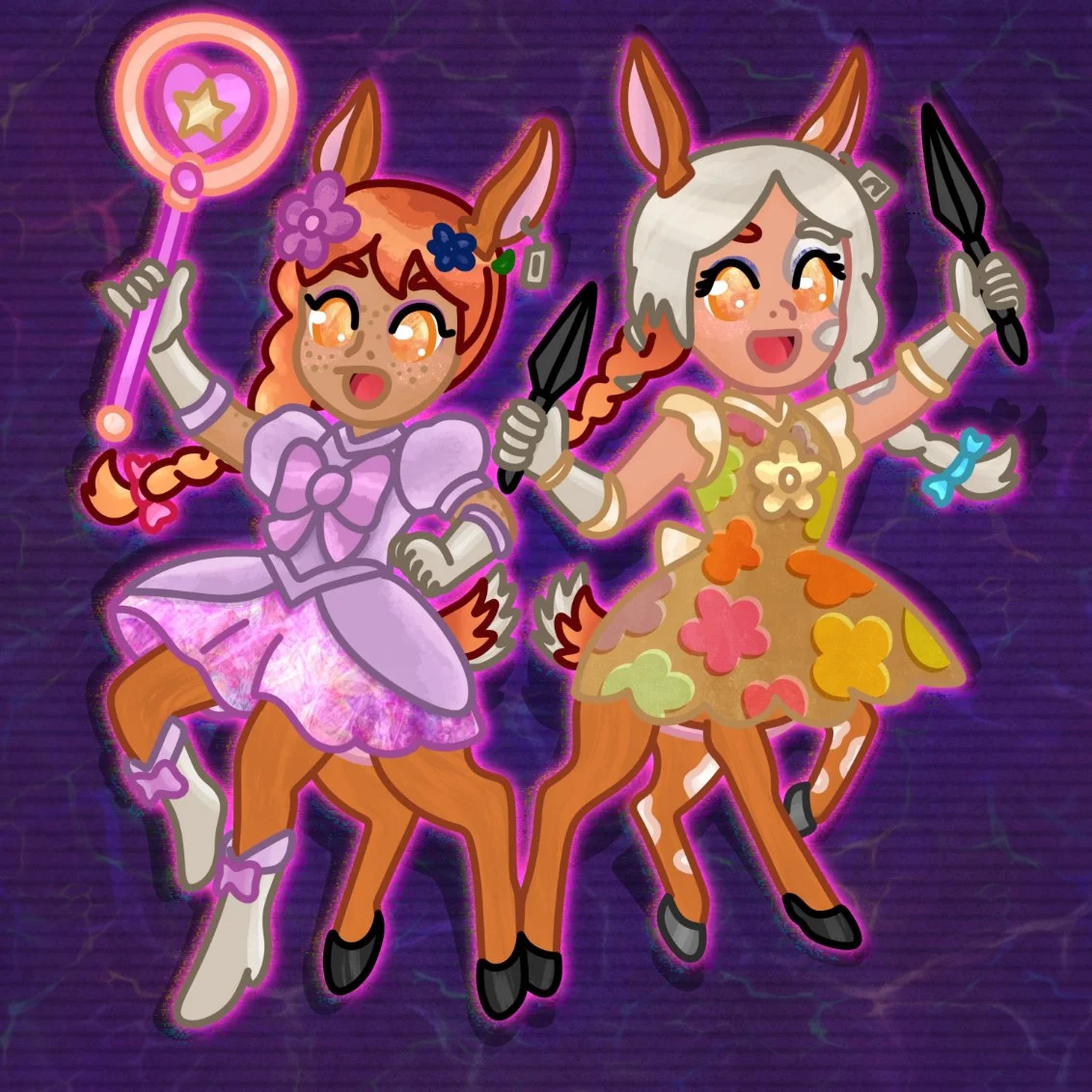
The specific case of my kink research led me to an unexpected crossroads of autonomy and absorption: I found an interactive medium that allowed me to simulate experiences and safely feed my curiosity to its limits. This medium was a text-based game called Trials in Tainted Space (TiTS), essentially an open-world erotic RPG. In TiTS, you create a character and gallivant around a sci-fi universe where you can engage in all manner of consensual (or consensually non-consensual, if you veer that way) encounters. What astonished me was how it was able to accommodate a player like me. The game emphasizes choice. “It hands you the keys to an entire universe of possibilities and says, ‘Go ahead, explore’”. It’s designed so that if you want to avoid certain kinks or content, you absolutely can; you steer every encounter. Consent and autonomy are basically baked into the design (despite the hedonistic premise), you can always say no, you can walk away, the game even provides content warnings and doesn’t mind if you save and load from a previous point. I had never encountered a space (virtual or real) that so aligned with my need for control while also offering me such a buffet of debauchery to inspect at my leisure. It was like a theme park for the sexologist-voyeur in me, with guaranteed personal safety. I dove in headfirst. I created a character (whom I named Doe) and effectively projected a part of myself into her journey. What followed was months of on-and-off gameplay that honestly changed me. I was hyper-absorbed, yes, I mapped the game’s extensive universe, read every bit of lore, tried countless branching storylines. But at the same time, I was learning, processing, and experimenting with aspects of relationship and identity that I never could in real life. The game became a sandbox not just for sexual scenarios, but for philosophical ones. I ended up guiding my character through a relationship anarchy style life… Without even planning to, it naturally evolved that way. In this wild sci-fi porn game, my character formed deep bonds with multiple partners, raised children with one (while still maintaining other connections), and refused to rank love in the usual hierarchy. I saw in simulation that it’s possible to create a community of lovers and friends who operate completely on negotiated terms, free from default scripts, something I came across in my research, but here it was in practice (albeit fictionally). The emotional impact was real. I came to care about the characters as if they were real friends; the themes of found family and unconventional love in Doe’s story genuinely moved me. I even wrote afterwards that I got a “thrilling sci-fi caper and a deeply personal odyssey of self-discovery” out of it. Not many people can say a pornographic game gave them moral and personal insight, but it did for me. It was an intense, transformative experience achieved entirely on my terms. If I had not been so autonomously minded, I might never have sought such a thing. But because I wouldn’t simply go out and have wild experiences in real life (too risky, too boundary-crossing for me), I found a creative workaround to quench that curiosity thirst.
However, I must note: even this was something I had to eventually moderate. I became so involved in the game world that I had to deliberately step back to focus on real-life responsibilities. I felt a bit like someone emerging from a long binge of a show or a novel… Dazed and wondering what day it was. You know the feeling. It’s clear I have an addictive/hyperfocused streak, and I channel it into knowledge and imagination. This has been, I think, my saving grace and also a challenge. On one hand, it keeps me from addictive social or substance behaviors (I’ve never had issues with drugs or peer-pressure activities, partly because I’m too busy nerding out on some independent interest). On the other hand, it can isolate me and sometimes affect my health (sleepless nights researching, etc.). The good part is, since it’s self-driven, I can usually recognize when it’s gone too far and take a break. I don’t have an external pusher or a group enabling me, in fact, I often have friends pulling me out saying “Hey, come back to earth for a bit, we miss you.” I’ve come to realize that the intensity I avoid in social settings, I enact in solitary ways. It’s like water finding a crack to flow through. The human need for absorption in something greater or more interesting than the mundane, it will find expression. If I were more group-inclined, maybe I’d join an extreme sport team or a monastery to get that feeling (I much preferred swim competitions that was me competing against my own personal best, rather than waterpolo that was exclusively team vs team). Instead, I explore universes in my head and on pages/screens. Opposite Paths, Common Human Roots In the end, my journey as an “autonomous self” isn’t as alien from the radicalized journey as one might think. On the surface, a militant extremist and a fiercely independent loner like me seem to have nothing in common. One chants slogans in a crowd; the other sits silently in the corner with arms crossed. One subsumes their identity in a cause; the other rejects any cause that isn’t their own. But look a little deeper, and you’ll see we are driven by the same human yearnings, only channeled through opposite valves. We both seek self-actualization, that fulfillment of being fully ourselves and fully alive. It’s just that we define “self” and “alive” in starkly different terms.
A person who becomes radicalized often starts from a place of lack or hurt: they might feel lonely, insignificant, chaotic, or wronged. The radical group comes along and says, “We can fix that. Join us.” It offers belonging to cure the loneliness, purpose to cure the aimlessness, order to cure the chaos, and an enemy or ideology to blame for the wrongs (which provides catharsis and clarity). It’s a package deal for healing the psyche’s wounds and fulfilling its cravings. When that person signs on, they give up a piece of their autonomy in exchange for these benefits. Their self merges with the group self, and they gain a powerful new identity and community, at the cost of independent thought and perhaps empathy for “outsiders.” It’s a trade-off, one that can slide into fanaticism, where violence and intolerance brew, but also one that might bring them a sense of wholeness they never had before. There’s a reason former extremists often describe feeling “born again” or “finally complete” at the height of their involvement. The group met their needs (belonging, meaning, identity, and more) in a way nothing else did.
Now consider my path. I too started from lack and hurt: feeling alien in social settings, feeling pressured to be someone I wasn’t, experiencing small traumas of being othered or having my boundaries violated. I ached to belong… But never at the cost of pretending to be someone else. I wanted meaning, but not if I had to swallow someone else’s truths. I craved identity. But only one I could live with in the mirror. So I refused the package deal. I said “no thanks” to ready-made communities and causes, even though that meant no easy fixes for those needs. Instead, I slowly, painstakingly constructed my own patchwork of fulfillment. I found belonging in the margins, one friend here, one online forum there, pieces of belonging scattered but genuine. I found meaning in personal projects and in understanding the world my own way. I forged an identity out of labels that felt authentic (aro-ace, writer, etc.) and threw out those that didn’t. Each human need had to be met in a bespoke fashion. Nothing was handed to me; I had to seek it or create it. It’s a longer, lonelier road in many respects. I didn’t have a ready-made “family” or tribe backing me up. I had to become my own cheerleader (and sometimes my own worst critic). But ultimately, this road led me to a version of self-actualization that feels deeply earned. I sometimes visualize it as gardening versus wild growth: The radicalized self is like a wild vine that found a tall tree (the group) to cling to and grow up with. It shoots up fast, but it’s completely entwined around that tree. The autonomous self is like a lone bonsai tree. Painstakingly pruned and shaped over years, small but uniquely formed. Neither is a “wrong” way to grow per se; they’re just different aesthetics of existence.
One fascinating parallel is how both extremes (group fusion and group rejection) can stem from trauma or disillusionment. People don’t radicalize in a vacuum; often there’s a backstory of feeling marginalized or having one’s boundaries violated by society at large. In my case, numerous boundary violations (even if relatively minor, like peer pressure and normative expectations) nudged me further and further into a defiant posture. For someone else, boundary violations (say, abuse or societal humiliation) might nudge them toward a group that promises empowerment and revenge. Both of us say “never again” to feeling powerless! One of us grabs power through numbers and aggression, the other by becoming an untouchable island. It’s like two patients with the same wound choosing opposite survival strategies. There’s a bittersweet kinship in that realization. I used to view extremists or “group people” with some disdain or at least puzzlement. Now I see a scared human underneath that armor, not so different from the scared human I was (and sometimes still am) under my self-fashioned armor.
This journey of writing and reflection has also shown me that, at the end of the day, neither extreme is wholly sustainable or healthy in its pure form. A wholly radicalized life can lead to heinous outcomes, it can become violent, create a loss of self, perpetuate hate. A wholly anti-group life can lead to isolation, stunted emotional growth, and a heavy burden of having to do everything alone. Both paths can cause harm to oneself or others. The sweet spot, perhaps, lies somewhere in the middle: a life of interdependence without loss of self, of meaning that’s both personal and shared, of belonging that doesn’t require erasing one’s boundaries. That sounds idyllic and maybe utopian, but I actually glimpsed a version of it in that strange arena of a video game narrative. There, I (as Doe) had a community of friends, lovers, and family all bonded not by a rigid group ideology but by chosen commitment to each other’s wellbeing. It was like a tiny model of how humans could relate if freedom and care were both fully respected. Everyone had each other’s backs, but no one demanded anyone betray their own identity or values. In the game’s story, this worked out beautifully, as everyone’s feelings mattered, no one tried to control who anyone loves, and it created a culture of mutual aid and respect. Now, real life is not a controlled game, and such harmony is hard to achieve, but it gave me hope that my anti-group ethos doesn’t doom me to lifelong solitude or conflict. It is possible to have autonomy and belonging together, it just requires more communication, tolerance, and creativity.
As I conclude this reflection, I find myself surprisingly at peace with both who I am and with understanding those who chose the other path. I have no desire to trade my autonomy for a collective identity; that’s simply not in my nature after all I’ve been through. But I no longer see it as me vs. them (the independent soul vs. the “sheeple” or whatever term I might’ve once thought). Rather, I see all of us humans on a spectrum of how we balance individual and group needs. We all oscillate on this spectrum throughout life too. I’ve even had moments (rare, but they exist) where I did feel myself part of a group without discomfort, like walking in unison at an LGBTQ+ pride event, momentarily feeling the swell of being “one of many” under the rainbow flag. It gave me chills of joy. And I thought, so this is what it feels like… I get it. Likewise, I suspect even the most group-immersed person has moments alone at 3 AM where they wonder, “Who am I, apart from all this?” In those moments, they touch a bit of my world.