Crew as Community
With Amber and the twins forming the emotional core of Doe’s journey, one might think she’d slow down on forming other bonds. On the contrary, this period saw Doe gather a whole crew of friends and lovers, transforming her ship into a vibrant intentional community. TiTS is designed such that the player can recruit numerous NPCs through quests or encounters, and I took full advantage of this to create a motley family for Doe. Each crew member had their own relationship with her… Some deeply intimate, others purely platonic or professional. Looking at this tapestry of connections, I can’t help but see it through the lens of relationship anarchy: a network of affection and support without hierarchy, each bond valued for its unique qualities rather than slotted into a tier list.
By this time, Doe’s heart had opened considerably. She was far from the guarded loner who stepped off the space station with a one-track mind. Her guiding principle became compassion. If someone needed help and she cared about them, she would gladly step up, even if it meant personal sacrifice. A perfect example is Shekka, a brilliant raskvel mechanic from Tarkus. Shekka had a problem not unlike Amber’s, but on a species-wide scale: her people were suffering from a genetic modification that caused overactive breeding and diminishing intelligence. With Doe’s help (and Steele Tech’s resources), Shekka devised a gene therapy project to save her species. However, implementing it required a rather intimate contribution from Doe. Specifically, that was agreeing to have children with Shekka as test subjects for the improved genes. This was not a trivial ask! It meant Doe would bear twenty of Shekka’s hybrid kids (raskvel are prolific) to ensure the new genotype was viable. In any other story, this might be outrageous (having dozens of children with a friend for science) but in the openness of Doe’s world, it felt like a profound act of friendship and altruism. Doe and Shekka weren’t “in love” romantically, but they cared for each other deeply and shared a goal of helping future generations. So Doe agreed, effectively saying: my body can be a gift to your people. She wouldn’t have made that choice if it conflicted with Amber or anyone else; but because her core partner Amber understood and supported her compassion, Doe felt free to do this. I find this incredibly moving. It underscores RA’s notion that commitments should be made by each person with their own boundaries in mind, not by rigid roles. Doe’s commitment to Amber didn’t preclude this very different commitment to Shekka, because Doe made sure it was her choice and aligned with her values (and she communicated with Amber, who respected Doe’s autonomy). The result?

Twenty healthy, genetically improved raskvel babies, and a lifelong bond between Doe and Shekka as co-parents of a sort. Far from straining Doe’s “primary” relationship, this experience enriched her life and community. When she visits the nursery and sees those little reptilian kids, it’s with pride and no regret.

Meanwhile, Doe also helped Reaha, a sweet cow-girl who had been trapped in a life of debt slavery and addiction. Reaha’s journey (involving kicking a drug habit and regaining her confidence) was another long arc that Doe patiently supported, ultimately freeing Reaha from her contract and welcoming her into a new life. Reaha became a close friend, and sometimes a lover when the mood struck, but importantly Doe never pressured her. It was more like Doe mentored her through recovery and gave her the freedom to find herself. Over time, Reaha did flourish, becoming far more self-assured. This bond emphasized non-hierarchical care: Reaha wasn’t a lesser priority because she wasn’t a “primary partner”; in fact, at the times Reaha needed Doe, Doe made her a priority. RA theory talks about dismantling the idea that only romantic/sexual partners get the lion’s share of care and everyone else is secondary. Doe’s crew exemplified this. Anyone under her roof had her love and attention when they needed it. It felt like a family-by-choice, where love wasn’t measured in one narrow way.
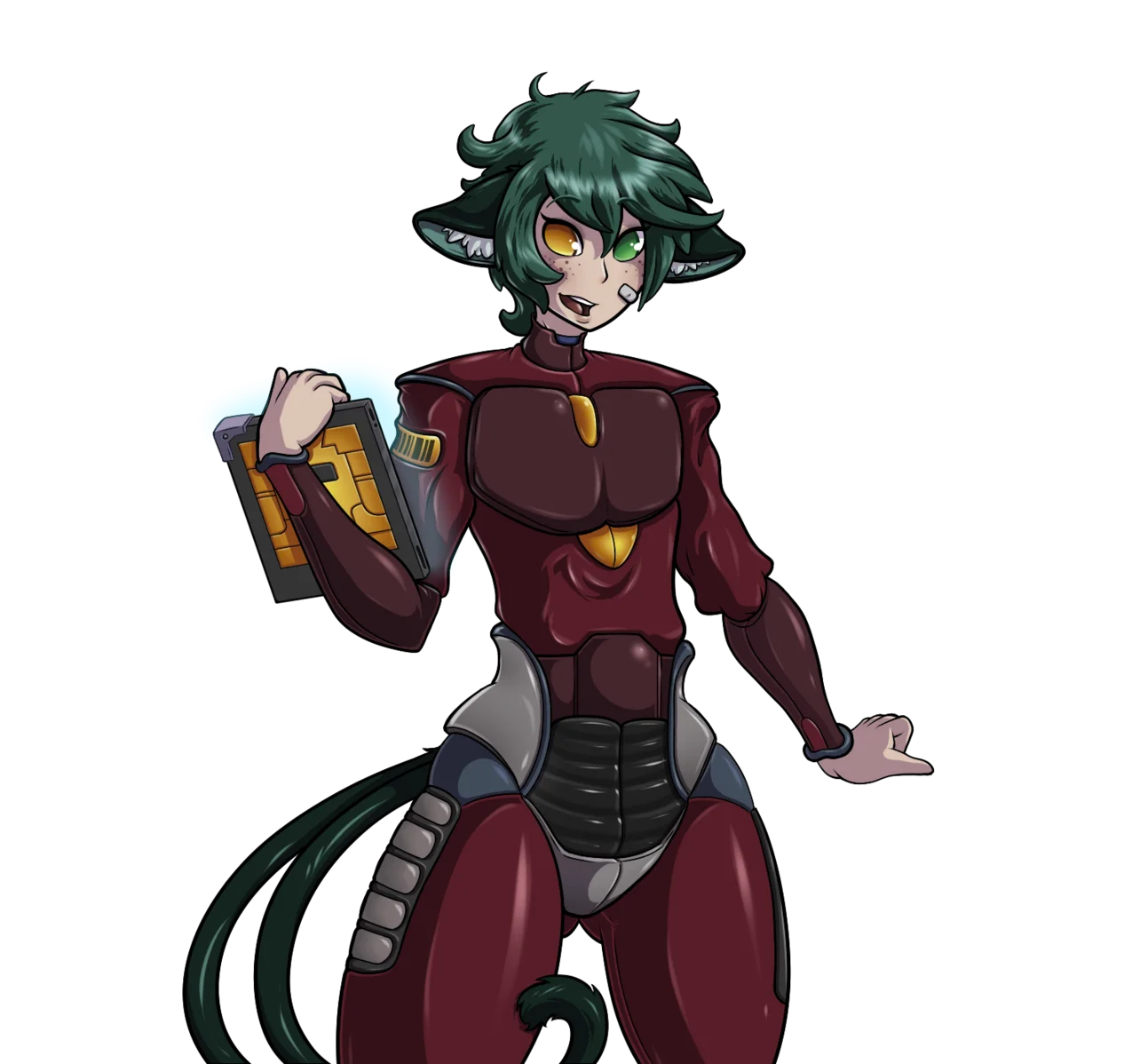
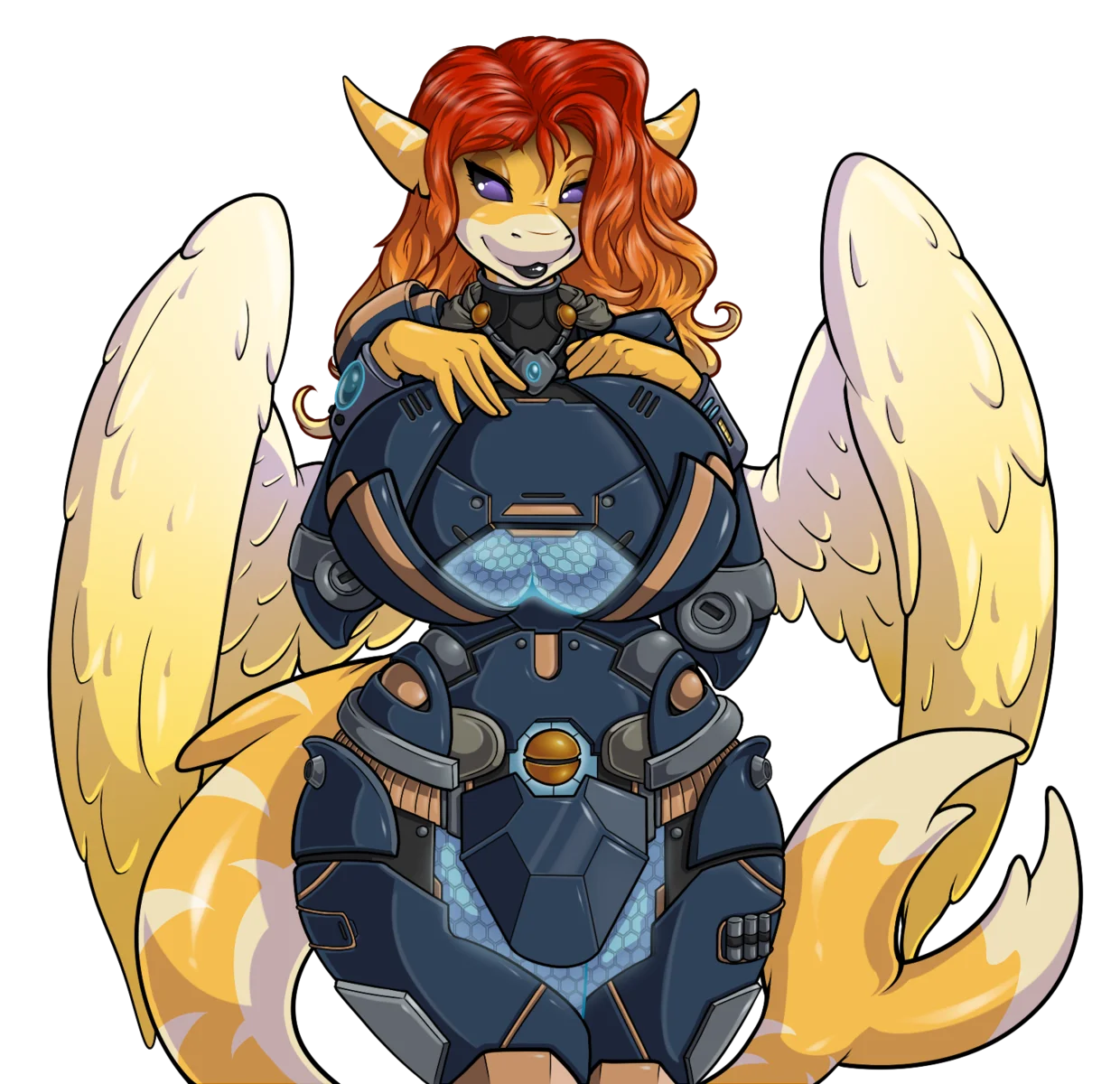
Let me introduce some of these beloved crew members, to paint a picture of how diverse Doe’s circle became. There was Azra, a formidable yet kind-hearted dragoness xenobiologist. Azra was older, scholarly, and had a maternal air; she often looked out for the younger crew. She led Doe on exotic safari missions (with a fair share of danger and discovery) and the two shared a mutual respect. Azra’s presence was a reminder that intimacy isn’t always erotic; sometimes it’s about mentorship and warmth. On the lighter side, Celise the goo-girl remained with the team throughout, cheerfully cleaning up messes (her gelatinous body feeds on... well, any bodily fluids lying around). Celise was like the housekeeper/cheerleader of the family, always positive. Doe’s relationship with Celise was mostly platonic camaraderie, a far cry from the typical captain-and-sexy-alien dynamic one might expect. Again, RA encourages not pigeonholing relationships: a living slime gal doesn’t have to be your fetish plaything; she can just be your messy roommate/friend who helps out!
Then there was Kase, Doe’s logistics officer, a diligent young man who took his job seriously. Kase was what one might call a “work friend”. Doe saw him as a valued colleague and a little brother figure. He wasn’t interested in the wild sexual escapades and mostly kept to himself, running ship comms efficiently. Their bond highlighted that not everyone aboard needed to be entwined in lust or drama. Kase made the crew functional and grounded, and Doe appreciated him for exactly who he was.

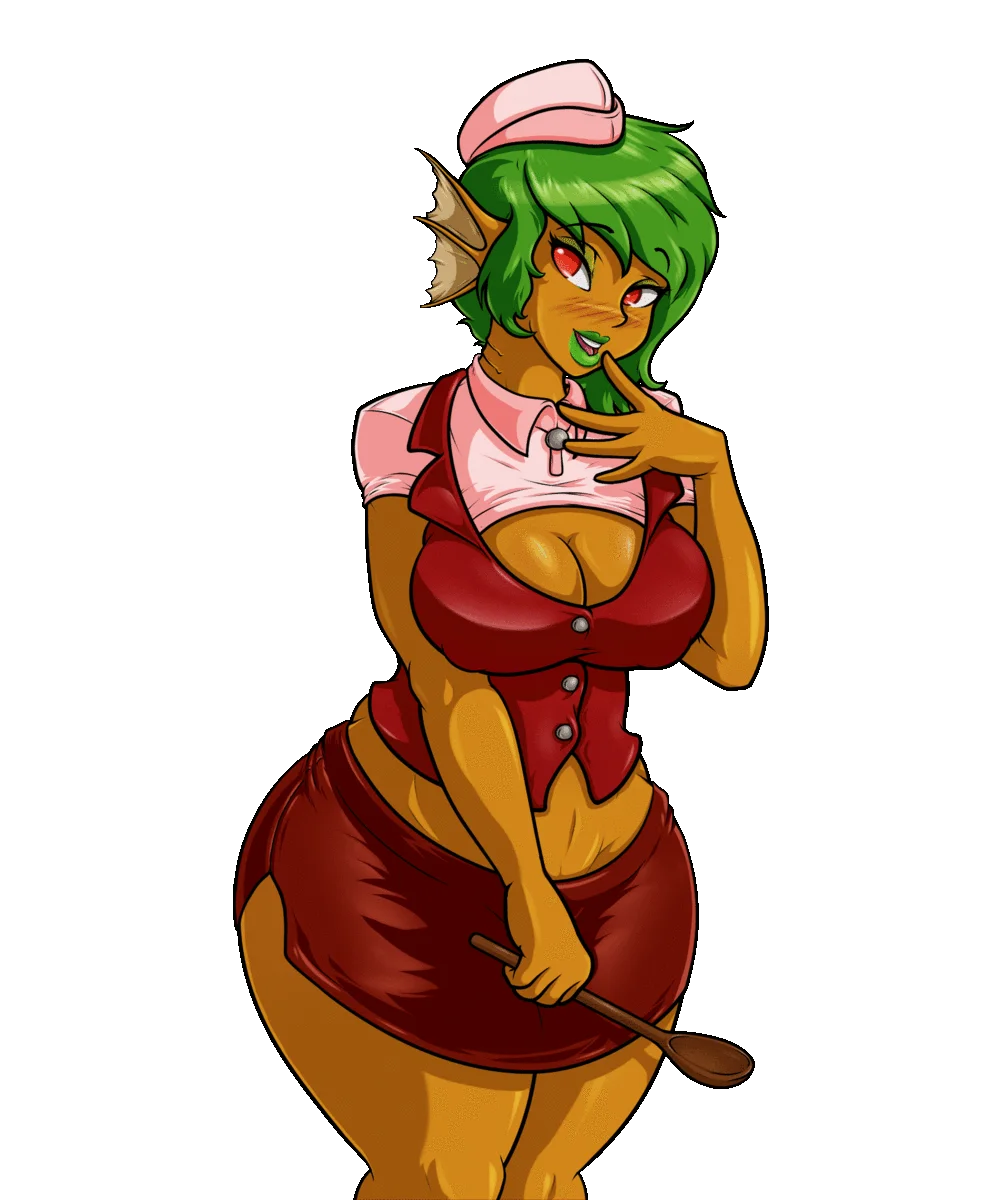
Contrast Kase with Mitzi, a bubbly green-skinned gabilani (goblin-like) who had been through some dark times before finding refuge with Doe. Mitzi was unabashedly sexual, a self-described bimbo who loved pleasure, but she also had a vulnerability beneath that persona. She had a history of someone taking advantage of her, dragging her into a drug-fueled life. By the time she joined Doe, Mitzi still struggled with addiction and trauma. Doe took a gentle approach with her: indulging Mitzi’s playful side (they certainly had some fun together, as Mitzi’s idea of thanking someone often involves enthusiastic physical affection), but also caring for her well-being and quietly hoping she’d heal. Doe never tried to control Mitzi or shame her; she simply set an example of a safe, supportive environment and let Mitzi find stability at her own pace. This, too, reflects RA’s influence: replacing traditional power dynamics (where one might try to “save” or command a troubled partner) with respectful support, letting the other person lead in their own recovery. Mitzi, in turn, became fiercely loyal to Doe, not because she was indebted by some contract, but because of genuine gratitude and affection.

Pippa was another delightful addition: a curvy modded human (pig-like) massage therapist with magic hands and a nurturing spirit. Pippa joined as the ship’s masseuse and physical therapist, but being TiTS, of course sensual “happy endings” were part of her repertoire. She adored making people feel good in their bodies. Doe’s interactions with Pippa were mostly about relaxation and stress relief; a friends-with-benefits type dynamic where both simply enjoyed each other’s company and touch with no strings attached. It was a consensual, no-pressure arrangement that filled a niche in Doe’s life: when you’re a starship captain juggling battles and babies, sometimes you just need a spa day with a caring friend! Pippa provided that, and it never threatened Doe’s other relationships.
Now, Sera is a complicated chapter. Sera was a dominant, willful futa modded human who originally ran a shop on Tavros Station. Sera had a reputation for enslaving cute submissives in her own subtle ways, a true domme with a cruel streak. Initially, Doe and Sera had a fiery tension because Sera tried to assert power over Doe. For the longest time, I steered Doe away; Sera’s dynamic felt too hierarchical and dangerous, antithetical to Doe’s values. But, I admit, curiosity got the better of me eventually. The game intriguingly allowed a path where Doe could turn the tables on Sera, essentially bankrupting Sera’s business and then purchasing Sera’s contract to make her the subordinate. This was a morally gray move for Doe. It meant deliberately enslaving someone (even if that someone was an unrepentant dom who kinda “had it coming”). In my log I even noted that this felt like “a strange puzzle piece to fit” into Doe’s story. I justified it as Doe conducting an experiment: Could Sera be happier and form a healthier relationship if someone finally disarmed her dominance? It was also, frankly, a content experiment for me as a player… I wanted to see the alternate personality Sera would develop under Doe’s ownership, and yes, to unlock the option for Doe and Sera to have children together down the line. So I went through with it, and Sera became part of the crew in a rather scandalous way… as Doe’s “slave”. Which was legal in this game’s universe, but hey, for research purposes, right?
However, in practice, their relationship became less Master/Slave and more an extremely kinky form of friendship. Sera’s domineering personality didn’t vanish; it just mellowed toward teasing rather than outright cruelty (most of the time). Doe didn’t actually mistreat Sera. Instead she gave Sera structure and the one thing Sera maybe secretly craved: someone she couldn’t dominate. Over time, they developed a bantering, tension-laden rapport. Is this RA-friendly? Probably not in a strict sense, slavery and power games are definitely not the anarchic ideal! It might remain an open question whether Sera stays with the crew long-term or is eventually set free once she and Doe have had their fun and growth. If anything, the whole Sera episode reinforced for me that Doe’s true ethos leans toward freedom… She far preferred seeing someone like Reaha freed than owning someone like Sera. Perhaps Sera is that one “exception” in Doe’s story that proves the rule: the appeal of turning a toxic power dynamic on its head, but also the reminder that true equality and mutual respect feel better than any master-slave arrangement. I suspect in the long run, Doe might guide Sera to a more egalitarian friendship, or let her go if Sera desired. Even this, oddly, ties back to RA concepts: hierarchy can be seductive (in a fetish sense here), but sustainable relationships thrive on equality and consent, not domination. I think Doe knew that deep down.


Rounding out the crew were others like Tika (the ever-helpful nurse droid who still provided medical care and a listening ear to everyone), Wulfe (a cybernetically enhanced dog-girl mercenary Doe rescued… Well, stole… Who became a reliable security officer), and Yammi (the ship’s chef, whose meals kept everyone’s morale high). Each person on board shared a trust and camaraderie with Doe. Some were lovers, some were not, but all felt like family. I’d imagine they’d gather in the galley for Yammi’s hearty stews, swapping stories of the day’s exploits. Sometimes the twins would be brought out, passed around dotingly from “auntie” to “uncle” to “goo-mama”. It was chaotic, unorthodox, and wonderful. There was no script for this kind of family, no pre-set roles like husband, wife, side-chick, etc. RA activist Andie Nordgren describes relationship anarchy as designing your relationships through intentional choice rather than default rules. Doe had, unknowingly, curated a collective of care that mirrored what relationship anarchy imagines is possible: people relating as individuals in a network, without one bond subordinating another, and with all commitments chosen, not imposed.
Another relationship in Doe’s orbit that deserves attention is the one she developed with Bess/Ben, the android she rescued from an abandoned body on Tarkus. Bess, in the feminine presentation Doe chose, was searching for personhood and connection, and Doe quickly became her main reference point. Unlike most of Doe’s other bonds, however, this relationship unfolded inside a very rigid structure. Bess’s development is controlled by a long sequence of timed events.
When certain affection thresholds are reached, and the ‘dice’ are rolled favorably when visiting the character, Bess appears to ask questions, seek reassurance, or propose new steps in intimacy. If Doe responds in particular “supportive” ways, the next scene unlocks. If she does not, some paths close permanently. In some branches, such as rejecting Bess’s love or refusing to look for her when she disappears, the result is that Bess vanishes indefinitely. That setup clearly resembles a relationship escalator: a directed sequence that moves from curiosity to affection to confession to defined partnership, with “wrong” choices treated as derailments rather than as valid alternate outcomes.
This is important for thinking about relationship anarchy, because the structure around Bess is much closer to the kinds of non-monogamous scripts that Pérez-Cortés critiques than to the RA model itself. The Bess route eventually presents the player with a menu of configurations, including a polyamorous or “open” version of the romance, but the underlying logic still assumes that the story should climb toward a central, named romantic bond. Polyamory, in this sense, is being presented as a particular shape at the top of an emotional ladder, not as a rejection of hierarchy or of normative scripts. Relationship anarchy is less about how many partners or what arrangement you pick and more about dismantling the idea that one type of love or one kind of agreement should automatically outrank the others. In many poly situations, prior agreements and primary partnerships silently dictate what is allowed. In Bess’s case, the code itself dictates what counts as the “correct” way to deepen intimacy. That is very different from RA’s emphasis on self-definition, anti-hierarchy, and boundaries that apply to oneself rather than functioning as rules for others.
Within that constraint, Doe still related to Bess in a way that reflected her own anarchic sensibilities. She treated each scene as another chance to check in with her own comfort rather than as a mandatory rung on a ladder. She did not decide that Bess was now “above” Amber, Shekka, Reaha, or anyone else just because the game poured more scripted emotion into that route. For Doe, Bess became one more beloved member of a wider constellation. The game still framed her story as a climb through predefined stages, but Doe quietly refused to let that escalator define her whole emotional landscape. In that sense, the Bess storyline worked in a traditional view of a romance structure, though it did so behind the scenes. The logic is only clarified in the wiki, but feels somewhat natural and random when encountered in game. Overall, the relationships in the game, though flavored through the various contributors (art and writing), end up being interpreted by each player uniquely.