… / / Dadaism: Collage and the Original “Anti-Art” Movement
katsumimaki.com
General
  • Home
  • About
  • Start Here
Topics
  • Newsletters
    • Fanmade
      • Anti Group Tendencies
        • Page 1
        • Life as an “Anti-Group”
        • Afterword
      • Burnout
        • Page 1
        • Afterword
      • Empathy
        • Page 1
        • Afterword
      • Friendswithyou
        • Origins in Miami: Seeds of a Playful Universe (2002–2004)
        • Building a World of Play: Interactive Installations (2005–2009)
        • Rainbow City: Exploding onto the Global Stage (2010–2012)
        • Animism, Art, and “Happy Virus”: A Philosophy of Play
        • Collaborations and Pop Culture Crossovers (2013–2017)
        • Post-Internet Explorations: From Virtual Worlds to NFTs (2015–2022)
        • Conclusion: Pop Spiritualists in a Connected Era
      • From Dada Collages To Ai Art
        • Introduction and Personal Motivation
        • Dadaism: Collage and the Original “Anti-Art” Movement
        • AI-Generated Art: Algorithms as the New Collage
        • Comparing Dadaism and “AI-Artism”
        • Modality and Technique: Collage vs. Computation
        • Origins and Intentions: Art Movement vs. Tech Innovation
        • Reception and Cultural Impact: Anti-Art Manifesto vs. Existential Disruption
        • Outcomes and Future Trajectories: Lessons from Dada for AI Art
        • Conclusion: Art, AI, and Accessibility – A Personal Reflection
      • Lights Sound Printing
        • Page 1
        • Lighting: High Color Fidelity vs. Spectral Restriction
        • Audio: Theatre Mic Techniques for a Hybrid D&D Game
        • Digital Fabrication: From Desktop 3D Printing to Stage-Size Scenery
        • Conclusion: Personal Reflections on Tech in Theatre
      • Littlespaces
        • Overalls and Feeling Small
        • Voluntary vs. Involuntary Age Regression
        • Stress, Comfort, and Little Space
        • Age Regression vs. Age Play
        • The ABDL Identity and Spectrum
        • Community Norms, Safety, and Stigma
        • Unpacking Misconceptions
        • Afterword
      • Monoline
        • Origins, Purpose, and Brief History
        • Shel Silverstein’s Expressive Monoline Style
        • From Viral Outlines to Indie Cartoons: Monoline’s Digital Revival
        • Bridging Traditional and Digital: Community Art and Personal Practice
        • The Commercial and Algorithmic Appeal of Monoline
        • Communities and Culture: Constraints as a Creative Identity
        • Conclusion and Personal Reflections
        • Afterword
      • Never Have I Ever: Kinks
        • About Me
        • Aromantic Asexual Autonomy
        • A Space for Kink Exploration: Trials in Tainted Space
        • Consent and Customization in a Kinky Universe
        • From Kink Exploration to Relational Ethics
        • Doe Steele: The Trials in Tainted Space
        • Opening Up on Mhen’ga: Amber Changes the Game
        • Crew as Community
        • Relationship Anarchy Among the Stars
        • Afterword
      • Ps1lowpoly
        • Page 1
        • Early Low-Poly 3D: Console Limitations Shaping an Aesthetic
        • From Quirk to Art Form: Low-Poly Revival and Nostalgia
        • Modern Low-Poly in Contemporary Media and Art
        • Super Mario 64
        • Indie Animators and Series
        • Comedy Skits and Memes
        • Cozy vs. Creepy
        • Interview with an Appreciator
        • Conclusion
        • Afterword Fave (Interviewee)
      • Saved My Life
        • My Relationship With Food
        • My Trip to the Hospital
        • What My Journey Looks Like Now
        • Re-Learning My Purpose
        • Afterword
      • Slowart
        • Additive
        • Subtractive (Decay)
        • Performative
        • Slow-Change (Growth)
        • Latent Activation
        • Pilgrimage
        • Witnessing
        • Conclusion: Embracing the Art of Slow Moments
      • The Life Death And Afterlife Of Mannequins
        • I. The Enduring Allure of Mannequins
        • II. The Material and Historical Trajectory of Mannequins
        • Evolution from Functional Forms to Lifelike Figures
        • The Fiberglass Revolution: Durability and Mass Production
        • III. Mannequins as Cultural Artifacts: From Discarded to Desired
        • The Paradox of Invisibility and Persistent Presence
        • Sustainable Second Lives: The Mannequin Madness Model (Judi Henderson)
        • Table 2: Case Studies of Mannequin Reuse
        • The Uncanny Valley: Mannakin Hall as Experiential Art (Roz Edwards)
        • IV. Mannequins in the Human Imagination: Companionship and Projection
        • V. Reflections on Mannequin Endurance: A Personal Synthesis
      • Valentine
        • Page 1
        • A Sweet Gesture After Lockdown
        • Yearning vs. Attraction
        • Thought Experiments with a Safety Net
        • The Fun of Shipping (Even for the Aro-Ace Crowd)
        • Conclusion: Choose Your Own Valentine
    • Original
      • 2024-09 September
      • 2024-10 October
      • 2024-11 November
      • 2024-12 December
      • 2025-01 January
      • 2025-02 February
      • 2025-03 March
      • 2025-04 April
      • 2025-05 May
      • 2025-06 June
      • 2025-07 July
      • 2025-08 August
      • 2025-10 October
      • 2025-11 November
      • 2025-12 December
      • 2026-01 January
      • 2026-02 February
      • 2026-03 March
  • Stories
    • Fanmade
      • Daggerheart
        • CiCi
          • Page 1
          • Page 2
      • Dnd
        • Azurion Nightfall
          • Page 1
        • Little
          • Page 1
      • History
        • Prahlada and Malala
          • Page 1
          • Page 2
          • Page 3
          • Page 4
          • Page 5
          • Page 6
          • Page 7
          • Page 8
          • Page 9
          • Page 10
      • My Little Pony
        • Stellar Redux
          • Page 1
          • Page 2
          • Page 3
          • Page 4
      • Pathfinder
        • Occupation on Vesk 3
          • Page 1
          • Page 2
          • Page 3
          • Page 4
      • Satisfactory
        • Everroot
          • Page 1
        • Reaper and ADA
          • Chapter 1
          • Chapter 2
          • Chapter 3
          • Chapter 4
          • Chapter 5
          • Chapter 6
          • Chapter 7
          • Chapter 8
      • Star Trek
        • USS Mesa
          • Page 1
          • Page 2
          • Page 3
      • Star Wars
        • Protocols and Princesses
          • Page 1
        • Shakka'Dira
          • Page 1
          • Page 2
          • Page 3
          • Page 4
          • Page 5
          • Page 6
          • Page 7
          • Page 8
          • Page 9
      • Trolls
        • Rave and Relaxation
          • Page 1
    • Original
      • Neon Fairy Lights
        • Main Story
          • Page 1
          • Page 2
          • Page 3
          • Page 4
          • Page 5
          • Page 6
          • Page 7
          • Page 8
          • Page 9
          • Page 10
          • Page 11
          • Page 12
          • Page 13
          • Page 14
          • Page 15
      • Northern Lights
        • Main Story
          • Page 1
          • Page 2
          • Page 3
          • Page 4
          • Page 5
          • Page 6
      • Virtual World
        • Commands
          • 01 Bash
          • 02 Cat
          • 03 Ping
          • 04 Mint
          • 05 Vi
          • 06 Echo
          • 07 Dig
          • 08 Tar
          • 09 Sudo
          • 10 Kali
          • 11 Nano
          • 12 RPM
          • 13 Tail
          • 14 Grep
          • 15 Cron
          • 16 Alma
          • 17 Shell
          • 18 Yaml
          • 19 Sed
          • 20 Curl
        • Five Stories
          • 01 Cautious 01
          • 02 Desperate 01
          • 03 Fading 01
          • 04 Cautious 02
          • 05 Indifferent 01
          • 06 Gentle 01
          • 07 Cautious 03
          • 08 Desperate 02
          • 09 Fading 02
          • 10 Cautious 04
          • 11 Indifferent 02
          • 12 Gentle 02
          • 13 Cautious 05
          • 14 Desperate 03
          • 15 Fading 03
          • 16 Cautious 06
          • 17 Indifferent 03
          • 18 Gentle 03
          • 19 Cautious 07
          • 20 Desperate 04
          • 21 Fading 04
          • 22 Cautious 08
          • 23 Indifferent 04
          • 24 Gentle 04
          • 25 Cautious 09
          • 26 Desperate 05
          • 27 Fading 05
          • 28 Cautious 10
          • 29 Indifferent 05
          • 30 Gentle 05
          • 31 Cautious 11
          • 32 Desperate 06
          • 33 Fading 06
          • 34 Cautious 12
          • 35 Indifferent 06
          • 36 Gentle 06
        • Main Story
          • Page 1
          • Page 2
          • Page 3
          • Page 4
          • Page 5
          • Page 6
          • Page 7

Dadaism: Collage and the Original “Anti-Art” Movement

Historical Context and Ideals: Dada (or Dadaism) was an avant-garde art movement that arose around 1915 during the upheaval of World War I. It began in hubs like Zürich and Berlin and soon spread to New York and other parts of Europe. Dada was, at its core, a protest – not just against the war but against the social and artistic norms that Dadaists felt had led to such widespread destruction. As such, Dada was explicitly anti-establishment and often described as “anti-art”. According to artist Hans Richter, a Dada founder, “Dada was not art: it was ‘anti-art.’ Dada represented the opposite of everything which art stood for. Where art was concerned with traditional aesthetics, Dada ignored aesthetics. If art was to appeal to sensibilities, Dada was intended to offend.” In other words, if conventional art aimed to be beautiful or meaningful, Dada deliberately embraced nonsense, shock, and absurdity. Dadaists saw this iconoclasm as a way to protest the “logic and reason” of modern capitalist society and the nationalist mindset that had led to war. They favored chaos and irrationality, cultivating an anti-bourgeois sensibility in their work. The movement had no single cohesive style, but a unifying principle was its rebellion against what art was supposed to be.

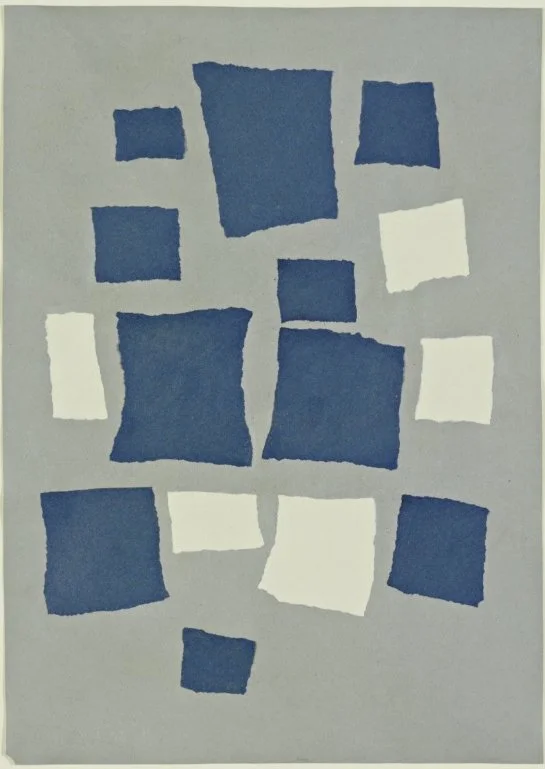
Collage, Photomontage, and Assemblage: In pursuing their anti-art ideals, Dada artists experimented with radically new techniques and media. One hallmark of Dada was the use of collage and found objects to create art, thereby subverting traditional painting and sculpture. In fact, Dadaists invented the “chance collage” technique. For example, artist Jean (Hans) Arp would tear paper into pieces and drop them randomly onto a larger sheet, pasting them wherever they fell. The resulting composition was unplanned and left to chance. Arp’s chance collages have come to represent Dada’s aim to relinquish control and embrace accident, challenging the idea that art must be a product of the artist’s careful composition. Dadaists also extended collage into photomontage, cutting and pasting photographs (often from newspapers or magazines) to create jarring, satirical compositions. For instance, Berlin Dadaist Hannah Höch famously used photomontage to critique society and gender roles. Others like Raoul Hausmann and John Heartfield spliced war images and political imagery in collage as corrosive social commentary. In addition, Dada artists created three-dimensional assemblages from everyday found objects: they would gather items like ticket stubs, wooden wheels, or even trash, and assemble them into sculptural works. These assemblages, often purposefully absurd, further dissolved the boundary between “high art” and ordinary life. By using mundane materials and chance operations, the Dadaists violated prevailing standards of craft and authorship – a deliberate anti-art statement.
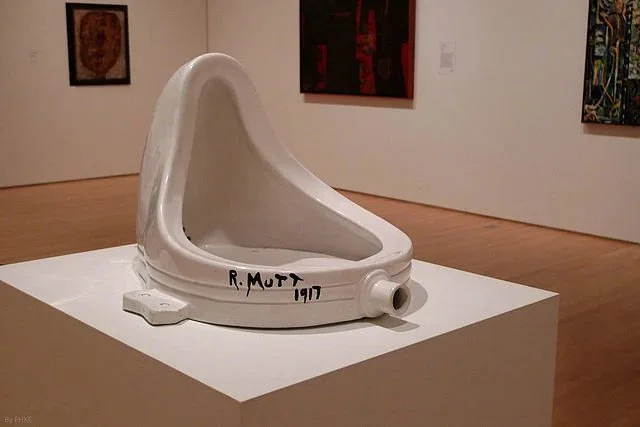
Marcel Duchamp’s Fountain (1917) – a porcelain urinal signed “R. Mutt”

The Readymade and Fountain: Perhaps the most iconic Dada gesture was the invention of the readymade, an everyday object presented as art with little to no modification. The artist’s act of selection was the only real creative act. Marcel Duchamp pioneered this concept. In 1917 he infamously submitted a porcelain urinal, signed “R. Mutt 1917,” to an art exhibition and titled it Fountain. Aside from being rotated 90 degrees and signed, the urinal was unaltered. This audacious submission was meant to shock and to mock. As Duchamp explained, his goal was to “raise [an] everyday object to the dignity of a work of art by the artist’s act of choice.” By ripping an object from its normal context (a men’s restroom) and placing it in an art gallery, Duchamp directly challenged the basic definition of art and the role of the artist. Fountain was, indeed, intended to offend the sensibilities of the art establishment – and it did. The exhibition organizers effectively hid the piece from view despite their rules that all submitted works be accepted. Yet, the very scandal around Fountain proved the Dada point: the concept behind art could matter more than the object’s intrinsic qualities. In retrospect, Fountain became an icon of Dada’s irreverence and radical influence. Art historians now consider Fountain a major landmark in 20th-century art, one that paved the way for movements like Surrealism and Conceptual art. It demonstrated that art could be anything (even a urinal) if it provoked thought and was framed as art. This subversive spirit was Dada’s legacy.

Reception and Legacy: During its brief heyday (circa 1916–1924), Dada was not widely understood or appreciated by the public. Many traditional artists and critics were horrified or baffled by Dada works. This was by design: Dada was anti-art and meant to be provocative. Its performances (like Hugo Ball’s nonsense sound poems at the Cabaret Voltaire in Zürich) and exhibitions were often riotous or tongue-in-cheek. The movement was fragmented across cities (Zürich, Berlin, Paris, New York), each with slightly different emphasis (for example, Berlin Dada was especially political, combining anti-art aesthetics with anti-fascist propaganda). By the mid-1920s, Dada as a group activity dissipated, partly morphing into Surrealism and other currents. However, its impact was lasting. Dada had exploded the definition of art. It introduced chance procedures, collage, readymades, and absurdist performance into the artist’s toolkit. What was once shocking (like using mass-produced objects or fragments of photographs in art) later became accepted techniques. Moreover, Dada’s anti-establishment ethos can be seen as a precursor to later art rebellions and media satires. Indeed, Dada is cited as an influence on late-20th-century movements that questioned art and culture, from Situationism to Punk and beyond. In summary, Dadaism’s anti-art stance was a radical revolt born of a specific historical moment – a response to world events and a deliberate attempt by artists to break art free from its old constraints.