Subtractive (Decay)
Slow Art as Erosion and Renewal. Not all creation comes from addition; some arises through subtraction. The slow wearing away, decay, or removal of what once was. In this lens, time is an artist that dismantles. Paint peels, metal rusts, organisms decompose. What looks like destruction can in fact reveal a different kind of beauty or meaning. Subtractive slow art finds poetry in weathering and ruination, and often in the unexpected resurgence that follows. If additive art is about patience in building up, subtractive art is about patience in letting go – allowing nature or time to reclaim, regrow, or reinterpret human creations. This perspective asks us to see value in decay and to recognize how endings feed new beginnings.
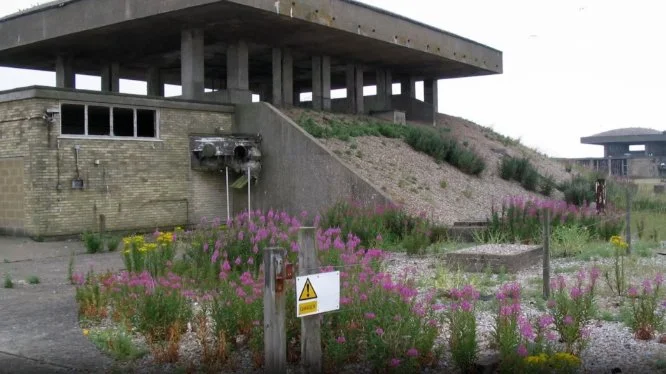
Orford Ness, the Post-Human Landscape: One of the most striking real-world examples of slow decay and renewal is Orford Ness, a remote shingle spit on the Suffolk coast of England. In the 20th century, Orford Ness was a heavily guarded military research site. A place of secret experiments, concrete bunkers, bomb testing and even nuclear weapons trials. It was littered with structures: laboratories, radar towers, explosive test chambers nicknamed “pagodas,” and a prominent Trinity House lighthouse. But fast-forward to the present, decades after the site was largely abandoned by the military. The ghosts of human activity remain in rusting metal, crumbling buildings, and even unexploded ordnance hidden in the scrub, but these relics are disappearing under wild grasses and sea lavender. In fact, Orford Ness is now internationally recognized as a wildlife haven, a rich nature reserve where rare birds nest and wildflowers reclaim the once-blasted soil. Nature thrives among the relics of the past: black-backed gulls, for example, have made homes in the abandoned atomic test pagodas, filling those concrete shells with new life. The National Trust, which owns most of the site since 1993, manages it with a light touch, letting natural processes proceed and keeping humans at bay (to protect both rare species and visitors’ safety, access is limited; only a small ferry can reach the spit, and large areas are roped off because of the risk of old unexploded bombs). Walking there feels eerie and profound. You might see the skeletal remains of a lab overtaken by ivy, or a sunken concrete slab that once guided missiles now half-swallowed by the encroaching sea. Orford Ness shows, in dramatic fashion, how decay itself can be creative (source). As author Cal Flyn observes in Islands of Abandonment, such places teach us to look beyond ruined appearances and recognize their ecological rebirth. What was once a top-secret zone of human innovation has become a sanctuary for wild organisms precisely because humans withdrew. In slow art terms, Orford Ness is a collaboration between human-made decay and natural resurgence: over years, entropy and growth perform a quiet pas de deux. It’s a living diorama of “Life in the Post-Human Landscape,” where rust, rot, and ruin set the stage for untamed beauty.
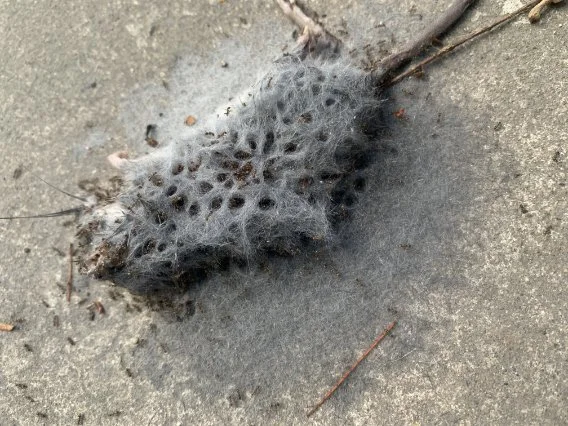
Ashes to Ashes (An Intimate Decay): My most vivid lesson in slow decay came unexpectedly, on a much smaller stage. One summer, I discovered a little memento mori in my driveway: a tiny mouse had died. Rather than immediately removing it, I felt oddly compelled to observe nature’s cleanup crew at work. Over the next several days, I quietly checked on the mouse’s remains. And what I witnessed was both grotesque and mesmerizing. A battalion of industrious ants had discovered the mouse and set about their methodical disassembly. Each day, the form of the mouse grew a bit more indistinct. The ants swarmed in and out, clipping away hairs and carrying off microscopic bits of flesh. Under the hot sun, the body slowly desiccated. I watched as decay turned what was once a recognizable little creature into a flattened patch of fur, then into a barely perceptible scattering of bones. By the end of a couple of weeks, there was almost nothing left at all. It felt somber, yes, but also strangely peaceful. The speed (or rather slowness) of the decay gave me time to make my peace with it and really think about mortality and nature. Each phase was like a natural art installation: the initial stillness of death, the gradual breakdown, the return of nutrients to the cycle of life. It struck me that this was subtractive slow art playing out in my own frontyard. Nature’s performance of removal and renewal. I hadn’t intervened; I simply bore witness to time and tiny insects doing their work. And in the end, the mouse became a part of the ecosystem again, fueling the humble worker ants and their queen. That scene made me reflect on larger cycles of decay around me: the peeling paint on our house trimmings, the way an unused garden bed gets overtaken by wildflowers and weeds, the house at the bottom of the water tower hill being slowly being draped in vines. What hidden beauty might lie in the slow breakdown of things? We often rush to tidy up, to renovate, to discard decaying stuff. But if you pause, you may see that a falling-apart old shack hosts an ecosystem of moss and bees, or that a fallen log is teeming with mushrooms. In your own life, is there a place or object aging quietly that you can appreciate rather than hurriedly “fix”? Sometimes, to find new growth, we need only step back and let time and decay do the sculpting.