IV. Mannequins in the Human Imagination: Companionship and Projection
Beyond their physical presence in the material world, mannequins and mannequin-like figures occupy a distinctive place in storytelling. The examples I am interested in usually cover loneliness, through their exploration of identity, empathy, and the human inclination to project emotions onto non-human objects. In narratives across film and television, mannequins become poignant symbols, embodying humanity’s deep-seated desire for companionship and understanding.
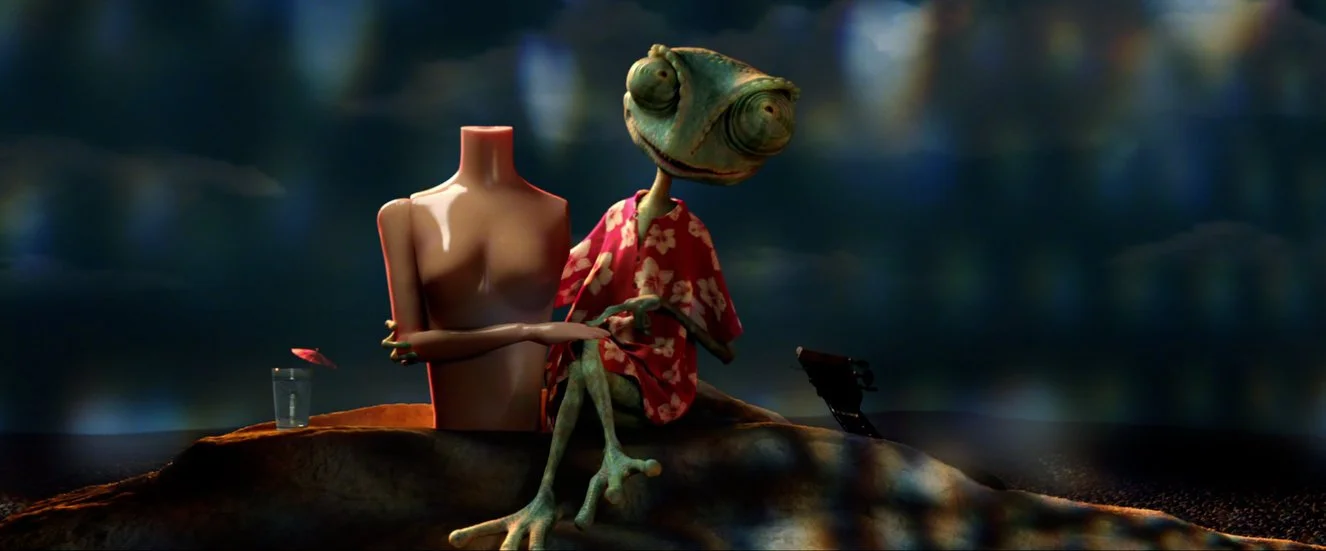
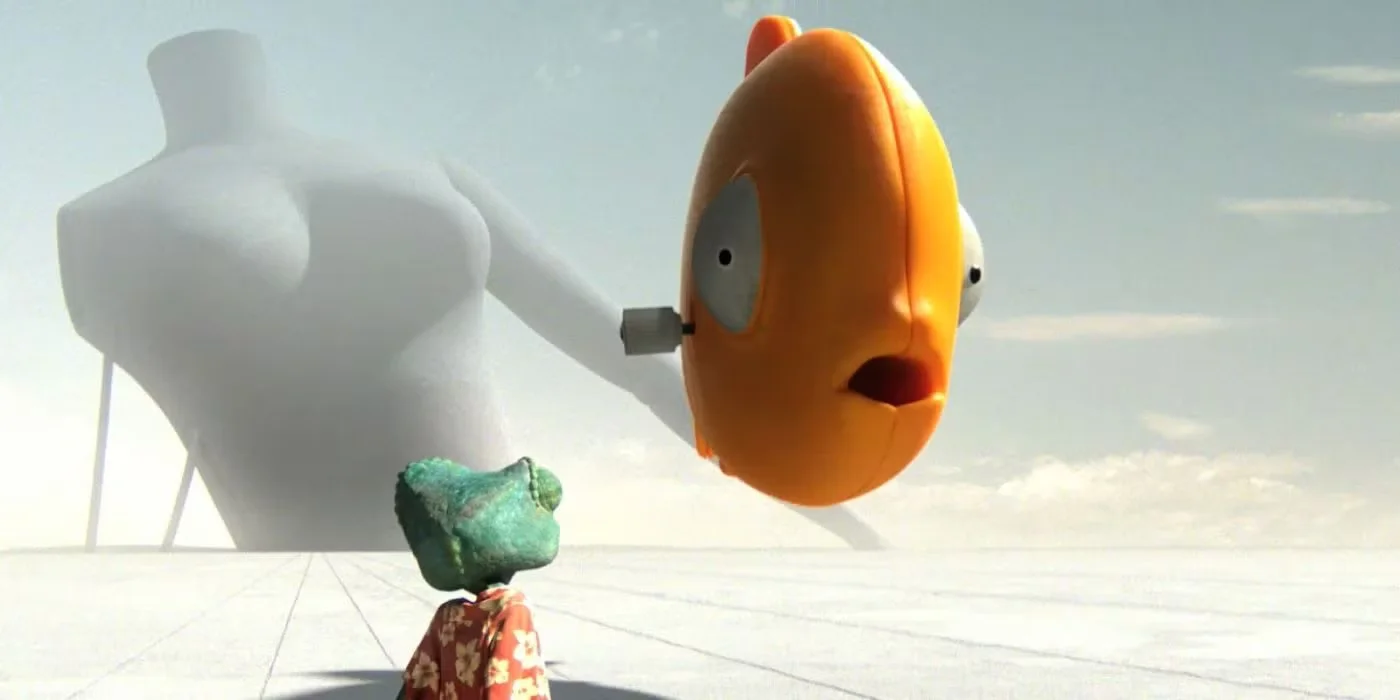
In the animated film Rango (2011), the opening scene is both comical and deeply revealing. The protagonist, a pet chameleon voiced by Johnny Depp, is depicted alone in his terrarium, meticulously enacting an elaborate play with a motley crew of inanimate co-stars. Among these is a headless mannequin torso, dressed in a Hawaiian shirt, alongside a toy fish, a dead insect, and even a tree. Rango has assigned names and personalities to these objects, engaging in dramatic dialogues with them as a means of staving off solitude. This absurd tableau serves as a direct window into Rango’s mental state: he is profoundly lonely and grappling with an identity crisis, embodying the chameleon's literal and metaphorical struggle with the question, "Who am I?" In the absence of genuine companionship, he projects an entire narrative onto his surroundings, treating these objects as real characters. The mannequin and other props become tools for him to construct a story and avoid confronting his isolation. The film cleverly uses this device to set up Rango’s subsequent journey, where he must abandon his play-acting with fabricated friends to discover an authentic sense of self in the real world. The opening scene with the mannequin is memorable because it exaggerates a relatable coping mechanism—the creation of imaginary friends or talking to objects when lonely— underscoring a universal human anxiety about identity and isolation. The mannequin endures in Rango’s imagination until he finds genuine social connection, illustrating how the mind can confer life and personality onto the non-living when interaction is desperately needed.
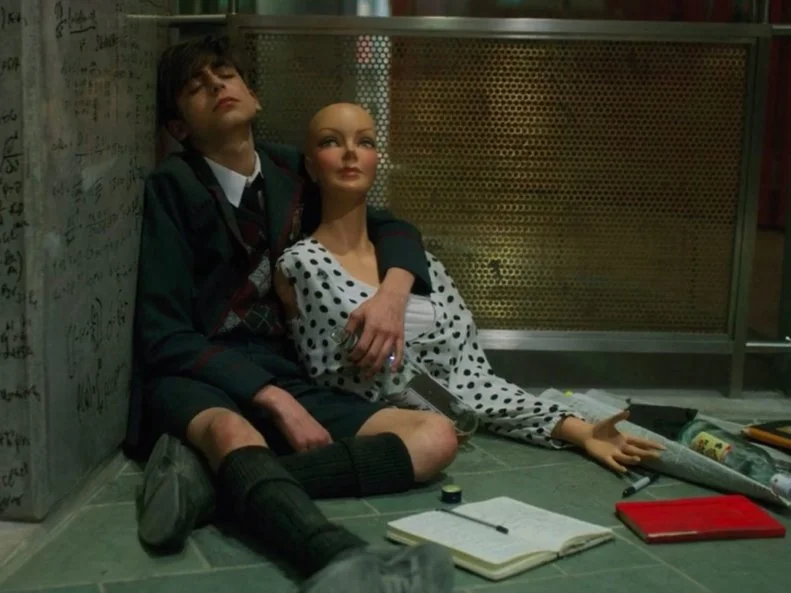
Building on this concept of companionship as a psychological anchor, I recall the Netflix series The Umbrella Academy (2019) takes it further by exploring empathy and personal validation through the character Number Five and his beloved mannequin, Dolores. When a time traveller accidentally becomes stranded in a desolate, post-apocalyptic future, Five develops a profound bond with Dolores, who becomes essential for his emotional survival. Crucially, this narrative emphasizes Five’s profound empathy toward Dolores, showing his fierce rejection of others’ dismissive attitudes. Dolores isn’t merely a coping mechanism; she symbolizes personal dignity, emotional sincerity, and the human drive to affirm one's emotional realities, even when others perceive them as absurd. Dolores remains deeply significant to Five even after his return to human society, underscoring the depth of his emotional investment and highlighting the empathetic respect humans can project onto even inanimate beings.
Speaking of emotional attachment, the film Cast Away (2000) introduces Wilson, a volleyball serving as a minimalist “mannequin-like” figure that the protagonist, Chuck Noland, anthropomorphizes during years of isolation on an island. Unlike the internalized narratives in Rango or the empathetic insistence in The Umbrella Academy, Wilson uniquely moves the audience and the storytelling begs emotional projection. Viewers come to share Chuck’s profound attachment to Wilson, demonstrating how easily human empathy can extend beyond characters to encompass their surrogate companions. The heartbreaking loss of Wilson resonates with audiences, many shedding a tear at the movie’s emotional climax. Wilson’s cultural significance underlines how deeply viewers can identify with and emotionally invest in objects representing companionship.
Through these progressively nuanced narratives (Rango’s personal identity crisis, Five’s empathetic defense of Dolores, and the audience’s emotional attachment to Wilson) a comprehensive depiction emerges of mannequins as more than mere objects. They are mirrors reflecting human vulnerability, vessels for profound empathy, and symbols of our universal need for emotional connection and imagination’s remarkable ability to bring life and meaning to emptiness.