… / / 1. Anti Group Tendencies
katsumimaki.com
General
  • Home
  • About
  • Start Here
Topics
  • Newsletters
    • Fanmade
      • Anti Group Tendencies
        • Page 1
        • Life as an “Anti-Group”
        • Afterword
      • Burnout
        • Page 1
        • Afterword
      • Empathy
        • Page 1
        • Afterword
      • Friendswithyou
        • Origins in Miami: Seeds of a Playful Universe (2002–2004)
        • Building a World of Play: Interactive Installations (2005–2009)
        • Rainbow City: Exploding onto the Global Stage (2010–2012)
        • Animism, Art, and “Happy Virus”: A Philosophy of Play
        • Collaborations and Pop Culture Crossovers (2013–2017)
        • Post-Internet Explorations: From Virtual Worlds to NFTs (2015–2022)
        • Conclusion: Pop Spiritualists in a Connected Era
      • From Dada Collages To Ai Art
        • Introduction and Personal Motivation
        • Dadaism: Collage and the Original “Anti-Art” Movement
        • AI-Generated Art: Algorithms as the New Collage
        • Comparing Dadaism and “AI-Artism”
        • Modality and Technique: Collage vs. Computation
        • Origins and Intentions: Art Movement vs. Tech Innovation
        • Reception and Cultural Impact: Anti-Art Manifesto vs. Existential Disruption
        • Outcomes and Future Trajectories: Lessons from Dada for AI Art
        • Conclusion: Art, AI, and Accessibility – A Personal Reflection
      • Lights Sound Printing
        • Page 1
        • Lighting: High Color Fidelity vs. Spectral Restriction
        • Audio: Theatre Mic Techniques for a Hybrid D&D Game
        • Digital Fabrication: From Desktop 3D Printing to Stage-Size Scenery
        • Conclusion: Personal Reflections on Tech in Theatre
      • Littlespaces
        • Overalls and Feeling Small
        • Voluntary vs. Involuntary Age Regression
        • Stress, Comfort, and Little Space
        • Age Regression vs. Age Play
        • The ABDL Identity and Spectrum
        • Community Norms, Safety, and Stigma
        • Unpacking Misconceptions
        • Afterword
      • Monoline
        • Origins, Purpose, and Brief History
        • Shel Silverstein’s Expressive Monoline Style
        • From Viral Outlines to Indie Cartoons: Monoline’s Digital Revival
        • Bridging Traditional and Digital: Community Art and Personal Practice
        • The Commercial and Algorithmic Appeal of Monoline
        • Communities and Culture: Constraints as a Creative Identity
        • Conclusion and Personal Reflections
        • Afterword
      • Never Have I Ever: Kinks
        • About Me
        • Aromantic Asexual Autonomy
        • A Space for Kink Exploration: Trials in Tainted Space
        • Consent and Customization in a Kinky Universe
        • From Kink Exploration to Relational Ethics
        • Doe Steele: The Trials in Tainted Space
        • Opening Up on Mhen’ga: Amber Changes the Game
        • Crew as Community
        • Relationship Anarchy Among the Stars
        • Afterword
      • Ps1lowpoly
        • Page 1
        • Early Low-Poly 3D: Console Limitations Shaping an Aesthetic
        • From Quirk to Art Form: Low-Poly Revival and Nostalgia
        • Modern Low-Poly in Contemporary Media and Art
        • Super Mario 64
        • Indie Animators and Series
        • Comedy Skits and Memes
        • Cozy vs. Creepy
        • Interview with an Appreciator
        • Conclusion
        • Afterword Fave (Interviewee)
      • Saved My Life
        • My Relationship With Food
        • My Trip to the Hospital
        • What My Journey Looks Like Now
        • Re-Learning My Purpose
        • Afterword
      • Slowart
        • Additive
        • Subtractive (Decay)
        • Performative
        • Slow-Change (Growth)
        • Latent Activation
        • Pilgrimage
        • Witnessing
        • Conclusion: Embracing the Art of Slow Moments
      • The Life Death And Afterlife Of Mannequins
        • I. The Enduring Allure of Mannequins
        • II. The Material and Historical Trajectory of Mannequins
        • Evolution from Functional Forms to Lifelike Figures
        • The Fiberglass Revolution: Durability and Mass Production
        • III. Mannequins as Cultural Artifacts: From Discarded to Desired
        • The Paradox of Invisibility and Persistent Presence
        • Sustainable Second Lives: The Mannequin Madness Model (Judi Henderson)
        • Table 2: Case Studies of Mannequin Reuse
        • The Uncanny Valley: Mannakin Hall as Experiential Art (Roz Edwards)
        • IV. Mannequins in the Human Imagination: Companionship and Projection
        • V. Reflections on Mannequin Endurance: A Personal Synthesis
      • Valentine
        • Page 1
        • A Sweet Gesture After Lockdown
        • Yearning vs. Attraction
        • Thought Experiments with a Safety Net
        • The Fun of Shipping (Even for the Aro-Ace Crowd)
        • Conclusion: Choose Your Own Valentine
    • Original
      • 2024-09 September
      • 2024-10 October
      • 2024-11 November
      • 2024-12 December
      • 2025-01 January
      • 2025-02 February
      • 2025-03 March
      • 2025-04 April
      • 2025-05 May
      • 2025-06 June
      • 2025-07 July
      • 2025-08 August
      • 2025-10 October
      • 2025-11 November
      • 2025-12 December
      • 2026-01 January
      • 2026-02 February
      • 2026-03 March
  • Stories
    • Fanmade
      • Daggerheart
        • CiCi
          • Page 1
          • Page 2
      • Dnd
        • Azurion Nightfall
          • Page 1
        • Little
          • Page 1
      • History
        • Prahlada and Malala
          • Page 1
          • Page 2
          • Page 3
          • Page 4
          • Page 5
          • Page 6
          • Page 7
          • Page 8
          • Page 9
          • Page 10
      • My Little Pony
        • Stellar Redux
          • Page 1
          • Page 2
          • Page 3
          • Page 4
      • Pathfinder
        • Occupation on Vesk 3
          • Page 1
          • Page 2
          • Page 3
          • Page 4
      • Satisfactory
        • Everroot
          • Page 1
        • Reaper and ADA
          • Chapter 1
          • Chapter 2
          • Chapter 3
          • Chapter 4
          • Chapter 5
          • Chapter 6
          • Chapter 7
          • Chapter 8
      • Star Trek
        • USS Mesa
          • Page 1
          • Page 2
          • Page 3
      • Star Wars
        • Protocols and Princesses
          • Page 1
        • Shakka'Dira
          • Page 1
          • Page 2
          • Page 3
          • Page 4
          • Page 5
          • Page 6
          • Page 7
          • Page 8
          • Page 9
      • Trolls
        • Rave and Relaxation
          • Page 1
    • Original
      • Neon Fairy Lights
        • Main Story
          • Page 1
          • Page 2
          • Page 3
          • Page 4
          • Page 5
          • Page 6
          • Page 7
          • Page 8
          • Page 9
          • Page 10
          • Page 11
          • Page 12
          • Page 13
          • Page 14
          • Page 15
      • Northern Lights
        • Main Story
          • Page 1
          • Page 2
          • Page 3
          • Page 4
          • Page 5
          • Page 6
      • Virtual World
        • Commands
          • 01 Bash
          • 02 Cat
          • 03 Ping
          • 04 Mint
          • 05 Vi
          • 06 Echo
          • 07 Dig
          • 08 Tar
          • 09 Sudo
          • 10 Kali
          • 11 Nano
          • 12 RPM
          • 13 Tail
          • 14 Grep
          • 15 Cron
          • 16 Alma
          • 17 Shell
          • 18 Yaml
          • 19 Sed
          • 20 Curl
        • Five Stories
          • 01 Cautious 01
          • 02 Desperate 01
          • 03 Fading 01
          • 04 Cautious 02
          • 05 Indifferent 01
          • 06 Gentle 01
          • 07 Cautious 03
          • 08 Desperate 02
          • 09 Fading 02
          • 10 Cautious 04
          • 11 Indifferent 02
          • 12 Gentle 02
          • 13 Cautious 05
          • 14 Desperate 03
          • 15 Fading 03
          • 16 Cautious 06
          • 17 Indifferent 03
          • 18 Gentle 03
          • 19 Cautious 07
          • 20 Desperate 04
          • 21 Fading 04
          • 22 Cautious 08
          • 23 Indifferent 04
          • 24 Gentle 04
          • 25 Cautious 09
          • 26 Desperate 05
          • 27 Fading 05
          • 28 Cautious 10
          • 29 Indifferent 05
          • 30 Gentle 05
          • 31 Cautious 11
          • 32 Desperate 06
          • 33 Fading 06
          • 34 Cautious 12
          • 35 Indifferent 06
          • 36 Gentle 06
        • Main Story
          • Page 1
          • Page 2
          • Page 3
          • Page 4
          • Page 5
          • Page 6
          • Page 7

Page 1

I’ve spent my whole life as the one who stands just outside the circle. As a teenager, I remember innocently joining a round of “Never Have I Ever” at a party, only to feel painfully spotlighted by the game. What was lighthearted fun for others became, for me, a minefield of othering, seemingly designed to single out anyone deviant from the norm. While peers bonded over shared wild anecdotes, I sat there feeling alienated and cornered, expected either to play along or be marked as the odd one out. In those moments, something visceral in me refused to surrender. If someone tried to nudge me into the group’s flow “Come on, just say it, just do it!” every fiber of my being answered with a stubborn no. I often literally crossed my arms and fell silent rather than raise a hand or take a drink under pressure. This pattern repeated itself everywhere: in Truth or Dare games (I always chose truth, because dares meant handing over my agency), and later, in romantic relationships (where I bristled at the unspoken “scripts” I was suddenly expected to follow). To others, I’m sure I often appeared a stick-in-the-mud. But I knew that something deeper was at stake each time I was pushed: my autonomy.

Daisy, a character of mine, holding an asexual flag, wearing a black ring on her middle finger and white ring on the other middle finger, signifying asexual and aromantic, respectively.

Looking back now, I recognize this lifelong pattern of gentle (and sometimes not-so-gentle) defiance as a core part of who I am. I have a superpower for resisting group influence. It’s almost reflexive, a psychological armor that formed over years of feeling pressured or out-of-place in group settings. In fact, psychologists have a term for the reflex that fires in me: psychological reactance, which is essentially “a reflex reaction to being told what to do, or feeling that your freedom is under threat.” When someone pushes you too hard, instead of complying, you become less inclined to do what they ask. That definition captures my experience perfectly. From childhood onward, the more a group tried to absorb me, the more my identity rebelled. I developed a nearly visceral need for autonomy in what I do. This need eventually permeated every aspect of my life. Even (or especially) domains where intimacy and social expectation are the norm. The very same forces that made that party game so distressing, like peer pressure and the demand to conform, later underlay my lifelong friction with traditional romantic relationships, as I discovered when I kept balking at the arbitrary “rules” of dating. I simply could not accept doing things just because “that’s what couples do.” If a romantic partner said we had to hold hands in public or use cutesy nicknames “just because we’re dating,” my instinct was to not do it, almost on principle. It wasn’t spite; it was that same internal guardian rising up to say “No one gets to script your behavior but you.” Of course, behaving this way in a relationship often created conflict. More than one ended toxicly, as you might imagine. At the time I didn’t fully understand why I reacted so strongly. I often wondered, “What’s wrong with me? Why can’t I just go with the flow like everyone else?” It took years to find the answers. In my twenties I finally stumbled upon vocabulary that made everything click: aromantic and asexual. Discovering these identities was a revelation. I learned that I wasn’t broken after all, I was simply part of a community that experiences attraction and relationships very differently. As I read others’ stories, I realized my aversion to prescribed romantic scripts wasn’t a personal failing; it was a trait I shared with many aro-ace folks who value unconventional forms of connection. Finding the labels aromantic and asexual, and the supportive community around them, was lifesaving: it made me realize I was not broken… just different. Along with that realization came a powerful affirmation of the value I had been defending all along: autonomy.

I have always been careful in my relationships, especially around emotional closeness, because I am sensitive to how quickly expectations can form. Even before I had the language to explain it, I understood that it was not fair or healthy to try to control how others act, and I tried to avoid doing that. At the same time, I was very clear about what I did not want for myself. I’ll say it clearly, I am personally disengaged with the idea of polyamory. Being invited into that kind of structure feels wrong in my body, not just in my head. Even when I cared deeply about two people as individuals and liked each relationship on its own, the idea of a group dynamic in an intimate relationship felt like a loss of self rather than a gain of anything else.

This became painfully clear during a boundary violation that had a lasting impact on me. I had explicitly said that I did not want two of my friends to kiss each other inside my home. Yes, I know now that consent isn’t really about controlling other’s actions with anyone else. But I felt like I had a safe place at my house, somewhere I do not want to be surprised by situations that trigger anxiety or insecurity. We had that conversation on purpose, so when the boundary was crossed, I felt betrayed. Still, the emotional damage remains, especially because of the context. I was cuddling with each of them in a space that felt happy and safe, and that moment was suddenly overwhelmed by insecurities about being asexual, aromantic, and deeply uncomfortable with throuples. What stayed with me was a strong need to re-establish myself as my own person. That experience reinforced my tendency to resist group emotional dynamics and to protect my individuality when I feel it is at risk.

Yet as strongly as I cling to personal autonomy, I’m also academically fascinated by the human pull of group identity and even as far as radicalization. Perhaps because I’ve always stood at the edge of the crowd, I can’t help but wonder what it’s like in the center to be so fused with a group or cause that it defines you. In a sense, radicalization and my anti-group autonomy are two sides of the same coin, each an extreme answer to some fundamental psychological needs. This paper is a personal exploration of those two paths. I’ll weave together my own experiences (from troubled party games to intellectual rabbit-holes) with broader reflections on psychology. I’ll also draw connections to some unlikely sources, including a boy-band called Boy Throb, to illustrate how performance, identity, and human needs play out in both radical group contexts and in an “autonomous self” like me. My journey may seem far removed from the likes of extremists and cult followers, but as I’ll show, we’re motivated by some of the same needs; we just take radically different routes to meet them. Identity-Fusion vs. Identity-Rebellion So, what exactly do I mean by radicalization and by the autonomous anti-group stance? At the simplest level, radicalization is the process by which a person becomes so tightly bonded with a group and its ideology that the group’s identity effectively consumes their own. Psychologists sometimes call this identity fusion. The individual’s self and the group’s cause fuse together, often to a point where the person will do anything for the group (even commit violence or self-sacrifice) because the group’s fate feels like their own. We usually discuss radicalization in contexts like religious extremism or political terrorism, but in truth it’s a spectrum that can include milder forms (think of ultra-fanatical sports fans or die-hard political partisans). The common thread is that the group becomes the person’s primary source of meaning and identity.

It’s easy to assume people are “brainwashed” into such extreme group alignment purely by ideology, by believing the content of some radical doctrine. But research suggests ideology is often secondary. In many cases, people latch onto extremist groups not just because of what they think, but because of what they need. Participation in violent extremism is better understood as driven by a need for identity and belonging than by doctrine alone. A radical group offers a powerful promise: “You feel lost? Join us and you’ll belong. You feel insignificant? Our cause will make you important.” Social bonds often pull people in before any ideology does. Only after someone is embedded in a tight-knit group of comrades do they fully adopt the beliefs… By then, the social connection has hooked them. In short, radicalization is largely a social process. It’s what happens when the basic human hunger for belonging, meaning, identity, even adventure and catharsis, finds an answer in an all-encompassing group. The result is a kind of identity alchemy: my self merges with our cause.

On the flip side is what I call the “anti-group” stance, exemplified (extremely) by my younger self. If the radicalized person resolves the tension of “who am I and where do I belong?” by merging with a group, the anti-group person resolves it by refusing to merge with anyone. It is identity-fusion in reverse. An identity rebellion. Instead of absorbing external ideals, I reflexively reject them if they even smell like they’ll override my agency. I could describe it as carrying an internal compass so strong that I’d sooner walk alone in the wilderness than let someone else yank the needle around. To someone highly group-oriented, that might sound lonely, or even pathological. Indeed, taken to an extreme, an anti-group mentality can be maladaptive (alienating potential friends or partners, breeding isolation). But for me, this stance wasn’t born from a lack of social needs; it was born from the protection of them. I learned early that groups could hurt me, exclude me, or demand from me what I wasn’t willing to give. My fierce independence is, in large part, a scar (and also a shield) from those experiences.

The boy band, Boy Throb, against a green screen cloud background with a foam number 1 hand in the right corner. The music video is called Finger.

One way to understand the anti-group mindset is through the lens of that psychological reactance I mentioned. When I perceive an attempt to control me or subsume me into the collective, a red alert goes off in my mind: “Warning: your freedom is under threat!” The result is that I push back, hard. I do the opposite of what’s expected, or I disengage entirely, purely to regain my sense of self-determination. It’s basically an allergic reaction to pressure. This is a documented psychological phenomenon: when your autonomy is threatened, you may feel an urge to rebel… simply because it has been mandated. If a group’s going one way, my mind instinctively swivels 180 degrees. As a teen I even cultivated a bit of pride in being the contrarian. If the teacher brought up a concept, I’d intentionally play the devil’s advocate. If my friends all joined a new social app, I’d stubbornly abstain (at least for as long as I could get by without). It wasn’t that I thought I was better than them; it was a knee-jerk strategy to avoid the risk of groupthink taking root in me. I was terrified (on a subconscious level) of what might happen if I did just go along. I couldn’t articulate it then, but now I see clearly: I feared losing myself… Losing my values, my unusual interests, my sense of control.

Crucially, the anti-group stance isn’t about lacking social or psychological needs. I still have the same fundamental needs everyone does (more on those soon). The difference lies in strategy: I seek to fulfill those needs without surrendering my individuality, whereas a joiner or “radical” type might fulfill them through unity with others. In effect, I’ve tried to become a self-sufficient island for everything that a group might otherwise provide. If a radicalized peer says, “I know who I am because I’m part of something,” I counter with, “I know who I am because I stand apart.” One is an external route to identity; the other, an internal route. One involves obedience to a larger blueprint; the other, an almost obsessive self-determination.

Let me illustrate this contrast with a concrete (if whimsical) example. Now, I don’t use or watch Tik Tok (I’ll even resist looking at people’s screens in public if they are on it or attempting to show me something). It’s apart of my Anti-Group tendencies (but much more on that later). However, a video made its way over to me on YouTube, a music video called “Finger” and a video essay about the band. So recently, I became engrossed in the online saga of Boy Throb, a parody-turned-real (were they even a parody to begin with?) boy band that went viral in spectacular fashion. Their story struck me as a funhouse-mirror reflection of these two paths. Here were four young men who deliberately authored an outrageous group persona: they donned matching salmon-pink tracksuits and declared themselves “the world’s next biggest boy band” on TikTok, straight-faced and brimming with over-the-top confidence. In their very first video, Boy Throb announced a mission to get their fourth member (stuck overseas) a U.S. visa by racking up one million followers. It was a performance for the ages: part genuine hustle, part satire, all presented with such earnest self-belief that viewers couldn’t tell where the joke ended and the real passion began. And you know what? It worked. Fans flocked to them. Boy Throb’s online rise was meteoric, they hit that million-follower goal in a matter of weeks, essentially gunning from 0 to 1,000,000 at a sprint. The fandom even gave themselves a name (“the Throb Mob”) and rallied around the band’s every post and goofy storyline twist. In other words, Boy Throb managed to manufacture, out of thin air, a group identity that people wanted to be part of. They created a little radicalization sandbox (albeit a benign and humorous one): a cause (help Darshan get a visa!), a shared identity (we’re Throbbers!), an us-vs-world narrative (eccentric underdog boy band vs. the doubting public), and charismatic leadership (the band members themselves setting goals and calling on fans for help). Observing this as an outsider was fascinating. I found myself emotionally invested, even moved, by what started as a tongue-in-cheek enterprise. At one point I was watching the video essay about their journey and realized I had tears in my eyes, the way you might when a scrappy group of friends finally “make it.” I had to laugh at myself: I, the consummate skeptic of group endeavors, was crying over a boy band!

Boy Throb’s case also highlighted something important: the role of satire and self-awareness. The band was self-created and self-aware. They knew they were ridiculous and leaned into it, but they also clearly cared about their project. Boy Throb knows they’re being funny... but in the end, they’re not just a joke; they’re a bunch of guys who came together to make their dreams come true as a team. In a way, Boy Throb exemplified intense self-authorship: they wrote a narrative for themselves (half-comedy, half-destiny) and then lived it with utter conviction. I realized that this is something I deeply respect and even emulate in my own way. My anti-group stance doesn’t mean I lack ambition or mission; it means I script those missions for myself rather than signing onto someone else’s. I, too, often cloak serious personal aims in humor or creativity. For instance, I’ve turned deeply personal explorations (like researching human sexuality, which I’ll discuss later) into a kind of playful intellectual performance, much like Boy Throb turned their ambitions into a flamboyant show. The common denominator is agency: being the author of one’s story. Boy Throb could laugh at themselves and still earnestly declare, “We’re going to win a Grammy,” in one breath. That paradox of sincere absurdity resonated with me. It’s how I feel about my own life sometimes: I refuse to take part in society’s pre-written scripts, yet I’m writing my own script with equal parts sincerity and irony.
Boy Throb writing a tandem bicycle with the fourth member, Darshan, on a telepromper to join them remotely.

In summary, radicalization and the anti-group mindset are both about identity, but one achieves it through fusion and the other through refusal. One says, “Find yourself in others,” the other says, “Find yourself despite others.” Neither is a random quirk; both arise from deeply human motivations. To understand those, let’s dig into the psychological needs that drive people toward groups, and how someone like me tries to meet those same needs outside of groups. Shared Psychological Needs Why do people join fervent groups or movements? And why, conversely, might someone like me instinctively avoid them? On the surface those seem like opposite behaviors, but I’ve come to realize they originate from the same set of human psychological needs. We all, to some extent, crave: belonging, meaning (or purpose), a stable identity, structure and clarity, emotional catharsis, and even leadership (guidance or mentorship). The radical joiner and the autonomous loner just have opposite strategies for fulfilling these universal needs.

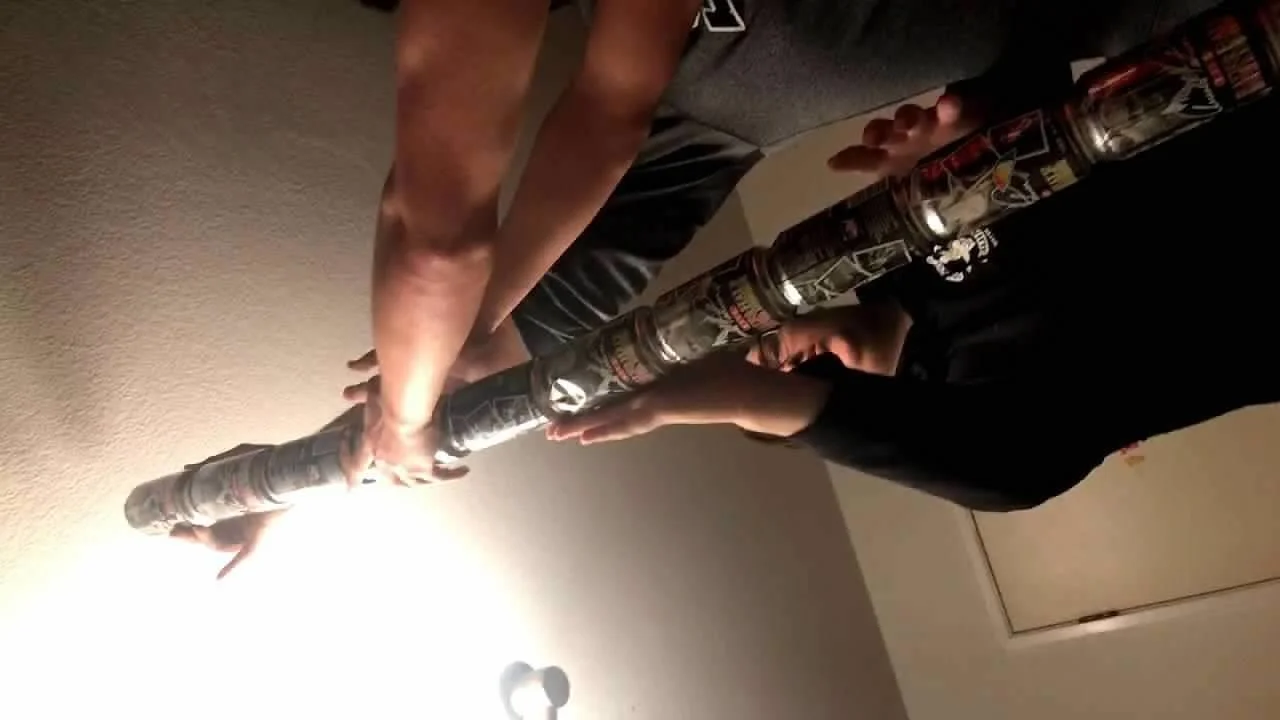
My tribe of oddballs holding a stack of Arizona ice tea cans from the floor to the ceiling.

Belonging & Community: Humans are social creatures; feeling part of a group or “tribe” is a fundamental need. A radicalized individual often finds intense belonging in their chosen group, be it a religious sect, an activist cell, or an internet fandom. That group becomes a family. They’ll use language of kinship: brothers-in-arms, sisterhood, comrade. For example, fans of Boy Throb proudly called themselves “Throbbers” and the “Throb Mob,” reveling in a communal identity. Commenters on their videos weren’t just watching passively; they were rooting for Darshan like he was one of their own, celebrating milestones together. One could say Boy Throb was “building a family” out of its fanbase and members, and indeed one band member explicitly said “we’re building a family” when their follower count exploded. In extremist contexts, this belonging is even more intense: marginalized youth might join a gang or militant group and for the first time feel they have brothers who’d die for them. Now contrast that with me… An anti-group soul. Do I not need belonging? Of course I do; I’m just extremely wary of the costs that often come with it. I’ve sought belonging in more individualized ways. My “tribe,” if I have one, is made up of a few close friends and fellow oddballs who each respect the other’s autonomy. It’s a tiny, loosely knit tribe. Interestingly, finding the aro-ace community online was a moment of profound belonging for me, a safe belonging where simply existing as myself was enough, with no extra demands. It made me realize I was not broken and that there were others like me. That sense of belonging didn’t require me to change myself; it was about being understood. This is key: anti-group individuals often seek out (or accidentally stumble into) “communities of individuals” or groups whose very ethos is respecting each member’s uniqueness. I found refuge in a community that says “you don’t have to play the standard romance game to belong here.” So in a funny way, even I satisfied the need for belonging through a kind of group, but one that aligns with my autonomous values. That said, I still largely experience belonging on a one-to-one level (deep friendships) or in being part of humanity in a broad sense, rather than identifying with tight-knit teams. The hunger for belonging is there, but I feed it with careful bites, wary of being swallowed whole.

Meaning & Purpose: Almost everyone wants to feel their life has meaning, that they’re contributing to something important. Radical groups often offer an off-the-shelf grand purpose. Join the jihad and you’re fighting a holy war to purify the world; join this revolutionary party and you’re part of a historic struggle for justice; become a Boy Throb fan and your mission is to help a friend reunite and see a dream through. Ok, the last one wasn’t a radical group. But, these causes will energize people. Research on extremism notes that members often experience newfound feelings of empowerment, efficacy, and sense of purpose once they’ve fused with the group. Purpose is a powerful drug. It can erase ennui, depression, and uncertainty. I have rarely walked the path of ready-made purpose; I’ve consistently turned away from political conversations, engaged in fandoms in my own ways, and chose my path differently than my two older brothers. But my need for meaning is just as strong. So what do I do? I craft meaning in highly personal ways. I pour myself into deep intellectual and creative projects that give me a sense of mission. In the absence of people telling me what my purpose is, I’ve had to declare my own. For instance, I once spent months writing a long, introspective “research memoir” about human sexuality. It became a mission of understanding, a quest that pulled me out of bed eagerly each morning. No one gave me this mission; it was entirely self-directed, but it provided a similar sense of contribution: I was creating something that might help or enlighten others. Even this very essay, in a way, is me finding purpose by sharing a perspective I think might matter. The difference is, I choose these purposes freely and can drop them if they cease to resonate. A radicalized person often feels they can’t quit; their purpose is tied to the group’s survival or a prophecy’s fulfillment. My purposes are tied to my evolving interests and values. And admittedly, sometimes I envy the clarity my radical counterparts get: it must be nice to have a 100% certainty that “This is the cause I must serve.” I’ve never had that handed to me; I live in a haze of self-chosen meanings, always questioning. But I prefer self-directed meaning over an imposed one, even if it’s fuzzier. One of the reasons I was so captivated by Boy Throb’s saga was because it illustrated how powerful a narrative purpose can be. Their mission (however tongue-in-cheek on the surface) galvanized not only themselves but thousands of strangers; it created instant meaning in those people’s daily scrolling: “Today I’m going to help these dudes bring their friend home.” That’s beautiful, even if done in a lighthearted way. It reminded me that humans can make almost anything meaningful with the right story. I do the same, just on a very individual scale; I make meaning out of personal stories rather than collective ones.

The first time I realized I was unique was finding my interest in My Little Pony, where I was not the target audience! But the story (the meaning) connected with me.

Identity & Self-Definition: “Who am I?” is one of the most fundamental questions we ever grapple with. Joining a group (especially one with a strong ideology) can provide a very clear answer to that. A recruit goes from being a drifting individual to “I am a warrior of X,” “I am a child of this Church,” “I am a proud Throbber fan of Boy Throb.” The group identity often overwrites or simplifies the personal identity. Notably, extremists often adopt new names, uniforms, even language… All symbols of their new self. This identity fusion not only answers “who am I” but often comes with a sense of worth: “I am valuable because I am one of the chosen (or one of the righteous, or one of the freedom fighters).” For someone who felt insignificant or lost before, that could be deeply validating. For me, identity has always been a do-it-yourself project. Rather than accept a premade identity, I’ve layered together my own from scratch: I am a writer, an independent thinker, an aro-ace quirky soul, a nerdy explorer of weird ideas, and so on. I won’t lie; sometimes DIY identity is exhausting. There’s no single flag I can wave that everyone else understands. Even the labels I do claim (like asexual) are misunderstood by most people, so they don’t automatically grant me acceptance or pride in broader society. But the flip side is, my identity is fully mine. It’s like a patchwork jacket I’ve sewn over the years, with each patch an experience or value I chose to incorporate. I guard it jealously. If someone tries to stick a foreign patch on it, I’ll peel it right off. I suspect this is why I react so strongly to things like forced activities or relationship labels, it feels like someone trying to write on my jacket without permission. On a more positive note, the identity I’ve built for myself has become a fortress I can retreat to. I have a strong sense of internal identity (some might call it a strong individual self-concept). It allows me to be okay being different. I don’t mind being the only one in a room not drinking or not playing a party game, because being “the abstainer” is actually part of who I am. I’ve owned it. You could say I’ve radicalized around my own autonomy. My identity is fused not with a group, but with the very idea of staying an independent self. In both cases (the extremist and me), identity brings comfort and direction. It’s just that one person finds identity by melding with others, and the other finds it by sharpening their uniqueness. Both are responding to that human need to say “This is me” and feel at peace with it.

Structure & Certainty: Life is confusing and chaotic. Many people gravitate to groups or ideologies because they provide structure, rules, and clear answers. Fundamentalist movements are a prime example. They turn the grey ambiguity of life into black-and-white clarity. There’s often a strict code of conduct, a schedule, a hierarchy, a doctrine that explains everything. This structure can be incredibly reassuring. One theory, uncertainty-identity theory, suggests that when people feel uncertain about their place in the world, they’re more likely to join extreme groups that mitigate uncertainty… to gain a reassuring sense of certainty and clarity. In a militant cult, you don’t have to figure out right and wrong… It’s all laid out for you. There’s a certain relief in outsourcing your decision-making to a higher authority or a clear rulebook. Now consider the anti-group person: we don’t get an off-the-shelf rulebook. We tend to reject external structure (sometimes to our detriment). But that doesn’t mean we thrive in chaos. What I’ve noticed in myself is that I create internal structures to compensate. I won’t follow society’s schedule for when to marry or how to socialize, but I’ll develop my own consistent principles to live by. For example, I developed a very firm personal ethic around consent and boundaries (partly as a reaction to past pressures). It’s almost a private religion. I have rules like: “Never agree to something major when under peer pressure; step away and decide alone.” Or: “Any interaction, even small, must have ongoing mutual consent, or I’m out.” These rules provide structure to my relationships and choices. They might seem overly strict to others, but they give me clarity and safety. In essence, I’ve built a structure of one. In my case, when I felt adrift, I imposed structure on myself: I schedule personal projects, I set goals and milestones that matter only to me. During a time when I struggled with understanding intimacy, I embarked on a “research project” and played an adult game to better understand human sexuality. It sounds strange (and it was, in a beautifully human way), but it gave me a sense of purpose.

Catharsis & Emotional Outlet: Human beings have anger, passion, grief. They have big emotions that need a place to be let out. Groups, especially radical or high-intensity ones, often provide a channel for that. Think of a political rally where everyone is shouting slogans and pumping fists. It’s a cathartic group release of frustration. Some extremist groups actually stoke the anger of their members intentionally, then direct it at a target (an out-group or enemy), giving members a sense of relieved aggression: “It’s not just you; we’re all furious, and we can lash out together.” This can be dangerously empowering and bonding. In less violent terms, even joining a passionate sports fan club and screaming at the TV together is a form of group catharsis. Maybe you’re politically active, or join your union and attend a few rallies. There’s also catharsis in shared grief or trauma. Support groups or movements can be built around a tragic cause to let members cry and heal collectively. Now, I have intense emotions too, but I’ve never felt comfortable expressing them in a crowd. If anything, group settings make me more inhibited emotionally (I’m too busy keeping my guard up). So where do my big feelings go? They tend to be released either in solitude or in very controlled, intimate contexts. Writing is a huge outlet. I pour my very being into my research papers, into my newsletters. I’ve written stories and essays that are essentially me processing feelings under the guise of fiction or analysis. Here’s where being an “observer” of groups rather than a participant has oddly given me catharsis: I often experience emotional release through media and art. For instance, watching Boy Throb’s saga, experiencing the emotional highs and lows of their journey from a safe distance (I don’t consider myself a throbber, nor do I even have Tik Tok) allowed me to think in a new way. It was as if I outsourced my catharsis to someone else’s story. I’ve realized I do this a lot: I get incredibly invested in books, shows, or even internet narratives. I might not sing at a concert with a crowd, but I will sob alone at a novel that touches a nerve. Some of my deep-dive “research” projects have also been, in hindsight, therapeutic catharsis. In the kink-related project I undertook, I created a fictional character and guided her through intense experiences (in a game world). There were moments of triumph and loss in that storyline that made me feel surprisingly real emotions. I essentially gave myself permission, through a proxy, to feel things I’d walled off. One could say I found catharsis in autonomy. Because I felt safe and in control, I could let myself feel anger (pause the game to rant in my notes about an unjust scenario) or joy (becoming invested in the characters met along the way). It’s not the traditional way to get an emotional high, but it worked. The difference is just like everything else: a radical group member might go to a rally to vent their rage at “the system,” whereas I’ll write a research paper to understand my emotions. Both of us exhale the toxic air, but one does it in a chorus and I do it solo. I sometimes wonder if my need for catharsis is less than average since I have fewer high-arousal experiences. But then I remember the sheer intensity of my private emotional moments and realize I’m just as cathartic… I just do it quietly, and in my own way.

Leadership & Guidance: People often seek leaders (labeled as mentors, gurus, commanders) to guide them. In extremist circles, a charismatic leader can be the magnet that pulls individuals in. Having a figure who “knows the truth” or “has a plan” is deeply attractive, especially in uncertain times. Radical leaders often cultivate almost parental roles: they set rules, reward loyalty, punish deviation, and become an embodiment of the cause. Followers not only obey them but frequently idolize them. From cults where devotees literally worship the cult leader, to militias where the general’s approval is everything, leadership fulfills a need for direction and validation from an authority. It’s a comforting hierarchy: you know your place and whose vision to trust. Now, I have essentially a toddler’s relationship with authority: I shout “You’re not the boss of me!” at any figure who tries to assert dominance over my choices (figuratively shout, usually). Authority figures have often triggered my reactance if they come on too strong. I simply hate being led. And yet, I’ve benefited from guidance, just often in an indirect or on-my-own-terms way. I prefer mentors to leaders, people who have wisdom but don’t force it on me. For example, during my self-guided sexuality project, I read materials by sex educators and psychologists. In a sense, I “followed” their leadership in knowledge, but it was one-way: I took their lessons but wasn’t in any hierarchical relationship with them. Similarly, I’ve had one or two close friends whom I admire and whose advice I take seriously, but again, it’s always framed as advice, not orders. I think anti-group folks like me seek guidance in more impersonal forms: books, online resources, observing from the sidelines how others do things. We might cobble together a “personal board of advisors” from various sources we trust, without ever formally submitting to any of them. I also find guidance from principles or philosophies rather than persons. Relationship anarchy, for instance, provides some guiding tenets (like “no relationship is by default more important than others; it’s up to you to decide”). I’m willing to listen to a principle if it resonates with my core values, whereas I’m not willing to blindly listen to a person just because they hold a position of power. My general stance is: I will follow you only so far as you walk in the same direction I’ve independently chosen. It’s leadership conditional on autonomy. Most people in a cohesive group are more comfortable with unconditional leadership (within some moral bounds), they trust the person at the helm to decide the direction. I trust no one that much, except maybe myself. And sometimes, to be honest, being one’s own leader is exhausting and fallible. I have to own all my mistakes. There’s no one to defer to when things go wrong. This is the price of the anti-group life: full responsibility, all the time. I can appreciate why others happily hand the steering wheel to a leader, it’s nice to relax in the passenger seat and just navigate by someone else’s North Star. But I get carsick when I’m not driving, metaphorically speaking. I must be the one steering my life, or I feel ill at ease.

As we can see, radicalization and anti-group autonomy are two responses to the same inner thirsts. We both seek belonging, meaning, identity, structure, emotional release, and guidance… But in diametrically opposite fashions. And intriguingly, sometimes the two paths can lead to oddly similar outcomes by very different means. For example, a devoted member of a cause and a fiercely independent loner might both end up willing to die for what they believe in. One for their group, the other for their principles. Both can display extreme conviction and sacrifice, just oriented differently.

Pearl and Stella (from Dr Suess’ The Sneetches on Netflix) stand between the Sneetch groups holding hands, choosing their own direction instead of following either side.