Page 1
For most of my life, I assumed empathy was a single thing. Either you had it or you did not. I cared about people, tried to be kind, and wanted good outcomes for those around me, so I assumed I was doing empathy the same way everyone else was. I did not feel cruel or indifferent. If anything, I felt steady. I was often calm in moments that unsettled others. I stayed optimistic even when the room grew heavy.
Over time, something about that steadiness began to trouble me.
When someone I cared about was hurting, I could usually recognize it immediately. I could tell what they were feeling and often why. I could predict what they might need next. I could follow the logic of their inner world with clarity. Yet inside my body, where other people seemed to feel a shared weight or pull, there was often nothing. No ache. No emotional echo. No internal shift that mirrored theirs.

Other’s emotions were like a snowglobe; I could see it shaken up, yet I felt none of the cold wind swirling inside them.
That gap became a quiet but persistent tension in my life. I was capable in one dimension of empathy and conspicuously absent in another. I could understand people. I could care about them. I could show up reliably. What I could not do was feel what they felt in my body. Not automatically. Not viscerally. Not in the way I saw others do with no apparent effort (or even intention).
What unsettled me most was how easily I could step back emotionally. That distance protected me, and I cannot deny that it has been useful. Still, there were moments when it felt morally uncomfortable. The ease with which I could disengage made me wonder whether I was missing something essential. The fact that I could remain internally unaffected when someone else was deeply affected bothered me more than any lack of feeling itself.
From the outside, none of this was visible. Most people would never describe me as unempathetic. Over time, I learned how to respond in ways that made others feel heard and supported. I nodded at the right moments. I softened my voice when a situation called for it. I said the phrases that communicate concern. I can ask questions, offer help, stay present, or show that I think about them.
I want to be clear about this. I was not pretending in order to manipulate anyone. I was not acting out care as a trick. I genuinely want connection. I want people to feel less alone. These responses worked, and because they worked, I used them. They reassured people. They helped conversations feel safe, conveying that I was engaged and paying attention.
At the same time, I was always aware that I was using tools.
What people often describe as empathy seemed to live primarily in my thoughts rather than my body. My concern was real, but it arrived as understanding and intention, not emotional resonance.

In emotionally charged conversations, another reaction often appeared alongside that concern. If someone shared something painful and I did not know how to help, I might feel anxious. That anxiety was not about absorbing their pain, it was actually about the possibility of responding poorly. I worried about saying the wrong thing or failing to meet the moment. If there was distress in me, it was frequently directed inward.
At times, that internal pressure turned into self-criticism. I noticed an expectation, sometimes harsh, that I should feel something more. When that feeling did not appear, I questioned myself. Why am I not moved? Why does this not affect me the way it seems to affect others?
For a long time, I assumed everyone else was doing something similar. I thought empathy might be largely learned behavior. People read the situation, selected appropriate responses, and acted accordingly. I assumed the emotional expressions I saw were, at least in part, deliberate.
Gradually, I encountered people who made it clear that something else was happening.
One early example was a youth group leader I admired as a teenager. Her empathy was unmistakably lived rather than executed. When someone shared something painful, her eyes filled with tears as if their story had taken up residence inside her. When someone celebrated, her joy was immediate and visible. Her emotional responses were not measured or restrained. They were physiological, visceral, and fully present.
Watching her, I felt admiration and something more unsettling. I could see, in real time, the difference between her internal experience and mine. When someone described suffering, she visibly shared it. I remained largely unchanged. I recognized the sadness and understood the situation, but my emotional state stayed steady.
That was the moment I began to realize that my experience might not be typical.
I did not have language for it then, but I understand now that empathy does not operate as a single mechanism. Sometimes it involves understanding another person’s perspective (“cognitive empathy” or “perspective-taking”). Sometimes it involves emotional resonance (“affective” or “emotional empathy”). Sometimes it shows up as physical mirroring (“somatic” or “embodied empathy”). Sometimes it motivates action (“compassionate empathy” or “empathic concern”). And sometimes what people call empathy is something adjacent, such as concern without emotional immersion (“sympathy”).
My own configuration seems naturally strong in understanding and concern, but weak in resonance. My actions are brought about because I know I should act, not that I feel internally moved to.
That realization did not become an excuse to disengage, it became something to understand. I wanted to be someone who made others feel safe to be human around me. I wanted to be present in ways that mattered, even if my internal experience differed from theirs.
Some of the clearest models for that presence came not from people in my life, but from fiction.
Animated characters, in particular, offered something real life often does not. They make emotions visibly legible, facial expressions are exaggerated, and tone shifts with good voice actors are unmistakable. Internal states can be externalized through movement, color, and sound. For someone like me, who does not intuit emotional resonance automatically, this clarity is quite appealing.

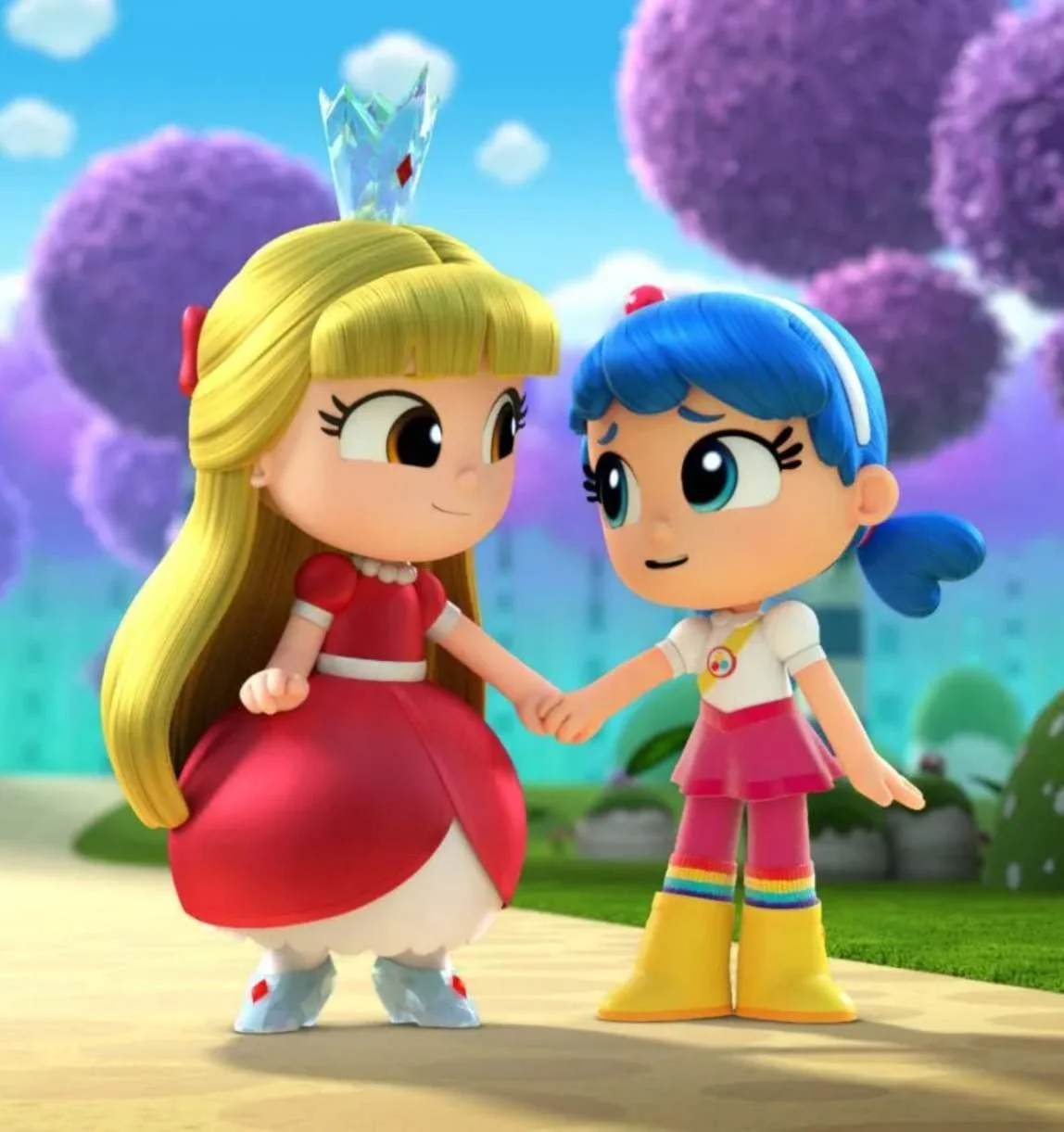
I found myself drawn to empathetic female characters whose emotional attunement was central to their strength. Characters like True (from True and the Rainbow Kingdom), Vampirina (from Vampirina), and especially Poppy (from the Trolls films). These characters responded to others’ emotions immediately and visibly. When someone was hurting, their entire demeanor shifted. When someone felt joy, they shared it fully.
Watching them did not make me feel what they felt. It did something else. It showed me what empathy looks like when it is expressed outwardly and consistently. It demonstrated how attention, tone, and behavior can communicate care even when emotional experience itself differs.
What stayed with me most was that their empathy was not passive. It directed their actions. They stayed with people, adjusted themselves to match the emotional situation, and they did not rush past pain or attempt to fix it prematurely. They treated emotional states as real conditions that deserved time and respect.
That observation changed how I understood my own role. I stopped measuring empathy by what I felt internally and began measuring it by how I treated others’ inner worlds. I could not feel their sadness in my body, but I could acknowledge it without minimizing it. I could refrain from forcing optimism into moments that did not call for it. I could choose not to solve what needed to simply be witnessed.
I came to understand that my steadiness is not a failure of care. It is simply part of how I am built. I do not absorb others’ emotions, and I do not expect that to change. There is no hidden reservoir waiting to be unlocked, no version of me that suddenly feels everything deeply. I won’t pretend that I haven’t desired that. It’s for exactly that reason that I love watching the kinder shows, media with strong moral messaging and expressive, legible emotion. Connecting to my inner child is the closest I feel to being vulnerable in a world that tells men not to.
I also recognize something else, that not being able to feel others’ pain can be easier. Emotional resonance carries a cost. I have watched deeply sensitive people become exhausted by constant emotional absorption. There is a reason the nervous system protects itself.
For men in particular, this experience is shaped by culture as much as temperament. Growing up in the United States, I saw very few examples of emotionally expressive men. Stoicism was rewarded. Vulnerability was made a punchline. Empathy, when I imagined it, often wore a feminine face. That absence of models shaped my expectations, even if it did not fully explain my internal experience.

Another consequence of my emotional style took years to notice. Because I do not strongly feel other people’s emotions, I assumed they would not strongly feel mine. I treated my struggles as information rather than something that might weigh on others. I downplayed it. I delayed asking for support, I often (too often) handled difÏculty alone.
When friends expressed worry or sadness on my behalf, I was often surprised. Not because I doubted their sincerity, but because I did not intuitively grasp that others could carry my emotions in ways I could not carry theirs. Despite my slow-moving emotions, it was possible for me to become sad about something. I just never really considered that it could transfer, nor would I particularly want it to.
Learning this required adjustment, I had to recognize that dismissing support from others was not always neutral. Sometimes it deprived others of the chance to care in the way that made sense to them. Respecting their empathy meant allowing myself to be seen, even if I did not experience that care internally in the same way.
Over time, I stopped framing my emotional profile as a deficiency. I am not broken. I’m built different. I operate thought-first, with a reliance on understanding, intention, and choice rather than emotional contagion.
That configuration has limits, of course. It also has strengths. In crises, I remain calm. When others are overwhelmed, I can think clearly, and there are moments when that steadiness is exactly what the situation requires. In some cases, I can act. Though, I’ve made a promise to myself to never blame myself for inaction, since my thinking-first methodology can slow me down. Things aren’t so stressful for me when they otherwise should be.
What I have learned is that steadiness alone is not presence. Presence requires attention and respect for another person’s emotional reality, even when it does not enter your own.
My path has not been about learning to feel empathy. It has been about learning how to live ethically and relationally despite a weak grip on the affective type of empathy. That means listening carefully. It means letting others’ emotions set the tone of an interaction rather than defaulting to my own mood. It means acknowledging pain without trying to evacuate it. Most of all, it means I choose to care as an action rather than expect it to arise as a feeling. Just know that if I’m nice to you, it’s because I actively choose to be nice. Very little in my biology urges me to, and I’ve learned to live around that.

Empathy, I have come to believe, is not an all-or-nothing trait. It is a collection of capacities, and people vary widely in how those capacities are distributed. Some feel deeply. Some understand clearly. Some act reliably. Some do all three. Some do not.
What matters most is not whether I feel another person’s sadness in my body, but whether I treat their sadness as real, honor it, and respond with care.
I may never be someone whose eyes fill with tears at the first sign of suffering. That is not who I am. What I can be is someone who stays, who listens, who does not minimize. Someone who chooses tenderness deliberately.
That growth has mattered.
Not because it made me more like someone else, but because it allowed me to live honestly within my own limits while still showing up for others.