My Trip to the Hospital
My brother Noah happened to be in town that week. When I told him I needed to go to the hospital, he immediately offered to come along. Perhaps I was too exhausted to feel much panic, or perhaps all those nights of Star Trek had imbued me with a bit of stoicism; in a strange way I felt like a Starfleet officer calmly facing an anomaly in the neutral zone. Meanwhile, externally, the ER was a hive of chaos. It was a busy night; the waiting room was packed. I checked in and explained my symptoms to the triage nurse. They tagged me with a hospital bracelet and told us they’d find me a spot soon.
Due to the high patient volume, I ended up in a patient overflow area initially. This basically meant a reclining chair in a hallway. From my vantage point, I had a front-row seat to the frenetic ballet of the ER: nurses briskly walking past with IV bags, doctors in scrubs teaching students, the PA system crackling with announcements, and the constant low cacophony of beeps from monitors. I felt a bit like I was observing from outside my own body, exhausted and in discomfort, but simultaneously fascinated by all the activity around me. I’ve been around people in scrubs enough (thanks to Mom) that they don’t scare me too much. In fact, there was something reassuring about seeing the professionalism with which the staff moved. It told me I was in a place where problems get solved.
Still, it was hard to tune out the distress around me. Across the hall, I could hear a man groaning in pain and nurses speaking in hushed, urgent tones, or a worried mother getting their attention. My only real discomfort was a nagging anxiety about what might be wrong with me. But even that I managed to keep at bay, reasoning with myself that I was in the right place to get answers. It went from a long morning, to a long day, to a long evening.
At some point, I was finally wheeled into a new part of the hospital. I hadn’t expected a CT scan, but I was agreeable. By that point, my pain had subsided (maybe the IV fluids helped or maybe I was just too fatigued to feel it as acutely), and my curiosity had kicked in. I’ve always had an interest in medical technology. So the prospect of getting a high-tech body scan had a strange appeal to me, despite the circumstances.
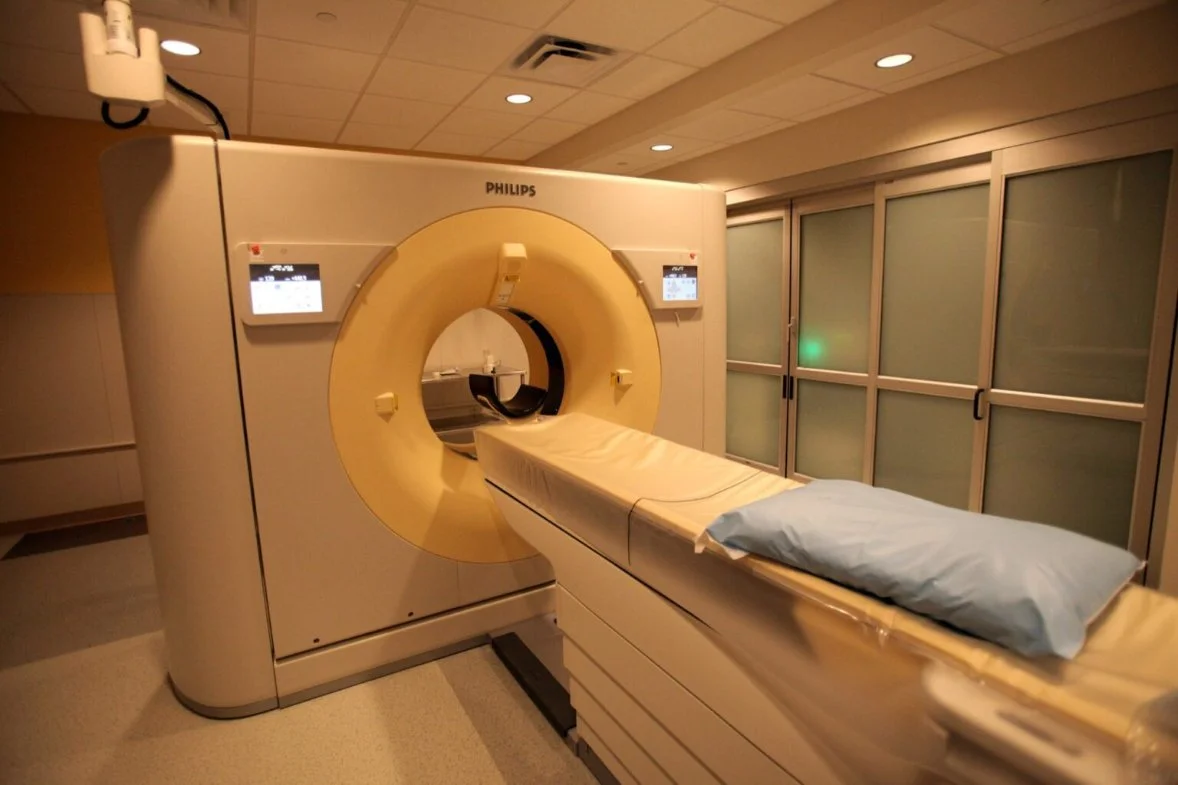
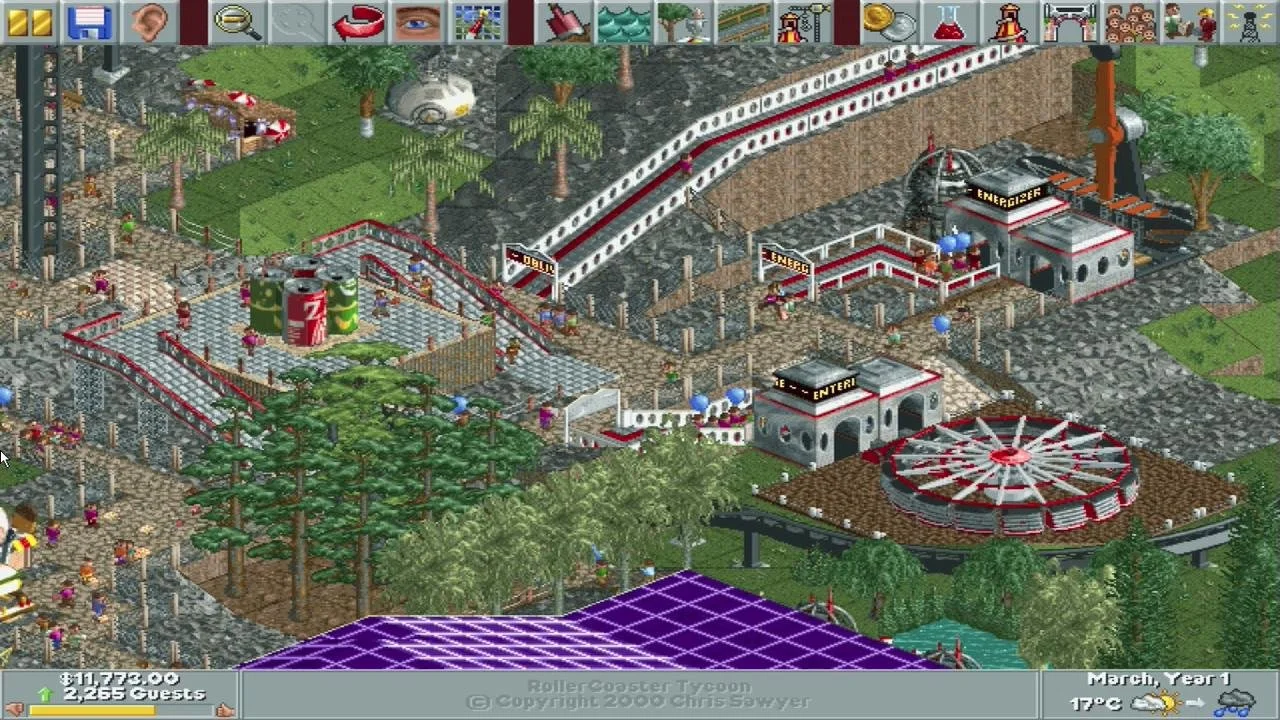
They had rolled me into the radiology department in a wheelchair. The CT machine looked like a giant white donut. It was a familiar sight from TV medical dramas but now very real in front of me. A radiology tech explained the procedure, and that they’d be injecting a contrast dye into my IV during the scan. “You might feel a warm sensation and a metallic taste when the contrast goes in, that’s normal. Some people feel like they’ve accidentally wet themselves, but it’s the iodine” she said. Sure enough, as the machine whirred to life and the contrast dye flowed into my vein, I felt that odd warmth spread through my body. The feeling was not unpleasant at all; in fact, it was almost comforting, like a quick wave of warmth from a heater. I jokingly complained to her that I didn’t taste the iron and wanted to try again. Lying there, sliding in and out of the CT scanner’s circular gantry, I found myself marveling at the technology. Here I was, effectively being “x-rayed” in thin slices, the machine capturing detailed images of my insides. The nerd in me was fascinated, I immediately thought of Dr. Crusher scanning a patient in TNG. Despite the gravity of the situation, I actually enjoyed the CT scan experience in some weird way. Chalk it up to being a curious person; I couldn’t help finding the process academically interesting. I told her it was my first time experiencing a CT and that it felt like being in a sci-fi movie scanner. She laughed, “Well, you’re handling it better than a lot of folks do.” After the scan, they parked me back in the ER bay. The ER had quieted down a bit in the late-night hours, the earlier rush easing. I pulled out my iPad and played some Roller Coaster Tycoon 2, a childhood game that had a mobile version. I even shut my eyes (but with the constant lights, it was nowhere near sleeping).
Eventually, I was awoken to interesting news. They were to transfer me to the hospital, at a different location. I offered my mother to drive me, but they resisted, saying that an internal transfer had to go through the ambulance. Oh boy. Well, I didn’t have a car with me anyway, and my mom and brother had visited during the day already, so it seemed like another unique experience for me. Today was just full of them (or was it tomorrow already?).
So an ambulance it was.
If I am honest, I felt a flicker of childlike intrigue about the whole thing. I had never ridden in an ambulance before, at least not as a conscious and consenting passenger. There is something undeniably cinematic about it. The gurney, the straps, the gentle sway of the ride, it all felt faintly like I had wandered onto the set of a medical drama.
And yet, unlike the tense flashing lights chaos you see on television, this was calm. Almost cozy.
The EMTs themselves were cheerful in a way that immediately put me at ease. EMTs always seem youthful to me, energetic, quick with a joke, somehow both competent and slightly mischievous. As they settled me in, they made light conversation, asking how I was feeling, explaining what would happen during the ride. I remember thinking that I was not entirely sure why I merited an ambulance escort, but I was not about to argue with how it was supposed to happen and the attentive company.
At one point, one of them asked what music I would like to listen to during the drive.
This was an opportunity, I love niche electronic genres. After some deliberation, I requested industrial techno.
There is something deeply amusing about introducing unsuspecting EMTs to pounding, mechanical, vaguely dystopian electronic music while being transported between medical facilities. To their credit, they were game. The front of the ambulance filled with rhythmic metallic beats, less soothing elevator music and more Berlin warehouse at 2 AM. We chatted over the music, laughing about how this was probably not the standard ambulance playlist (nor would many passengers be in a place to request it). The whole ride felt less like a medical necessity and more like an oddly curated social experience. Kind of like “how did we end up here” territory.
I have always had a soft spot for EMTs, perhaps because of a friend of mine who once had an EMT roommate. He was one of my favorite people to see whenever I visited, effortlessly friendly, full of stories from overnight shifts, equal parts exhausted and animated. He would occasionally practice starting saline drips on my friend, who did not mind needles and had a surprisingly enthusiastic attitude toward hydration experiments. I was never tempted to volunteer as tribute. I prefer my veins unpunctured unless medically justified. Watching my friend casually agree to be infused with fluids for science was endlessly entertaining. It gave my idea of the whole profession a slightly chaotic and endearing aura in my mind.
So as I lay there in the back of the ambulance, industrial techno humming and EMTs chatting amiably beside me, I could not help but feel that the day had taken on a strangely adventurous tone. What had begun as an unfortunate illness had now included a CT scan, an IV contrast experience, and a late night ambulance ride with a custom soundtrack. It was not the way I had intended to spend my summer break, but as unusual experiences go, it was surprisingly pleasant.
Somewhere between the steady thrum of the engine and the electronic bass reverberating through the compartment, I remember thinking that this was not how I imagined this day unfolding, but it was undeniably interesting.
Because I could have been contagious (and the hospital follows strict isolation protocols for such cases), they had me in a private room overnight for observation. I was effectively quarantined, both for my own rest and to protect other patients. I didn’t mind at all, the room was quiet and dimly lit, far from the tumult of the ER floor at the other site. By this point the doctor that I was transferred to was signing off, so overnight it is. He was just as confused on how I got admitted, as I was quite young, cheerful, and seemingly able-bodied.
Despite the IV line tugging at my arm and the vitals checks, I managed to get some sleep. By the next morning, I felt slightly better, now used to the clear liquids diet. I certainly like jello, it reminds me of the movie “Cloudy with a Chance of Meatballs,” and the jello bounce house is my favorite scene. Still to this day I wear scrunchies, because Sam Sparks (the weather woman) wore a jello scrunchy that Flint Lockwood made her in a tender scene.
That morning, I was told they wanted more tests in Outpatient Care, but finally released me on a diagnosis of E.Coli. I immediately blamed Jack in the Box. I was discharged with instructions to stay on a bland diet, drink plenty of fluids with electrolytes, and monitor for any worsening symptoms. They also set me up with an appointment to see a gastroenterologist (GI specialist) to investigate that possible Crohn’s disease seen on the CT.
Wait, what? Chron’s disease?
To be sure, the GI doctor ordered a battery of tests. First up was an MRI enterography, a specialized MRI scan for the intestines, to get a better look at the small bowel inflammation the CT noted. A week later I underwent that MRI, which was a bit more involved than the CT. It required me to drink a large volume of contrast solution beforehand. The MRI machine was louder and more claustrophobic than the CT, but true to form, I found the loud rhythmic thumping of the MRI to be oddly soothing. It’s bizarre, but in the MRI tube, listening to the gradient coils bang and whir, I closed my eyes and imagined I was in some avant-garde electronic music concert… Or perhaps on a starship experiencing some kind of alien scan (yes, my imagination went there). The repetitive nature of the sounds almost put me in a meditative state. Not everyone would find an MRI relaxing, but I had so much fun. If anything, the hardest part was lying still. By the end of it, I was eager to stretch and scratch my nose.
The MRI enterography results came back and noted general movement (your guts do that as you exist), but it wasn’t looking like the tests were stopping there.
Now, anyone who’s had a colonoscopy will tell you the worst part is the prep the day before. Drinking liters of laxative and then camping out near the bathroom for hours is nobody’s idea of fun. The day of the colonoscopy, I was surprisingly not too nervous. After a bit of sedative, I don’t remember anything after the humming of the fans (or was the buzzing from the sedative?). If they said anything about the scoping results to me afterwards, I actually don’t remember.
Even still, the results got passed on to another doctor in follow-up care. And… I officially had Crohn’s Disease.
For those unfamiliar, Crohn’s disease is an incurable autoimmune condition in which the body’s immune system mistakenly attacks the gastrointestinal tract, causing inflammation. It falls under the umbrella of Inflammatory Bowel Disease (IBD), along with ulcerative colitis. In Crohn’s, the inflammation can affect any part of the GI tract, though it often targets the end of the small intestine or the colon. My case, as we discovered, was affecting the terminal ileum, or the place between the large and small intestine. Quite common, we found out. This explained so much about my health history. One of the listed common symptoms of Crohn’s is indeed loss of appetite and weight loss. It hit me then: my “normal” of never feeling hungry, of being occasionally underweight… That wasn’t just a quirk of my personality or lifestyle. It was likely Crohn’s disease simmering quietly for years. The GI doctor estimated from the state of my intestinal tissue that I’d probably had Crohn’s for at least 3 to 5 years prior to this diagnosis, “smoldering” at a low level. It often happens that Crohn’s disease creeps in gradually, with subtle signs that get overlooked or misattributed. In fact, it’s common for Crohn’s patients to go years before getting a correct diagnosis, especially if initial symptoms are mistaken for something like irritable bowel syndrome. I was no exception; I had normalized my own symptoms for a long time. It’s a sobering thought that had I not gotten violently ill with E. coli and undergone that CT scan, I might still be oblivious to the fact that I have Crohn’s disease.
The revelation was overwhelming but also oddly empowering. At least now I knew what I was dealing with. Crohn’s disease is chronic and currently incurable, meaning I will have it for life, but it is treatable and manageable with the right therapies. The doctor explained in depth what Crohn’s is and what it would mean for me. It’s an autoimmune disease, meaning my immune system, for reasons not fully understood, was attacking my own intestines. This results in inflammation that can flare up (active disease periods) and then go into remission. Untreated, Crohn’s can cause complications like strictures (narrowing of the intestine from scar tissue), fistulas (abnormal tunnels between intestines and other organs), malnutrition, and other unpleasant things. The goal of treatment is to induce and maintain remission. Basically to quiet the immune system’s misguided attack and heal the intestinal lining. Hearing all this, I won’t lie, I felt a bit daunted. Managing a chronic illness sounded like a big commitment. But I also felt a strange sense of validation. I wasn’t neglectful for not eating much; I was sick. My body had been fighting a hidden battle, and now the enemy had a name.
The GI doctor discussed treatment options. Crohn’s therapy often starts with medications to reduce inflammation: this can include corticosteroids for short-term flare control and immunosuppressants or specialized drugs known as biologics for long-term management. Biologics are advanced medications that target specific components of the immune system’s inflammatory response. There are a few classes: TNF inhibitors (like infliximab/ Remicade, adalimumab/Humira), integrin blockers (like vedolizumab/Entyvio), and interleukin inhibitors (like ustekinumab/ Stelara which blocks IL-12/23, or newer IL-23 specific ones). Given the location and severity/active nature of my disease, the doctor recommended starting a biologic therapy. We discussed options and one that stood out was guselkumab, brand name Tremfya. Tremfya is one of those newer biologics (an IL-23 inhibitor) which had recently been approved for Crohn’s disease. It had originally been used for psoriasis, but studies showed it can induce remission in Crohn’s by targeting a key inflammatory pathway. I was fascinated (leave it to me to turn even a med consult into a learning session). The idea of a monthly injection that could tame my overactive immune cells sounded almost sci-fi, like little microsurgeons working away inside me. They only target such a narrow slice of my immune system that I can pretty much live a normal life. Tremfya was appealing also because the dosing is only once every 4 weeks, and it has a good safety profile. Ultimately, after insurance approval (thankfully swift), I received my first Tremfya dose in November 2025.
It’s worth noting how fortunate I am to be in California when it comes to accessing this medication. In California, it’s actually mandated by law that everyone maintain health insurance coverage (or face a tax penalty), so I’ve always had insurance. Beyond that, California has laws to keep specialty drug costs within reach. A state law first passed in 2015 and made permanent in 2023 caps the out-of-pocket cost for each prescription drug at $250 for a 30-day supply. This is a big deal for drugs like Tremfya, which are extremely expensive. The list price of Tremfya is around $15,000 per injection, a staggering amount that, without insurance, would be utterly unaffordable for me or for most anyone. However, thanks to my insurance and California’s copay cap, my cost is limited to $250 a month. That law was designed so that people with chronic illnesses (like Crohn’s, arthritis, MS, etc.) aren’t bankrupted by life-sustaining medications. With that financial protection in place, I could start Tremfya without hesitancy. It hit me how important health policy is; without the California mandate and cap, I might have skimped on or delayed treatment due to cost, which is sadly something many patients elsewhere face. Chron’s is one of those conditions that kicking the can down the road doesn’t work with. Complications are something I don’t even want to think about, but they would happen if I never addressed my disease.