Introduction and Personal Motivation
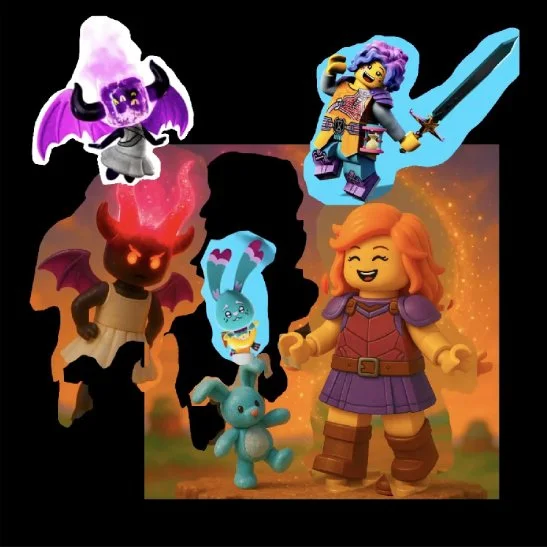
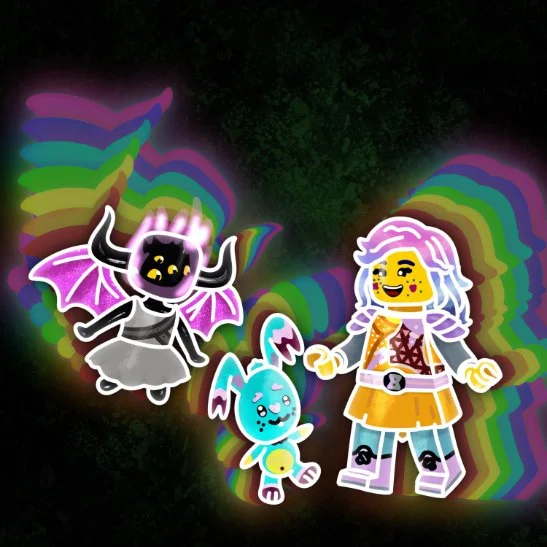
I have always struggled with fine motor skills. Even as an adult, my handwriting remains nearly illegible despite months of trying to train myself to write in a new “font” or switching to all-caps for clarity. This lack of dexterity made traditional sketching and drawing feel out of reach (or should I say grasp). Recently, however, technology opened a door for me: I began using AI-generated images as a preliminary “sketch” layer and then tracing over them to create art. By carefully crafting text prompts, I can coax the AI to produce an image close to what I envision, then modify and refine it with digital drawing tools (with plenty of undo and stabilization to help). The result is that I can create artwork I’m proud of, despite not having classical drawing training or steady hands. In a sense, I’m assembling a mathematical collage drawn from an uncountable number of artworks the AI has been trained on. This approach not only makes art more accessible to me, but it also raises interesting parallels with art history. It reminds me of the early 20th-century Dadaism movement, which embraced collage and fundamentally challenged what art could be by being deliberately “anti-art.” In this paper, I explore that parallel in depth. I will first explain the Dada art movement, such as its motivations, methods (like collages and readymades), and reception. Then I’ll explain how modern AI art generation algorithms work, as well as the reception of AI-generated art in today’s art world. I will compare specific attributes of Dadaism and what we might call “AI art-ism,” both in their modalities of creation (physical collage vs. computational model) and in their reception as forms of anti-art. Finally, I will discuss the broader impacts: how Dadaism influenced art and what the trajectory of AI art might be, considering the differences in their origins and intentions.