… / / Lighting: High Color Fidelity vs. Spectral Restriction
katsumimaki.com
General
  • Home
  • About
  • Start Here
Topics
  • Newsletters
    • Fanmade
      • Anti Group Tendencies
        • Page 1
        • Life as an “Anti-Group”
        • Afterword
      • Burnout
        • Page 1
        • Afterword
      • Empathy
        • Page 1
        • Afterword
      • Friendswithyou
        • Origins in Miami: Seeds of a Playful Universe (2002–2004)
        • Building a World of Play: Interactive Installations (2005–2009)
        • Rainbow City: Exploding onto the Global Stage (2010–2012)
        • Animism, Art, and “Happy Virus”: A Philosophy of Play
        • Collaborations and Pop Culture Crossovers (2013–2017)
        • Post-Internet Explorations: From Virtual Worlds to NFTs (2015–2022)
        • Conclusion: Pop Spiritualists in a Connected Era
      • From Dada Collages To Ai Art
        • Introduction and Personal Motivation
        • Dadaism: Collage and the Original “Anti-Art” Movement
        • AI-Generated Art: Algorithms as the New Collage
        • Comparing Dadaism and “AI-Artism”
        • Modality and Technique: Collage vs. Computation
        • Origins and Intentions: Art Movement vs. Tech Innovation
        • Reception and Cultural Impact: Anti-Art Manifesto vs. Existential Disruption
        • Outcomes and Future Trajectories: Lessons from Dada for AI Art
        • Conclusion: Art, AI, and Accessibility – A Personal Reflection
      • Lights Sound Printing
        • Page 1
        • Lighting: High Color Fidelity vs. Spectral Restriction
        • Audio: Theatre Mic Techniques for a Hybrid D&D Game
        • Digital Fabrication: From Desktop 3D Printing to Stage-Size Scenery
        • Conclusion: Personal Reflections on Tech in Theatre
      • Littlespaces
        • Overalls and Feeling Small
        • Voluntary vs. Involuntary Age Regression
        • Stress, Comfort, and Little Space
        • Age Regression vs. Age Play
        • The ABDL Identity and Spectrum
        • Community Norms, Safety, and Stigma
        • Unpacking Misconceptions
        • Afterword
      • Monoline
        • Origins, Purpose, and Brief History
        • Shel Silverstein’s Expressive Monoline Style
        • From Viral Outlines to Indie Cartoons: Monoline’s Digital Revival
        • Bridging Traditional and Digital: Community Art and Personal Practice
        • The Commercial and Algorithmic Appeal of Monoline
        • Communities and Culture: Constraints as a Creative Identity
        • Conclusion and Personal Reflections
        • Afterword
      • Never Have I Ever: Kinks
        • About Me
        • Aromantic Asexual Autonomy
        • A Space for Kink Exploration: Trials in Tainted Space
        • Consent and Customization in a Kinky Universe
        • From Kink Exploration to Relational Ethics
        • Doe Steele: The Trials in Tainted Space
        • Opening Up on Mhen’ga: Amber Changes the Game
        • Crew as Community
        • Relationship Anarchy Among the Stars
        • Afterword
      • Ps1lowpoly
        • Page 1
        • Early Low-Poly 3D: Console Limitations Shaping an Aesthetic
        • From Quirk to Art Form: Low-Poly Revival and Nostalgia
        • Modern Low-Poly in Contemporary Media and Art
        • Super Mario 64
        • Indie Animators and Series
        • Comedy Skits and Memes
        • Cozy vs. Creepy
        • Interview with an Appreciator
        • Conclusion
        • Afterword Fave (Interviewee)
      • Saved My Life
        • My Relationship With Food
        • My Trip to the Hospital
        • What My Journey Looks Like Now
        • Re-Learning My Purpose
        • Afterword
      • Slowart
        • Additive
        • Subtractive (Decay)
        • Performative
        • Slow-Change (Growth)
        • Latent Activation
        • Pilgrimage
        • Witnessing
        • Conclusion: Embracing the Art of Slow Moments
      • The Life Death And Afterlife Of Mannequins
        • I. The Enduring Allure of Mannequins
        • II. The Material and Historical Trajectory of Mannequins
        • Evolution from Functional Forms to Lifelike Figures
        • The Fiberglass Revolution: Durability and Mass Production
        • III. Mannequins as Cultural Artifacts: From Discarded to Desired
        • The Paradox of Invisibility and Persistent Presence
        • Sustainable Second Lives: The Mannequin Madness Model (Judi Henderson)
        • Table 2: Case Studies of Mannequin Reuse
        • The Uncanny Valley: Mannakin Hall as Experiential Art (Roz Edwards)
        • IV. Mannequins in the Human Imagination: Companionship and Projection
        • V. Reflections on Mannequin Endurance: A Personal Synthesis
      • Valentine
        • Page 1
        • A Sweet Gesture After Lockdown
        • Yearning vs. Attraction
        • Thought Experiments with a Safety Net
        • The Fun of Shipping (Even for the Aro-Ace Crowd)
        • Conclusion: Choose Your Own Valentine
    • Original
      • 2024-09 September
      • 2024-10 October
      • 2024-11 November
      • 2024-12 December
      • 2025-01 January
      • 2025-02 February
      • 2025-03 March
      • 2025-04 April
      • 2025-05 May
      • 2025-06 June
      • 2025-07 July
      • 2025-08 August
      • 2025-10 October
      • 2025-11 November
      • 2025-12 December
      • 2026-01 January
      • 2026-02 February
      • 2026-03 March
  • Stories
    • Fanmade
      • Daggerheart
        • CiCi
          • Page 1
          • Page 2
      • Dnd
        • Azurion Nightfall
          • Page 1
        • Little
          • Page 1
      • History
        • Prahlada and Malala
          • Page 1
          • Page 2
          • Page 3
          • Page 4
          • Page 5
          • Page 6
          • Page 7
          • Page 8
          • Page 9
          • Page 10
      • My Little Pony
        • Stellar Redux
          • Page 1
          • Page 2
          • Page 3
          • Page 4
      • Pathfinder
        • Occupation on Vesk 3
          • Page 1
          • Page 2
          • Page 3
          • Page 4
      • Satisfactory
        • Everroot
          • Page 1
        • Reaper and ADA
          • Chapter 1
          • Chapter 2
          • Chapter 3
          • Chapter 4
          • Chapter 5
          • Chapter 6
          • Chapter 7
          • Chapter 8
      • Star Trek
        • USS Mesa
          • Page 1
          • Page 2
          • Page 3
      • Star Wars
        • Protocols and Princesses
          • Page 1
        • Shakka'Dira
          • Page 1
          • Page 2
          • Page 3
          • Page 4
          • Page 5
          • Page 6
          • Page 7
          • Page 8
          • Page 9
      • Trolls
        • Rave and Relaxation
          • Page 1
    • Original
      • Neon Fairy Lights
        • Main Story
          • Page 1
          • Page 2
          • Page 3
          • Page 4
          • Page 5
          • Page 6
          • Page 7
          • Page 8
          • Page 9
          • Page 10
          • Page 11
          • Page 12
          • Page 13
          • Page 14
          • Page 15
      • Northern Lights
        • Main Story
          • Page 1
          • Page 2
          • Page 3
          • Page 4
          • Page 5
          • Page 6
      • Virtual World
        • Commands
          • 01 Bash
          • 02 Cat
          • 03 Ping
          • 04 Mint
          • 05 Vi
          • 06 Echo
          • 07 Dig
          • 08 Tar
          • 09 Sudo
          • 10 Kali
          • 11 Nano
          • 12 RPM
          • 13 Tail
          • 14 Grep
          • 15 Cron
          • 16 Alma
          • 17 Shell
          • 18 Yaml
          • 19 Sed
          • 20 Curl
        • Five Stories
          • 01 Cautious 01
          • 02 Desperate 01
          • 03 Fading 01
          • 04 Cautious 02
          • 05 Indifferent 01
          • 06 Gentle 01
          • 07 Cautious 03
          • 08 Desperate 02
          • 09 Fading 02
          • 10 Cautious 04
          • 11 Indifferent 02
          • 12 Gentle 02
          • 13 Cautious 05
          • 14 Desperate 03
          • 15 Fading 03
          • 16 Cautious 06
          • 17 Indifferent 03
          • 18 Gentle 03
          • 19 Cautious 07
          • 20 Desperate 04
          • 21 Fading 04
          • 22 Cautious 08
          • 23 Indifferent 04
          • 24 Gentle 04
          • 25 Cautious 09
          • 26 Desperate 05
          • 27 Fading 05
          • 28 Cautious 10
          • 29 Indifferent 05
          • 30 Gentle 05
          • 31 Cautious 11
          • 32 Desperate 06
          • 33 Fading 06
          • 34 Cautious 12
          • 35 Indifferent 06
          • 36 Gentle 06
        • Main Story
          • Page 1
          • Page 2
          • Page 3
          • Page 4
          • Page 5
          • Page 6
          • Page 7

Lighting: High Color Fidelity vs. Spectral Restriction

Lighting is a long-time interest of mine, especially the quality and color of light. I remember it being my favorite subject in 7th grade science class. The teacher, a substitute actually, showed how light operates as a wave with a slinky on the ground. Students at each end of the slinky would wiggle the slinky at a certain rate. I was excited to see the physical representation of the electromagnetic waves be shown in such a fun way. Later, in 9th grade, I also recall being fascinated with the broad spectrum emissions, learning the radio wave song. I currently use high-CRI LED strip lights and frosted LED globes (around 2700 K color temperature) to illuminate my LEGO collection. They make the colors of the bricks look rich and accurate. But in the back of my mind I wondered what CRI (Color Rendering Index) really meant. CRI is defined as a comparison to a reference light source of the same color temperature. In other words, an LED with 95 CRI at 2700 K is being judged against a theoretical 2700 K “perfect” incandescent/blackbody source, whereas a stage light with 95 CRI at 5600 K is judged against a 5600 K daylight reference. CRI isn’t a universal measure of “full spectrum” content; it’s always relative to that reference illuminant. I realized this when I wondered if my warm 2700 K LEDs, despite their high CRI, might still be missing some spectrum that a cool white light would have… and indeed CRI alone wouldn’t tell me that, since it’s temperature-dependent. This got me curious: how do professional theatrical fixtures handle color rendering? Do they simply tout high CRI at whatever color temp they have, or do they truly engineer a broad spectrum? And what metrics do they use to assure designers of color quality?
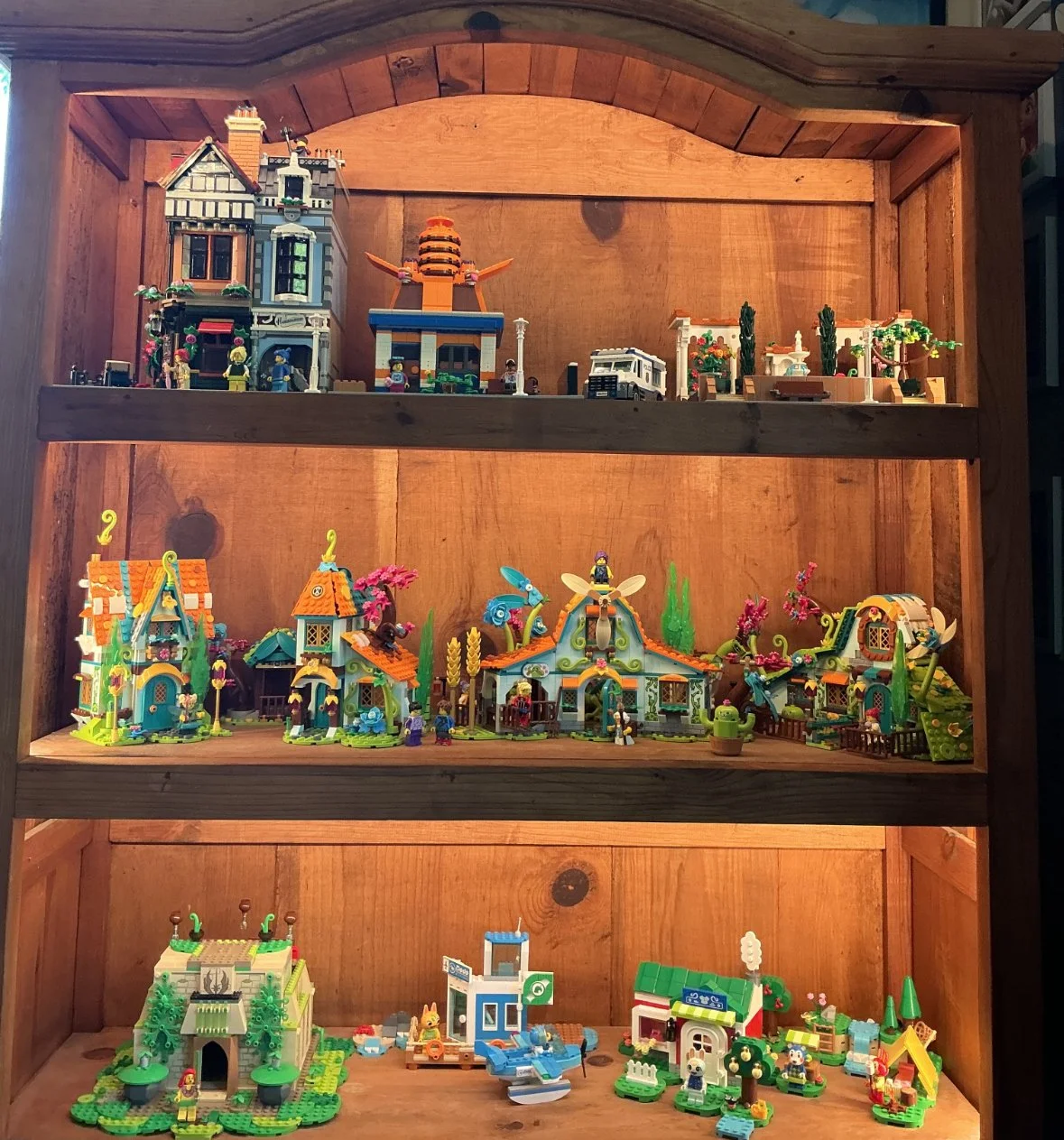
My Lego Display, lit by high CRI LED lights

Digging into this, I learned that the theatre lighting industry has been moving beyond simple CRI numbers. One reason is that CRI (Ra) has well-known blind spots. The standard CRI test (CIE 13.3) uses only eight pastel color samples (R1–R8) to compute the average Ra value. This means two different lights can both score, say, 90 CRI, yet one might render saturated reds or deep blues very poorly – because those aren’t included in the eight sample colors. In fact, the commonly discussed R9 value (a strong red sample) is excluded from the Ra calculation. R9–R12 (saturated red, yellow, green, blue) and R13–R14 (skin tone hues) are “additional” CRI metrics often not reported. It’s a classic scenario: an LED can have high Ra but a terrible R9, meaning reds look dull. I’ve certainly noticed consumer “CRI 95” LEDs sometimes still make a red LEGO brick look off, or the prints on my wall have distinctly less performing reds (I always max them out when drawing digitally). High-end lighting vendors know this shortfall of the CRI scheme. That’s why I started seeing references to IES TM-30 metrics in theatre lighting specs. TM-30 gives two numbers: Rf (fidelity index, built from 99 color samples) and Rg (gamut index, indicating saturation). Instead of a handful of pastels, TM-30’s 99 samples cover a huge range of colors, which provides a more complete picture of how the light renders objects. In online discussions among lighting designers, there’s a consensus that TM-30 is “the new standard” for evaluating LED color quality.

That being said, lighting isn’t just about matching a reference (fidelity), but also about controlling saturation or even deliberate distortion for artistic effect.
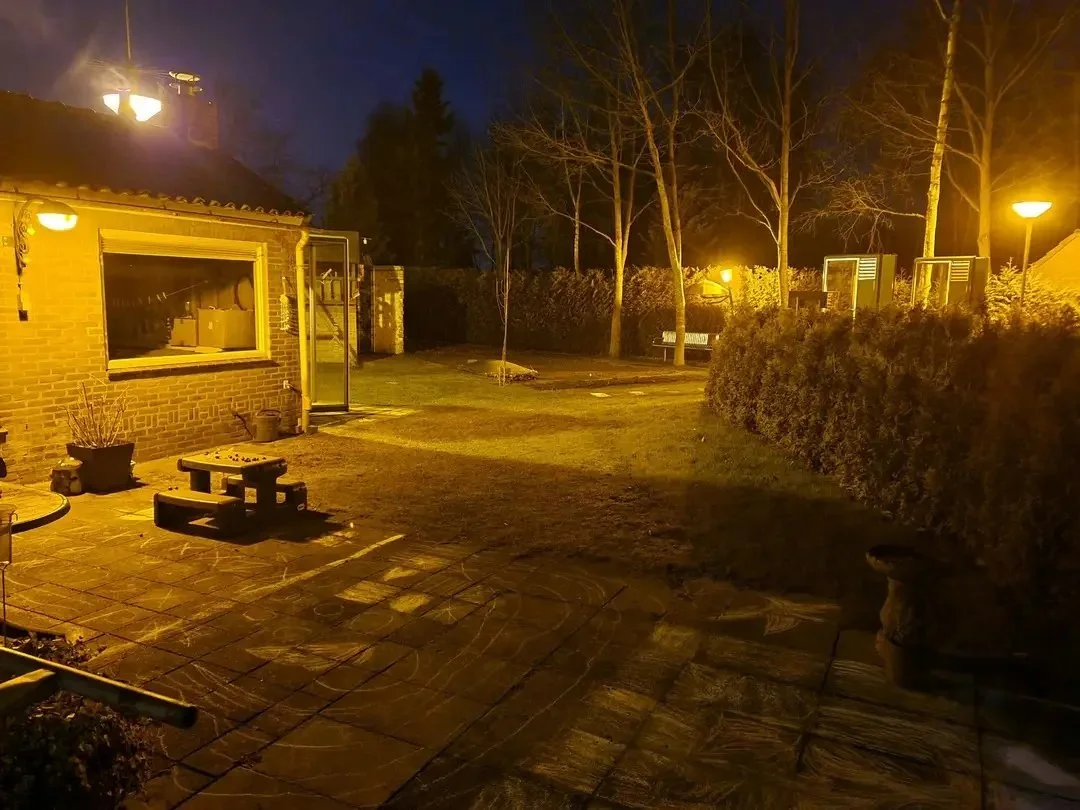
While high-fidelity color rendering is one fascination of mine, I also have a quirky opposite fascination: lighting that deprives us of color entirely. The prime example is the Low-Pressure Sodium (LPS) lamp. You know, those old-fashioned street lights that glow a murky yellow-orange. As a kid I remember the weird look of streets under LPS lights; everything would be shades of grayish-brown because the lamp’s spectrum was basically one color. In technical terms, an LPS lamp’s output is nearly all at the 589 nm line (the sodium D line), a narrow spike in the yellow range. That makes it essentially a monochromatic source. Under such a lamp, color vision is lost, where a red apple and a green apple both reflect that same yellow light and thus both just look yellow-gray (not red or green) to our eyes. The only differences you see are due to brightness or texture, not hue.

Why am I interested in this? Perhaps because it’s such a dramatic creative tool: using an LPS lamp on stage would cast an eerie single-color wash that could make a scene feel dreamlike or nightmarish. It’s the polar opposite of a high fidelity, neutral gamut (Rf 85–95, Rg ~100) lighting array. Instead of revealing all colors faithfully, it obliterates them, reducing the world to value (light and dark) without hue. I find that concept artistically intriguing. It’s like shooting in black-and-white, but via lighting instead of camera. I even at one point wanted to get an LPS lamp for my own experimentation and collection. Unfortunately (and predictably), this is old tech and has been phased out. I discovered that the main manufacturer, Philips Lighting (now Signify), ceased production of low-pressure sodium lamps around 2019 after something like 87 years of making them. A Philips factory in Hamilton, Scotland that produced these “SOX” lamps shut down, marking the end of an era. So I missed my chance to easily buy a new one. They’re now quite hard to find, and the world has largely transitioned to LED streetlights (which can be tuned to emit a similar color but of course aren’t true monochromatic sources). I enjoy seeing them crop up in my youtube videos, as I primarily watch edutainment and there are some popular experiments using that light, such as “Black Flame” or even recreations of Disney’s “Yellow Screen” process.

Even though I won’t find any LPS fixtures at USITT (unless some history-minded exhibitor has one as a novelty), the concept still connects to my broader exploration of light. In fact, it highlights an important point: not all lighting goals are about color fidelity. Theatrical lighting designers sometimes intentionally push colors in one direction or eliminate them for effect. For example, one might use very narrow-band deep blue LED units (or gels) to create a stylized moonlight where everything on stage has a blue cast. Or use an LPS-like filter to emulate the surreal look of sodium vapor lamps on a city street set. The cool thing about modern LED technology is that it can approximate these niche spectral looks, while also being able to shift back to white light when needed. It’s all about the vision!

Low Pressure Sodium Garden on Reddit

In reflecting on both ends of this spectrum (pun intended), I find a satisfying theme. On one hand, I’m excited by the cutting-edge of “full-spectrum” lighting that makes every color pop naturally. On the other hand, I’m captivated by restricted-spectrum lighting that paints the whole scene with a single emotional hue. High-CRI LEDs with multi-emitter color engines and metrics like TM-30 give designers the power of fidelity when they want it. And sources like low-pressure sodium (or modern LED equivalents with diodes that produce a narrow band) give the power of stark, otherworldly atmospheres when they want that. The key is understanding the tools and their spectral output. My research journey here started with a practical home project (displaying LEGO) and led me to the floors of the Long Beach convention center (virtually). This certainly deepened my appreciation for the art and science of lighting.