Latent Activation
Slow Art as Time Capsule or Deferred Meaning. Not all art reveals its significance in the moment of creation; some works are deliberately made to be encountered in the future. The latent activation lens of slow art focuses on creations that lie in wait – projects completed now (or in the past) which are intended for discovery or activation after a long duration. These can range from literal time capsules to messages to the future, seeds planted for posterity, or performances scheduled to unfold decades hence.
The core idea is delayed gratification and dialogue with an unknown audience across time. There’s a built-in anticipation and mystery: the creator must trust that someone, someday, will receive the work and find meaning in it. Latent activation art often carries an optimism (or at least a curiosity) about the future. It’s an act of faith that art and messages will bridge temporal distances. It prompts us, the current observers, to ponder our place on the timeline: we become the intermediaries between those who set things in motion and those who will later complete the circuit by witnessing or opening the work.
Time Capsules (Messages to the Distant Future): The classic example of art and artifact created for future eyes is the time capsule. In fact, the term “time capsule” itself was coined at a world’s fair as part of an art-science project about future communication. During the 1939 New York World’s Fair (which optimistically looked toward “The World of Tomorrow”), the Westinghouse Company buried a torpedo-shaped capsule filled with artifacts of contemporary life, intended not for any of the fair’s visitors, but for people 5,000 years in the future. Inside this sealed metal tube they placed microfilm records, a newsreel, everyday items like a fountain pen and a pack of cigarettes, and even letters (one by Albert Einstein) addressed to whomever eventually opens it. They specified an opening date: the year 6939 A.D. To put that in perspective, the future recipients of this capsule might be as distant from us as we are from the builders of the Egyptian pyramids. In 1965, Westinghouse added a second capsule alongside the first, likewise to be opened in 6939, and even erected a monument at the site – a reminder to passersby in Queens that beneath their feet lies a message waiting for millennia. Time capsules became a bit of a craze after that. Communities, schools, and artists around the world have buried countless capsules since the mid-20th century (the International Time Capsule Society estimates tens of thousands exist), though ironically many are forgotten or lost before their intended opening. Still, some ambitious examples stand out (source). Oglethorpe University’s “Crypt of Civilization,” sealed in 1940, aimed to preserve a snapshot of all human knowledge for 6,000 years in a sealed vault. In Japan, the Expo ’70 time capsule in Osaka used high-tech materials to safeguard objects for 5,000 years, with a clever system of periodic check-ups (opening a twin capsule every 100 years to ensure the main one survives). We might even consider conceptual projects like Katie Paterson’s Future Library (started in 2014, collecting one new unpublished manuscript from a famous writer each year to lock away until 2114 when they’ll all be printed at once, using trees from a forest planted for this project) as a kind of living time capsule of literature. The appeal of these projects is deeply human: they represent hope that our culture (and someone to receive it) will endure. A time capsule is basically a slow art performance where the audience isn’t born yet. It forces a kind of long-view mindfulness. When selecting items or messages to include, creators must ask: what will matter in a century? In a millennium? What will give future folks a flavor of our time, or what do we want to say to them? In a way, time capsules are letters to our imagined grandchildren’s grandchildren, combining nostalgia, prophecy, and imagination. They are art in the dimension of time: a bottle tossed into the temporal ocean with a note inside, hoping to wash ashore in an era we will never see.
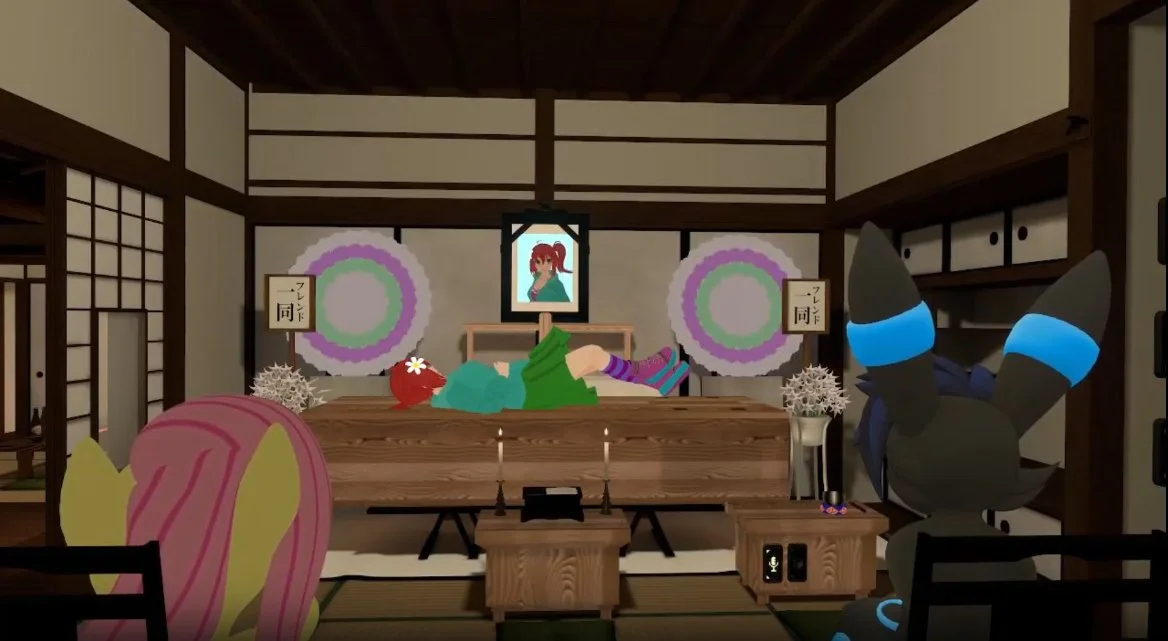
Dear Future Me (Messages for My Own End): Latent activation doesn’t have to span millennia; sometimes it’s poignantly personal. In my case, I’ve been crafting a time capsule of a very intimate sort: I record messages for my own funeral. This might sound morbid to some, but to me it’s an exercise in perspective and even comfort. It started a long time ago when I heard of the concept of a “morgue file.” Though, I took it literally and started writing notes to my online friends, as if I were deceased and to be distributed if I die. The process of making those messages – imagining an audience of my grieving friends and family hearing my voice one last time – was surprisingly cathartic. Recently I restarted that ritual in video form for a contest. I spoke earnestly in that recording about what I hoped to pass along in my final message. After sending off that entry, I realized I didn’t want this idea to be a one-off. Why not update it every so often? After all, the person I am now may not be the person I am in ten or fifty years. So I plan to make it an annual update (or whenever the mood strikes): I sit down with a camera or microphone and record a new “funeral message” to my future listeners. It’s like leaving behind chronological breadcrumbs – a series of little time capsules for my family, to be opened in sorrow, yes, but hopefully also in wonder. There’s even a playful uncertainty about which message will end up being the final one (I’ve considered specifying that only the latest should be played, but part of me imagines a future where multiple versions of me, at different ages, all speak in turn at the memorial… what a conversation that would be!). This practice has made me oddly appreciative of time’s sweep. I find myself speaking to an unknown future audience (possibly my own family or just dear friends) and it forces me to articulate what matters most, stripped of day-to-day triviality. It’s art in a sense, shaped by time: these recordings will sit quietly on a hard drive, latent, inactive, possibly for decades. You may view my public entry, but the rest won’t be viewable until after I’m gone. In creating these, I feel connected to the makers of time capsules everywhere. The scale is different but the sentiment is similar – a mixture of love, hope, and curiosity about an audience I won’t be around to see. If you were to leave a message or gift for the future, what would it be? It could be as simple as writing a letter to your older self or planting a tree you’ll never sit under. What would you preserve or say for someone 100 years (or 10 years) from now, and what does that tell you about what matters to you today?