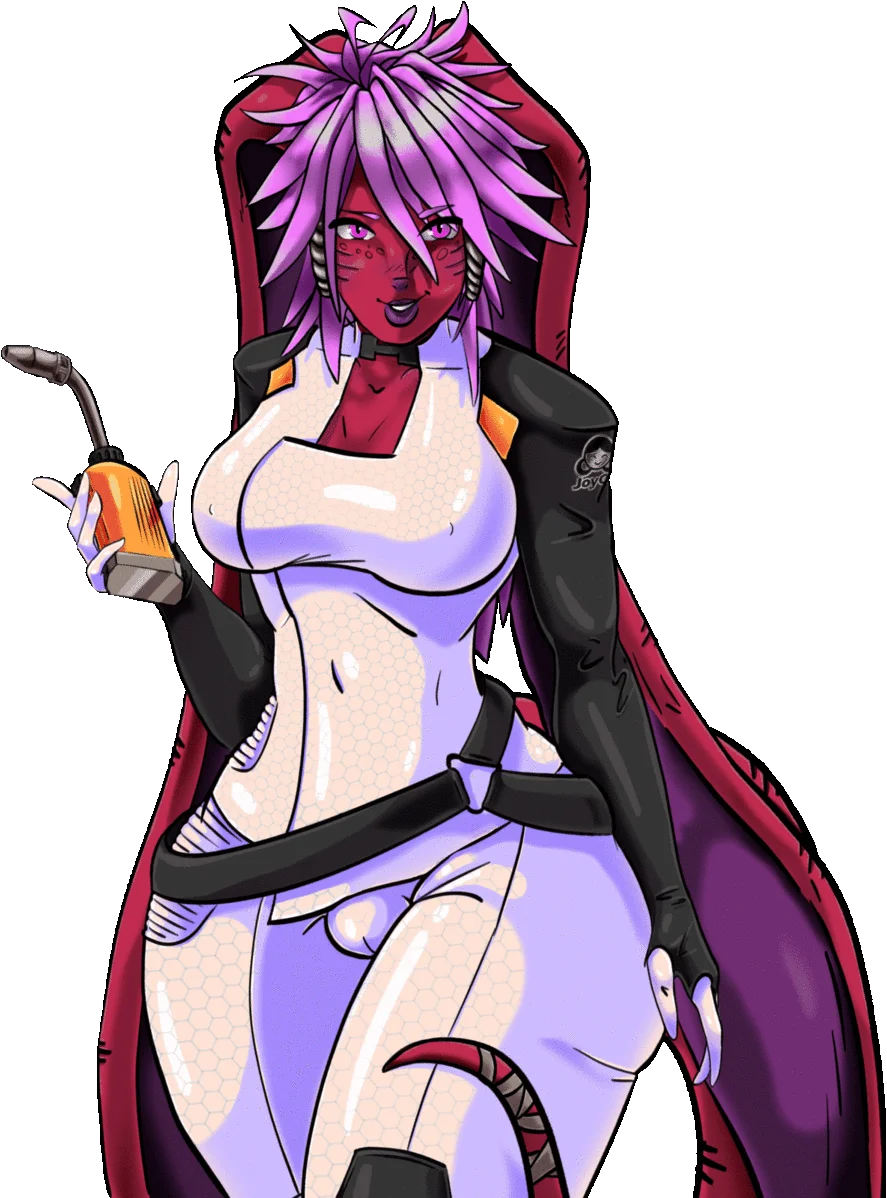
Opening Up on Mhen’ga: Amber Changes the Game
For a long time, Doe’s cautious approach persisted. She traveled to Mhen’ga, the first frontier planet, and much of her early character development happened there amidst tropical jungles and small colonial outposts. By this point I had grown a bit more comfortable with TiTS’s systems. Doe had leveled up and learned to use her psionic powers (as a kineticist) to handle threats deftly, giving us more confidence to explore. I was still keeping her “pure” in the sense of being very selective. She hadn’t formed any lasting intimate bonds yet, aside from the occasional experiment. Little did I know that a chance encounter on Mhen’ga would crack Doe’s world wide open and, in the process, challenge a lot of my assumptions about how relationships in this game (and outside it) could work.
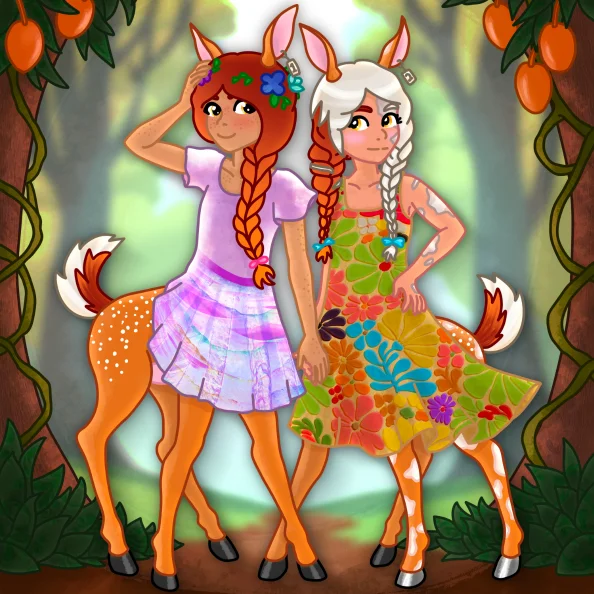
One humid day in Mhen’ga’s wilderness, Amber found us. Or rather, we stumbled upon Amber. A wild, half-transformed deertaur woman, lost to insatiable lust because of experimental mods gone wrong. Meeting Amber was like opening Pandora’s box. Up until then, most encounters felt like typical game “mobs” or one-off events, but Amber’s introduction was different. She appeared not as a simple enemy or a trivial NPC, but as someone with a story. The encounter text was surprisingly deep and evocative, hinting at a personal tragedy behind her uncontrolled nymphomania. I recall feeling a mix of curiosity and concern. Here was a being who wasn’t just there to fight or flirt; she clearly needed help, though she was coming onto Doe with aggressive desire.
At first, true to form, I resisted. Doe declined Amber’s frantic advances on that first meeting. Emotionally, we weren’t ready to handle a rampant tauric lover in full heat. But I was intrigued. Amber felt important. The encounter had the weight of a story quest, and indeed I soon discovered that she was tied to a lengthy side quest. Breaking my usual rule against spoilers, I looked Amber up on the TiTS wiki for just a moment, just enough to learn one critical fact: it was possible to recruit Amber onto your crew if you earned her trust through a series of intimate encounters. Recruit her? The idea of actually bringing an NPC companion aboard the ship excited me. Up until then, Doe’s only crew had been Celise, a friendly goo-girl given by her father as a helper (I’d kept Celise more as a sentimental gesture rather than as a romantic interest). The prospect of adding Amber as a crewmate and perhaps something more felt like a natural next chapter for Doe. It hinted at companionship, responsibility, and yes, deeper intimacy… things Doe had been so cautious about, but maybe was finally ready to explore.
In making this decision, I see now that I was embracing an RA principle: letting relationships develop organically based on genuine connection, not on a predetermined track. Traditionally in games (and life), you might have a monogamous “romance path” as a classic relationship escalator leading from meeting to dating to exclusive partnership. But here I was considering forming a bond with Amber while not abandoning Doe’s independent streak or shutting out others. This wasn’t about locking in “the One” love interest as in many RPGs. Instead, it felt like adding a new unique bond to Doe’s life. Relationship anarchy, as described by Juan-Carlos Pérez-Cortés, “confronts the normative scheme symbolized by the [relationship] escalator head-on because the latter is an imposed, naturalized structure,” rejecting any imposed structure and instead negotiating what works for the people involved. Taking that leap with Amber was Doe’s first step off the conventional escalator and into uncharted relational territory.
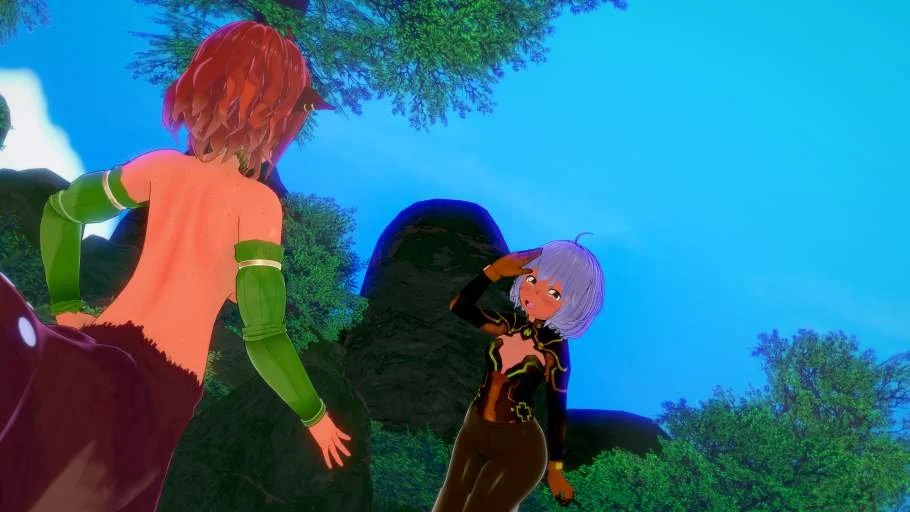
So, how to proceed? The wiki had warned that recruiting Amber required a bit of preparation. Amber was a deer-like tauric being, which meant Doe’s ship needed a special taur-friendly module for Amber to live and love comfortably. Also, Amber would only join if Doe had… shall we say, gotten very familiar with her at least five times. Essentially, Doe needed to prove herself as a consistent, trusted partner in Amber’s eyes (even if those encounters were largely physical due to Amber’s altered state of mind). Taking a deep breath, I decided to go for it, but on Doe’s terms. First, we made a pit stop in town to buy the taur-compatible ship equipment. Next, I purchased a supply of Sterilex contraceptive pills. Doe still had no interest in unintended pregnancy (and neither did I as the player!). If she was going to intimately engage with Amber multiple times, I wanted it to be safe and consequence-free. This was another boundary: a way to say yes to new experiences without sacrificing personal comfort or bodily autonomy. It strikes me that even this is reflective of RA’s focus on personal boundaries and self-management. We often discuss negotiating condom use or birth control in real relationships; in TiTS, I literally had to make sure Doe was prepared, demonstrating intentional consent each time.
With preparations made, we headed back into Mhen’ga’s wilds. Over the next few in-game days, Doe sought out Amber deliberately. Perhaps it was fate, or perhaps Doe’s growing eagerness (reading the wiki, it was indeed a stat that calculated Amber’s encounter possibility via Doe’s eagerness), but Amber appeared frequently. Each encounter was intense: Amber, overwhelmed by her mods-induced lust, would essentially throw herself at Doe. And gradually, Doe let herself indulge. I watched our once-prudish space captain explore sex in a raw, wholehearted way with Amber. These scenes were explicit and edgy, but crucially, they were opt-in. TiTS always asked if I wanted to proceed, and every single time with Amber, I chose yes. In those moments, I sensed Doe’s walls beginning to come down. She was learning that intimacy could be more than a stat reset or a risky distraction; it could be a path to connection and empathy. With each encounter, Amber’s in-game description subtly changed… Little glimpses of the person behind the haze. Doe noticed Amber’s moments of clarity and vulnerability. Piece by piece, she was earning Amber’s trust and piecing together her backstory. This wasn’t casual lust anymore; it was care.
By the time Doe had met the “five encounters” condition, something in both of us had shifted. Sure enough, the next time they met, an option popped up to invite Amber to join the crew. I still remember the thrill of hitting that “Recruit Amber” button. Amber, despite her addled state, agreed, a hint of hope amid her confusion. Suddenly Doe had a new companion aboard the ship, one who wasn’t just a utility (like Celise had been) but someone she felt responsible for. This marked a turning point in Doe’s journey. She was no longer a solo adventurer dabbling in one-night flings; she had a partner of sorts, someone to care for. And interestingly, this didn’t make her world smaller or narrower, it made it bigger. Adopting Amber into the crew felt like adding a new color to Doe’s life’s palette, not painting over the entire canvas. In RA terms, it was an example of expanding the network of intimacy rather than funneling all energy into one traditional romance. There was no talk of making Amber an exclusive lover or “settling down”; instead, Doe simply gave Amber a place in her life appropriate to Amber’s needs and their growing bond.
Bringing Amber onto the ship unlocked the next chapter of this journey: the “Cure Amber” quest arc. If I thought the game couldn’t surprise me more, I was wrong. On board, Amber’s true personality began to surface. She was sweet, funny, and artistically inclined (she loves sculpting and painting, as we later found out). But she was also clearly suffering. Her uncontrollable libido and the physical alterations to her body caused her pain and frustration. In tender moments, Amber confided in Doe about wanting her old self back. Thus, a prompt appeared: [Talk to Amber about Cure]. This kicked off one of TiTS’s most extensive side quests, one that spanned over 40 in-game days of research, travel, and waiting. It was an epic undertaking by TiTS standards, truly a narrative journey of its own. Doe had to seek out a scientist (Dr. Lumi) who specialized in reverse-engineering extreme transformations. Lumi agreed to help for a price, which in TiTS fashion meant not just credits but also some field work. Doe fetched rare ingredients, secured lab equipment, and even met other taurs for genetic samples (through some scenes that I roll my eyes at “having” to do, though I could have chosen my DNA samples a bit more carefully if I wanted to be patient. I was not patient, so I gritted my teeth), all on Amber’s behalf. The quest had me bouncing between planets and juggling it alongside Doe’s main mission and other side adventures, but Amber remained our emotional center. I appreciated that the game didn’t make the cure instantaneous; it insisted on each of the waiting periods for the next step of the cure to properly formulate, which meant Doe and Amber had to be patient. During that time, their relationship deepened organically. The narrative would occasionally update with Amber describing phantom sensations or hopeful remarks, and I took it as a chance to imagine their day-to-day: Amber practicing new hobbies on the ship to distract herself (the game later formalized this, as once was cured, Amber indeed develops hobbies you can support), and Doe checking in on her, bringing her treats from various planets. This long affective interlude was something I savored. Here was an adult game making me essentially role-play quiet domestic moments and acts of service, and I loved every bit of it.
Finally, the day came: Amber was cured. The tension that had thrummed through her every scene dissolved. The next time Doe approached her in the ship’s galley, Amber’s eyes were clear, her demeanor calm. She could think and feel beyond raw lust again. The gratitude and joy in that moment… I felt it right alongside them. Amber, in an emotional new scene, thanked Doe and expressed how strange and wonderful it was to have her mind back. And indeed, the game opened up a trove of post-cure content: Doe could now sleep with Amber, shower with her, or just talk about life. Amber even started picking up those hobbies in earnest, one by one, which Doe (and I) encouraged. She had endless love to give, she joked, now that her head wasn’t clouded 24/7. I felt it was time to have children with Amber. Doe had never allowed herself to be vulnerable to pregnancy before. In TiTS, pregnancy is a detailed system: gestation periods, belly size, due dates, and potentially permanent changes to your stats (and life) can all come with it. Up to now, I had maintained strict control over Doe’s fertility, chugging Sterilex whenever necessary and avoiding risky encounters. But here, in the safety of her ship with someone she deeply cared for, Doe made a pivotal choice: she would try to start a family with Amber. I reasoned that this decision was the culmination of how far Doe had come. She started out never wanting to give anyone even a nod at a bar; now she was prepared to have children in a polygalactic setting, on her own unconventional terms. Before taking the plunge, though, I did one last bit of preparation (old habits die hard!). Remember those body modifications the game allows? Well, during Amber’s cure quest, Doe had incidentally collected some biological reagents, specifically a set of “Motherhusks” from a plant that could alter pregnancy speed. With Lumi’s research complete, Doe used the Motherhusk treatments on herself to tweak her body for motherhood. These mods significantly decreased Doe’s gestation time (up to +700% speed, according to the item notes), meaning any pregnancy would progress much faster than a normal human’s. There was a trade-off: the treatments introduced a bit of Taint (a mildly corruptive essence) into Doe’s system, something I had avoided until then because too much Taint can ramp up libido or even end a playthrough if it hits 100%. But I deemed it an acceptable risk now. Doe wanted this, and a shorter pregnancy would minimize the time I had to wait and any chance of gameplay issues. She also bought some Laquine Ears, a lapine mod that would add random bunny traits to the character, and increase a 700% incubation period to 1000%. In lore, I imagined this as Doe symbolically letting a small guard down, embracing a “tainted” change because it served a positive, self-chosen purpose. And so it went: not long after Amber’s cure, Doe Steele became pregnant with Amber’s children.
The pregnancy arc that followed was one of the most unique sequences I’ve ever played through in any game. Thanks to the motherhusk and lapine modifications, a full human gestation was compressed to just 43 days (incubation period also counts the second participant, so for those counting, it averages out to 500% faster since all NPCs are likely at a standard incubation period). But in real time, experiencing those six weeks of game time felt substantial. I had the option to simply hit a fast-forward button, as TiTS lets you rest at the ship or the nursery to skip days… But I decided against it. Doe wasn’t about to sit around and twiddle her thumbs for over a month, and neither was I. Instead, we treated the pregnancy as part of the adventure. Doe continued to travel, take on odd jobs, and explore new locales, all while very much pregnant. This led to some touching and sometimes humorous moments. NPCs on various planets reacted differently to a mom-to-be adventuring in their midst (some offered congratulations, others protective caution, and a few fetishists found it or her lactation hot… TiTS covers all angles!). Doe herself had to adjust: as the days went by, descriptions of her growing belly and even newfound cravings appeared. In one episode, visiting a, let’s call it, cultural center on Myrellion (an ant-like alien planet), Doe decided to sample the local sweet nectar that the native Myr women produce and share. To her surprise, it caused an in-game status effect that made her exceptionally well-fed. I remember reading the updated character description and chuckling: Doe, who once couldn’t stand being told to drink at a party, was now literally drinking alien nectar and letting it change her body, all in the spirit of caring for her soon-to-be-born twins. And she was happy. The text had occasional triggers that talked about her mood (some good swings, some bad swings) and excitement about the pregnancy. It was as if the game knew this was a milestone in her personal arc… A reward for the long path we’d taken. When the day finally came, Doe delivered healthy twin girls (Athena and Beema, as I named them). The actual birth was handled in a few paragraphs of summary or commentary text by the nurse droids (TiTS often finds its own line, even if it’s a fetishist game), and I imagine Amber was right there by her side (not described in the summary, if my memory serves). I often chose to imagine scenes of Doe and Amber cooing over their newborns, or Amber playfully insisting on taking holo-photos of the “badass captain mom”. The emotional payoff was profound. Doe Steele, who began this journey as a loner with walls a mile high, had organically formed a family in the unlikeliest of ways.
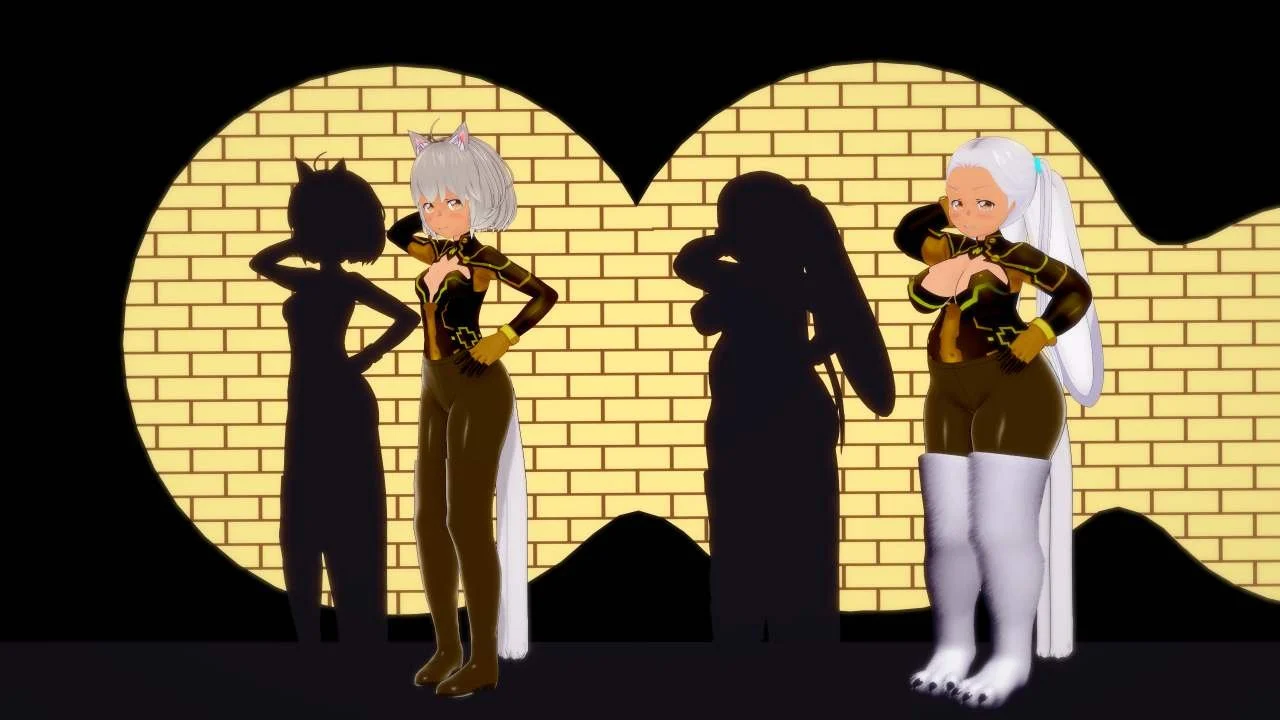
Throughout this, Amber remained an equal, open-hearted partner. One aspect I adore is that after Amber’s cure, she doesn’t turn into a jealous lover who demands Doe’s exclusivity. Quite the opposite: the game’s narrative (and my headcanon) emphasize that Amber understands and accepts that Doe has other encounters and adventures during the Planet Rush. There’s a lovely scene where Amber basically gives Doe her blessing, acknowledging that Doe’s wanderlust and promiscuity (such as it is) don’t diminish what they share. Amber is happy to be Doe’s companion on the ship, grateful for Doe’s help, and content knowing that their bond is strong even as Doe interacts with others. This kind of trust and freedom is at the heart of relationship anarchy. RA rejects the idea that love is a zero-sum game or that a committed partnership must come with ownership and exclusivity. Instead, each relationship is unique and not automatically ranked above others; ongoing honest communication and respect matter more than labels. Amber and Doe exemplified that. They were lovers and co-parents, but they were also, implicitly, open. I didn’t need the game to spell it out with a contract; it was simply the understanding we had. In RA terms, they practiced exactly what Pérez-Cortés describes, commitments that are voluntary and personal, with boundaries that don’t serve as “alibis for possession”. Doe didn’t impose rules on Amber beyond basic respect, and Amber didn’t try to confine Doe’s affection to herself. Their relationship was defined by choice every step of the way, even the choice to call it “family” when their twins were born.
Reflecting on Doe’s narrative journey, I see a thread of empowerment and growth through agency. Every major decision was driven by Doe’s (and my) deliberate choice. From accepting Tika’s immunity boost, to adopting the Ice Cold perk and a tease-first combat style, to opening up to Amber’s love and the idea of motherhood. At no point did the game wrest control from us; on the contrary, it consistently reinforced the importance of consent, customization, and player comfort in shaping the story. It would warn of options that would take pre-determined paths or any that would remove any agency or have unintended side effects. If I wanted to opt out of content, the game let me. If I tentatively opted in, it rewarded my trust with surprisingly thoughtful (and also lewd) writing. And when I was ready to push my boundaries further, TiTS supported it every step of the way, providing tools (like save states, items, and responsive narrative branches) to make sure it always felt safe. I cannot overstate how impactful that was. It’s a rare thing to find an adult game (or any game for that matter) that so effectively caters to an experience as niche as being an aromantic asexual exploring intimacy. Yet TiTS did exactly that by being, at its core, a sandbox of possibilities. Doe’s story is ultimately unique to the choices we made. Another player could have taken her same start and turned her into a promiscuous bimbo (yes, bimbofication is a game mechanic, and I’ve read quite a few fictions that the game lets contributors write in the codex) or a chaste battle-hardened mercenary with zero attachments. The game wouldn’t bat an eye either way. In our case, we ended up with something beautiful and unexpected: a tale of consensual kink exploration turning into found family, all played out on a stage of stars. It’s a journey I’ll carry with me, as both a thrilling sci-fi caper and a deeply personal odyssey of self-discovery.