I. The Enduring Allure of Mannequins
For many, the word "mannequin" might conjure images from horror films, figures lurking in shadows, or perhaps just a fleeting glance in a store window. Yet, for some, these silent, steadfast forms hold a peculiar fascination. Personally, a significant part of my creative life revolves around them—not the unsettling, cinematic kind, but the everyday store dummies that quietly model our clothes. I even own two child-sized mannequins, standing at approximately 50 and 42.5 inches tall, roughly equivalent to an 8-10 year old and a 4-5 year old, respectively. I already itch to find more to expand this collection, perhaps a different body type or pose.
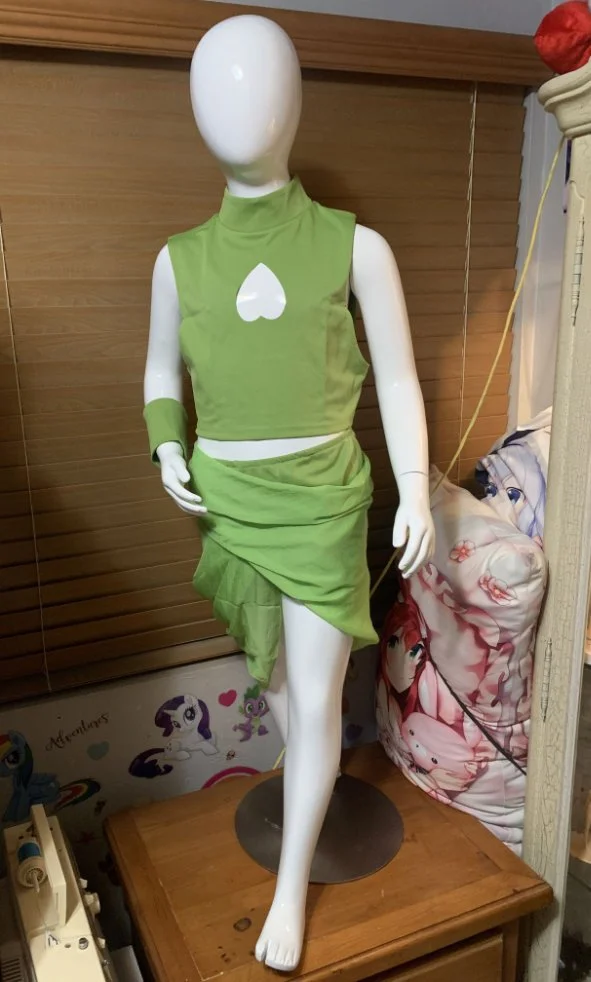
My connection to these figures stems from a passion for creation: I sew garments, primarily dresses, typically made from commercially available patterns. There is an undeniable satisfaction in witnessing these creations "come to life" on the forms, transforming fabric into art. This process, and the excitement of sharing the results, has even led me to consider venturing into cosplay costumes. Aesthetically, I am particularly drawn to "egghead" mannequins. Those with smooth, featureless heads devoid of facial details. Both of my current mannequins are glossy white eggheads, and I find that their sleek, abstract head shape suggests focus to the clothing itself, allowing the design to speak loudly. And of course, you may adorn them with hats (or give them headpats).
This aesthetic preference extends to my appreciation for art. Michael Benisty’s sculpture “In Every Lifetime I Will Find You” stands as a profound source of inspiration. This work features two shiny, reflective humanoid figures embracing, which are, in essence, colossal metallic eggheaded mannequins with mirrored surfaces. Displayed at events like Burning Man and later at Area15 in Las Vegas, these otherworldly, mirror-surfaced lovers capture precisely the kind of peculiar "mannequin magic" that resonates deeply with me. The sculpture's ability to reflect its surroundings and viewers, while remaining a distinct, stylized human form, highlights the mannequin's potential as a vessel for projection and universal identification.
This personal engagement with mannequins, moving beyond a mere hobby, prompted a deeper, more academic inquiry. It led to the central question explored in this paper: Why do mannequins endure? Their persistence extends beyond their literal physical durability. A quality they are, indeed, built to possess. They also exhibit remarkable endurance culturally, adapting and finding new meaning in society, and imaginatively, as powerful symbols in our collective consciousness. The subsequent sections will explore this endurance from material, cultural, and imaginative perspectives.