… / / From Quirk to Art Form: Low-Poly Revival and Nostalgia
katsumimaki.com
General
  • Home
  • About
  • Start Here
Topics
  • Newsletters
    • Fanmade
      • Anti Group Tendencies
        • Page 1
        • Life as an “Anti-Group”
        • Afterword
      • Burnout
        • Page 1
        • Afterword
      • Empathy
        • Page 1
        • Afterword
      • Friendswithyou
        • Origins in Miami: Seeds of a Playful Universe (2002–2004)
        • Building a World of Play: Interactive Installations (2005–2009)
        • Rainbow City: Exploding onto the Global Stage (2010–2012)
        • Animism, Art, and “Happy Virus”: A Philosophy of Play
        • Collaborations and Pop Culture Crossovers (2013–2017)
        • Post-Internet Explorations: From Virtual Worlds to NFTs (2015–2022)
        • Conclusion: Pop Spiritualists in a Connected Era
      • From Dada Collages To Ai Art
        • Introduction and Personal Motivation
        • Dadaism: Collage and the Original “Anti-Art” Movement
        • AI-Generated Art: Algorithms as the New Collage
        • Comparing Dadaism and “AI-Artism”
        • Modality and Technique: Collage vs. Computation
        • Origins and Intentions: Art Movement vs. Tech Innovation
        • Reception and Cultural Impact: Anti-Art Manifesto vs. Existential Disruption
        • Outcomes and Future Trajectories: Lessons from Dada for AI Art
        • Conclusion: Art, AI, and Accessibility – A Personal Reflection
      • Lights Sound Printing
        • Page 1
        • Lighting: High Color Fidelity vs. Spectral Restriction
        • Audio: Theatre Mic Techniques for a Hybrid D&D Game
        • Digital Fabrication: From Desktop 3D Printing to Stage-Size Scenery
        • Conclusion: Personal Reflections on Tech in Theatre
      • Littlespaces
        • Overalls and Feeling Small
        • Voluntary vs. Involuntary Age Regression
        • Stress, Comfort, and Little Space
        • Age Regression vs. Age Play
        • The ABDL Identity and Spectrum
        • Community Norms, Safety, and Stigma
        • Unpacking Misconceptions
        • Afterword
      • Monoline
        • Origins, Purpose, and Brief History
        • Shel Silverstein’s Expressive Monoline Style
        • From Viral Outlines to Indie Cartoons: Monoline’s Digital Revival
        • Bridging Traditional and Digital: Community Art and Personal Practice
        • The Commercial and Algorithmic Appeal of Monoline
        • Communities and Culture: Constraints as a Creative Identity
        • Conclusion and Personal Reflections
        • Afterword
      • Never Have I Ever: Kinks
        • About Me
        • Aromantic Asexual Autonomy
        • A Space for Kink Exploration: Trials in Tainted Space
        • Consent and Customization in a Kinky Universe
        • From Kink Exploration to Relational Ethics
        • Doe Steele: The Trials in Tainted Space
        • Opening Up on Mhen’ga: Amber Changes the Game
        • Crew as Community
        • Relationship Anarchy Among the Stars
        • Afterword
      • Ps1lowpoly
        • Page 1
        • Early Low-Poly 3D: Console Limitations Shaping an Aesthetic
        • From Quirk to Art Form: Low-Poly Revival and Nostalgia
        • Modern Low-Poly in Contemporary Media and Art
        • Super Mario 64
        • Indie Animators and Series
        • Comedy Skits and Memes
        • Cozy vs. Creepy
        • Interview with an Appreciator
        • Conclusion
        • Afterword Fave (Interviewee)
      • Saved My Life
        • My Relationship With Food
        • My Trip to the Hospital
        • What My Journey Looks Like Now
        • Re-Learning My Purpose
        • Afterword
      • Slowart
        • Additive
        • Subtractive (Decay)
        • Performative
        • Slow-Change (Growth)
        • Latent Activation
        • Pilgrimage
        • Witnessing
        • Conclusion: Embracing the Art of Slow Moments
      • The Life Death And Afterlife Of Mannequins
        • I. The Enduring Allure of Mannequins
        • II. The Material and Historical Trajectory of Mannequins
        • Evolution from Functional Forms to Lifelike Figures
        • The Fiberglass Revolution: Durability and Mass Production
        • III. Mannequins as Cultural Artifacts: From Discarded to Desired
        • The Paradox of Invisibility and Persistent Presence
        • Sustainable Second Lives: The Mannequin Madness Model (Judi Henderson)
        • Table 2: Case Studies of Mannequin Reuse
        • The Uncanny Valley: Mannakin Hall as Experiential Art (Roz Edwards)
        • IV. Mannequins in the Human Imagination: Companionship and Projection
        • V. Reflections on Mannequin Endurance: A Personal Synthesis
      • Valentine
        • Page 1
        • A Sweet Gesture After Lockdown
        • Yearning vs. Attraction
        • Thought Experiments with a Safety Net
        • The Fun of Shipping (Even for the Aro-Ace Crowd)
        • Conclusion: Choose Your Own Valentine
    • Original
      • 2024-09 September
      • 2024-10 October
      • 2024-11 November
      • 2024-12 December
      • 2025-01 January
      • 2025-02 February
      • 2025-03 March
      • 2025-04 April
      • 2025-05 May
      • 2025-06 June
      • 2025-07 July
      • 2025-08 August
      • 2025-10 October
      • 2025-11 November
      • 2025-12 December
      • 2026-01 January
      • 2026-02 February
      • 2026-03 March
  • Stories
    • Fanmade
      • Daggerheart
        • CiCi
          • Page 1
          • Page 2
      • Dnd
        • Azurion Nightfall
          • Page 1
        • Little
          • Page 1
      • History
        • Prahlada and Malala
          • Page 1
          • Page 2
          • Page 3
          • Page 4
          • Page 5
          • Page 6
          • Page 7
          • Page 8
          • Page 9
          • Page 10
      • My Little Pony
        • Stellar Redux
          • Page 1
          • Page 2
          • Page 3
          • Page 4
      • Pathfinder
        • Occupation on Vesk 3
          • Page 1
          • Page 2
          • Page 3
          • Page 4
      • Satisfactory
        • Everroot
          • Page 1
        • Reaper and ADA
          • Chapter 1
          • Chapter 2
          • Chapter 3
          • Chapter 4
          • Chapter 5
          • Chapter 6
          • Chapter 7
          • Chapter 8
      • Star Trek
        • USS Mesa
          • Page 1
          • Page 2
          • Page 3
      • Star Wars
        • Protocols and Princesses
          • Page 1
        • Shakka'Dira
          • Page 1
          • Page 2
          • Page 3
          • Page 4
          • Page 5
          • Page 6
          • Page 7
          • Page 8
          • Page 9
      • Trolls
        • Rave and Relaxation
          • Page 1
    • Original
      • Neon Fairy Lights
        • Main Story
          • Page 1
          • Page 2
          • Page 3
          • Page 4
          • Page 5
          • Page 6
          • Page 7
          • Page 8
          • Page 9
          • Page 10
          • Page 11
          • Page 12
          • Page 13
          • Page 14
          • Page 15
      • Northern Lights
        • Main Story
          • Page 1
          • Page 2
          • Page 3
          • Page 4
          • Page 5
          • Page 6
      • Virtual World
        • Commands
          • 01 Bash
          • 02 Cat
          • 03 Ping
          • 04 Mint
          • 05 Vi
          • 06 Echo
          • 07 Dig
          • 08 Tar
          • 09 Sudo
          • 10 Kali
          • 11 Nano
          • 12 RPM
          • 13 Tail
          • 14 Grep
          • 15 Cron
          • 16 Alma
          • 17 Shell
          • 18 Yaml
          • 19 Sed
          • 20 Curl
        • Five Stories
          • 01 Cautious 01
          • 02 Desperate 01
          • 03 Fading 01
          • 04 Cautious 02
          • 05 Indifferent 01
          • 06 Gentle 01
          • 07 Cautious 03
          • 08 Desperate 02
          • 09 Fading 02
          • 10 Cautious 04
          • 11 Indifferent 02
          • 12 Gentle 02
          • 13 Cautious 05
          • 14 Desperate 03
          • 15 Fading 03
          • 16 Cautious 06
          • 17 Indifferent 03
          • 18 Gentle 03
          • 19 Cautious 07
          • 20 Desperate 04
          • 21 Fading 04
          • 22 Cautious 08
          • 23 Indifferent 04
          • 24 Gentle 04
          • 25 Cautious 09
          • 26 Desperate 05
          • 27 Fading 05
          • 28 Cautious 10
          • 29 Indifferent 05
          • 30 Gentle 05
          • 31 Cautious 11
          • 32 Desperate 06
          • 33 Fading 06
          • 34 Cautious 12
          • 35 Indifferent 06
          • 36 Gentle 06
        • Main Story
          • Page 1
          • Page 2
          • Page 3
          • Page 4
          • Page 5
          • Page 6
          • Page 7

From Quirk to Art Form: Low-Poly Revival and Nostalgia

By the late 2010s and 2020s, what was once a dated look has been revived as an artistic choice. A wave of indie developers and artists who grew up with 90s consoles began imitating the low-poly style, not out of necessity but out of love for its look and the feelings it evokes. Nostalgia is a major driver. Many creators feel a thrill at creating games that look like the ones they used to cherish, tapping into that first spark of gaming in the 90s. Because those early 3D graphics were the backdrop of childhood for millennials, using the style today can instantly transport viewers to a warm, nostalgic frame of mind.

Yet it’s not only about nostalgia. The low-poly aesthetic has intrinsic artistic merits that creators celebrate. In game design discussions, the low-poly style can be seen as 3D gaming’s equivalent to minimalism or impressionism. Early 3D left a lot to the imagination. A character made of a few dozen tetrahedrons requires the player to mentally smooth out and interpret what they’re seeing. Many find that appealing, arguing that the N64/PS1 era was the last to really achieve this feeling of engaging imagination through abstraction. In other words, the visual ambiguity of low-poly graphics can make experiences more personal and memorable than hyper-detailed realism.
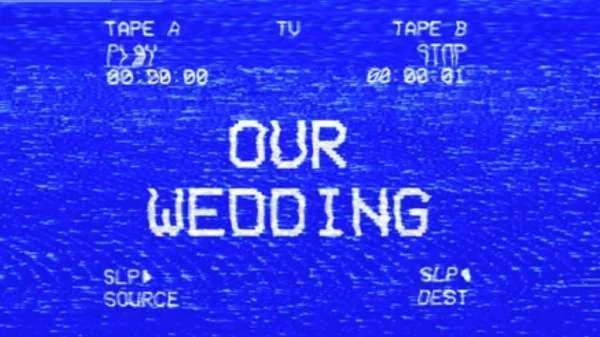
This simplicity can also aid focus and mood. With fewer details on screen, there is less visual noise, which can make scenes feel more clear or even relaxing. Likewise, what once were seen as flaws, such as grainy textures, polygon jitter, or aliasing, are now sometimes embraced as aesthetic texture. Media scholars talk about “medium-specific noise”: the idea that the quirks of an old medium (like film grain or VHS fuzz) can evoke authenticity or emotion when deliberately reintroduced into modern media. The low-poly revival follows this pattern. Artists add CRT filters, polygon jitter, and low-res textures not to mask limitations but to signal a certain mood. Paradoxically, these imperfections can make a work feel more authentic or evocative to an audience who remembers them fondly.

Notably, the low-poly renaissance first gained major traction in the indie horror scene. Developers like Puppet Combo began intentionally using PS1-era graphics for horror games, recognizing that the unsettling imperfection of low-poly visuals could enhance fear. In fact, the technique harks back to how the original Silent Hill (1999) turned technical limits into horror features, as thick fog would hide draw distance and distorted creatures were born of few polygons. When modern creators adopt PS1-style graphics, it’s no surprise many gravitate to horror or surreal imagery that benefits from feeling a bit “wrong” or lost in translation. At the same time, other creators use the style to craft comforting, whimsical worlds that feel like “lost PS1 games” from a gentler past. In all cases, PS1 graphics have become an intentional art style: a palette of low fidelity that creators wield to elicit nostalgia, humor, coziness, or dread.