… / / Origins and Intentions: Art Movement vs. Tech Innovation
katsumimaki.com
General
  • Home
  • About
  • Start Here
Topics
  • Newsletters
    • Fanmade
      • Anti Group Tendencies
        • Page 1
        • Life as an “Anti-Group”
        • Afterword
      • Burnout
        • Page 1
        • Afterword
      • Empathy
        • Page 1
        • Afterword
      • Friendswithyou
        • Origins in Miami: Seeds of a Playful Universe (2002–2004)
        • Building a World of Play: Interactive Installations (2005–2009)
        • Rainbow City: Exploding onto the Global Stage (2010–2012)
        • Animism, Art, and “Happy Virus”: A Philosophy of Play
        • Collaborations and Pop Culture Crossovers (2013–2017)
        • Post-Internet Explorations: From Virtual Worlds to NFTs (2015–2022)
        • Conclusion: Pop Spiritualists in a Connected Era
      • From Dada Collages To Ai Art
        • Introduction and Personal Motivation
        • Dadaism: Collage and the Original “Anti-Art” Movement
        • AI-Generated Art: Algorithms as the New Collage
        • Comparing Dadaism and “AI-Artism”
        • Modality and Technique: Collage vs. Computation
        • Origins and Intentions: Art Movement vs. Tech Innovation
        • Reception and Cultural Impact: Anti-Art Manifesto vs. Existential Disruption
        • Outcomes and Future Trajectories: Lessons from Dada for AI Art
        • Conclusion: Art, AI, and Accessibility – A Personal Reflection
      • Lights Sound Printing
        • Page 1
        • Lighting: High Color Fidelity vs. Spectral Restriction
        • Audio: Theatre Mic Techniques for a Hybrid D&D Game
        • Digital Fabrication: From Desktop 3D Printing to Stage-Size Scenery
        • Conclusion: Personal Reflections on Tech in Theatre
      • Littlespaces
        • Overalls and Feeling Small
        • Voluntary vs. Involuntary Age Regression
        • Stress, Comfort, and Little Space
        • Age Regression vs. Age Play
        • The ABDL Identity and Spectrum
        • Community Norms, Safety, and Stigma
        • Unpacking Misconceptions
        • Afterword
      • Monoline
        • Origins, Purpose, and Brief History
        • Shel Silverstein’s Expressive Monoline Style
        • From Viral Outlines to Indie Cartoons: Monoline’s Digital Revival
        • Bridging Traditional and Digital: Community Art and Personal Practice
        • The Commercial and Algorithmic Appeal of Monoline
        • Communities and Culture: Constraints as a Creative Identity
        • Conclusion and Personal Reflections
        • Afterword
      • Never Have I Ever: Kinks
        • About Me
        • Aromantic Asexual Autonomy
        • A Space for Kink Exploration: Trials in Tainted Space
        • Consent and Customization in a Kinky Universe
        • From Kink Exploration to Relational Ethics
        • Doe Steele: The Trials in Tainted Space
        • Opening Up on Mhen’ga: Amber Changes the Game
        • Crew as Community
        • Relationship Anarchy Among the Stars
        • Afterword
      • Ps1lowpoly
        • Page 1
        • Early Low-Poly 3D: Console Limitations Shaping an Aesthetic
        • From Quirk to Art Form: Low-Poly Revival and Nostalgia
        • Modern Low-Poly in Contemporary Media and Art
        • Super Mario 64
        • Indie Animators and Series
        • Comedy Skits and Memes
        • Cozy vs. Creepy
        • Interview with an Appreciator
        • Conclusion
        • Afterword Fave (Interviewee)
      • Saved My Life
        • My Relationship With Food
        • My Trip to the Hospital
        • What My Journey Looks Like Now
        • Re-Learning My Purpose
        • Afterword
      • Slowart
        • Additive
        • Subtractive (Decay)
        • Performative
        • Slow-Change (Growth)
        • Latent Activation
        • Pilgrimage
        • Witnessing
        • Conclusion: Embracing the Art of Slow Moments
      • The Life Death And Afterlife Of Mannequins
        • I. The Enduring Allure of Mannequins
        • II. The Material and Historical Trajectory of Mannequins
        • Evolution from Functional Forms to Lifelike Figures
        • The Fiberglass Revolution: Durability and Mass Production
        • III. Mannequins as Cultural Artifacts: From Discarded to Desired
        • The Paradox of Invisibility and Persistent Presence
        • Sustainable Second Lives: The Mannequin Madness Model (Judi Henderson)
        • Table 2: Case Studies of Mannequin Reuse
        • The Uncanny Valley: Mannakin Hall as Experiential Art (Roz Edwards)
        • IV. Mannequins in the Human Imagination: Companionship and Projection
        • V. Reflections on Mannequin Endurance: A Personal Synthesis
      • Valentine
        • Page 1
        • A Sweet Gesture After Lockdown
        • Yearning vs. Attraction
        • Thought Experiments with a Safety Net
        • The Fun of Shipping (Even for the Aro-Ace Crowd)
        • Conclusion: Choose Your Own Valentine
    • Original
      • 2024-09 September
      • 2024-10 October
      • 2024-11 November
      • 2024-12 December
      • 2025-01 January
      • 2025-02 February
      • 2025-03 March
      • 2025-04 April
      • 2025-05 May
      • 2025-06 June
      • 2025-07 July
      • 2025-08 August
      • 2025-10 October
      • 2025-11 November
      • 2025-12 December
      • 2026-01 January
      • 2026-02 February
      • 2026-03 March
  • Stories
    • Fanmade
      • Daggerheart
        • CiCi
          • Page 1
          • Page 2
      • Dnd
        • Azurion Nightfall
          • Page 1
        • Little
          • Page 1
      • History
        • Prahlada and Malala
          • Page 1
          • Page 2
          • Page 3
          • Page 4
          • Page 5
          • Page 6
          • Page 7
          • Page 8
          • Page 9
          • Page 10
      • My Little Pony
        • Stellar Redux
          • Page 1
          • Page 2
          • Page 3
          • Page 4
      • Pathfinder
        • Occupation on Vesk 3
          • Page 1
          • Page 2
          • Page 3
          • Page 4
      • Satisfactory
        • Everroot
          • Page 1
        • Reaper and ADA
          • Chapter 1
          • Chapter 2
          • Chapter 3
          • Chapter 4
          • Chapter 5
          • Chapter 6
          • Chapter 7
          • Chapter 8
      • Star Trek
        • USS Mesa
          • Page 1
          • Page 2
          • Page 3
      • Star Wars
        • Protocols and Princesses
          • Page 1
        • Shakka'Dira
          • Page 1
          • Page 2
          • Page 3
          • Page 4
          • Page 5
          • Page 6
          • Page 7
          • Page 8
          • Page 9
      • Trolls
        • Rave and Relaxation
          • Page 1
    • Original
      • Neon Fairy Lights
        • Main Story
          • Page 1
          • Page 2
          • Page 3
          • Page 4
          • Page 5
          • Page 6
          • Page 7
          • Page 8
          • Page 9
          • Page 10
          • Page 11
          • Page 12
          • Page 13
          • Page 14
          • Page 15
      • Northern Lights
        • Main Story
          • Page 1
          • Page 2
          • Page 3
          • Page 4
          • Page 5
          • Page 6
      • Virtual World
        • Commands
          • 01 Bash
          • 02 Cat
          • 03 Ping
          • 04 Mint
          • 05 Vi
          • 06 Echo
          • 07 Dig
          • 08 Tar
          • 09 Sudo
          • 10 Kali
          • 11 Nano
          • 12 RPM
          • 13 Tail
          • 14 Grep
          • 15 Cron
          • 16 Alma
          • 17 Shell
          • 18 Yaml
          • 19 Sed
          • 20 Curl
        • Five Stories
          • 01 Cautious 01
          • 02 Desperate 01
          • 03 Fading 01
          • 04 Cautious 02
          • 05 Indifferent 01
          • 06 Gentle 01
          • 07 Cautious 03
          • 08 Desperate 02
          • 09 Fading 02
          • 10 Cautious 04
          • 11 Indifferent 02
          • 12 Gentle 02
          • 13 Cautious 05
          • 14 Desperate 03
          • 15 Fading 03
          • 16 Cautious 06
          • 17 Indifferent 03
          • 18 Gentle 03
          • 19 Cautious 07
          • 20 Desperate 04
          • 21 Fading 04
          • 22 Cautious 08
          • 23 Indifferent 04
          • 24 Gentle 04
          • 25 Cautious 09
          • 26 Desperate 05
          • 27 Fading 05
          • 28 Cautious 10
          • 29 Indifferent 05
          • 30 Gentle 05
          • 31 Cautious 11
          • 32 Desperate 06
          • 33 Fading 06
          • 34 Cautious 12
          • 35 Indifferent 06
          • 36 Gentle 06
        • Main Story
          • Page 1
          • Page 2
          • Page 3
          • Page 4
          • Page 5
          • Page 6
          • Page 7

Origins and Intentions: Art Movement vs. Tech Innovation

A striking difference between Dadaism and the AI art boom is who started it and why. Dada was initiated by artists (poets, painters, performers) who were passionately reacting against the socio-political climate of World War I and what they saw as the hypocrisy of the art establishment. Their intentions were explicit: they wrote manifestos, staged events, and wanted to shock society into new ways of thinking. In contrast, the current wave of AI art generation was not started by artists per se, but by technologists and researchers. The people who developed GANs (Generative Adversarial Networks) or diffusion models typically came from computer science labs and companies. Their goal was to push the frontier of what AI can do, often with commercial or scientific motivations, not to make an artistic statement. For instance, Stable Diffusion’s creation involved researchers and a company (Stability AI) aiming to democratize image generation technology, not a bohemian café full of artists trying to overthrow bourgeois values. Thus, the impetus differs: Dada was a cultural movement, whereas AI art has emerged as a technology-driven trend.

This difference in origin also means the “movement” of AI art is more diffuse and arguably less intentional. There was no manifesto declaring “AI art will challenge art!” (at least not at first). Instead, the challenge to art traditions from AI has been an inadvertent byproduct. Programmers wanted to solve problems like “can we generate realistic images?” and succeeded spectacularly, only to find that this invention unsettled the art world. Now, belatedly, some tech people and artists are reflecting on AI art’s place in art history, drawing parallels to photography, Dada, Pop Art, etc. But this theoretical framing came after the fact. Dadaists knew they were doing something outrageous and revelled in it; early AI model builders were often surprised by how human-like their machine’s creations appeared, and did not necessarily intend to start an art revolution. In summary, Dada’s anti-art was ideologically driven by artists, whereas AI’s anti-art (if we call it that) is emergent, driven by algorithmic innovation and later adopted by masses of users, with artists then reacting to it.
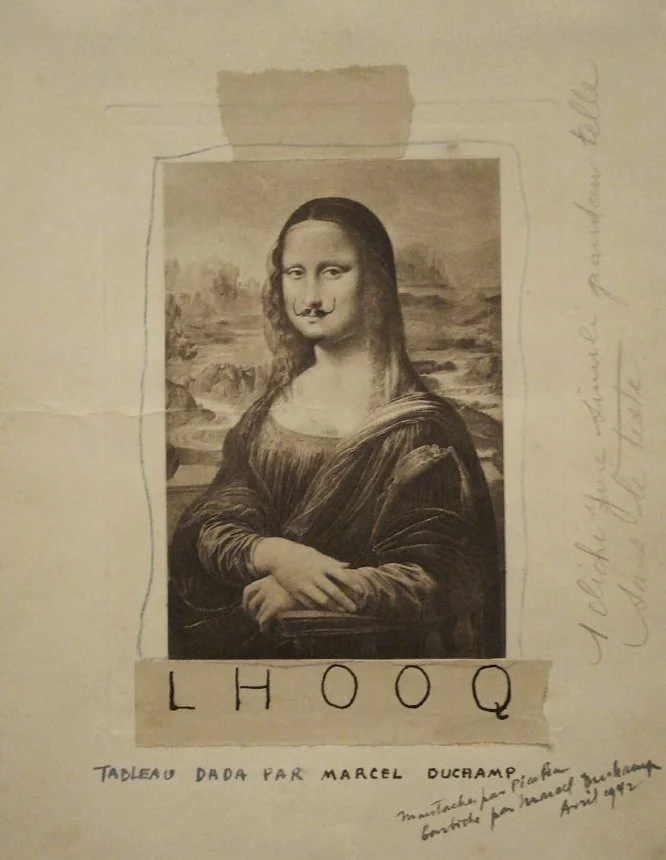
Another aspect is populace and accessibility. Dada, despite its populist rhetoric, was actually a fairly small avant-garde circle. Its ideas spread later, but the movement itself involved a limited number of practitioners. By contrast, AI image generation is used by millions of people within a short span. In some sense, AI art is more populist in practice. Anyone with an internet connection can produce images now, often for free or cheaply. There’s a democratizing force here: you no longer need years of training to create a passable illustration for your story or a concept for your project (such as a game, paper, or slides); the AI can do it from your prompt. This raises an ironic parallel: Dada wanted to break art free from elite control and make a statement that art belongs to everyone and no one (by saying “anything can be art”). AI art also breaks the monopoly of skilled artists, allowing laypeople to produce imagery. But while Dada intentionally posed a challenge (“our anti-art is for all, down with professional art”), AI’s challenge is more accidental and commercial (technology making a task easier and faster, for better or worse). In effect, the populace that started the movement differs – a handful of disillusioned artists in the 1910s vs. a global network of engineers and then mass users in the 2020s – and that shapes the movements’ characters.

L.H.O.O.Q., Marcel Duchamp, 1919