Communities and Culture: Constraints as a Creative Identity
One of the most fascinating aspects of monoline art is how it has been embraced by communities over time, effectively becoming a part of internet and fan culture. Throughout the history of online art, people have not only accepted the constraints of monoline drawing, they’ve often worn them as a badge of identity. In academic terms, this is a form of vernacular creativity, as a sort of folk art or folk design that emerges organically among groups of non-professional creators. It’s the visual equivalent of folk music: simple, accessible, passed around peer-to-peer, and reflective of the community’s spirit. Let’s look at how various communities have turned the limitation of a single-width line into a source of pride, humor, and camaraderie.
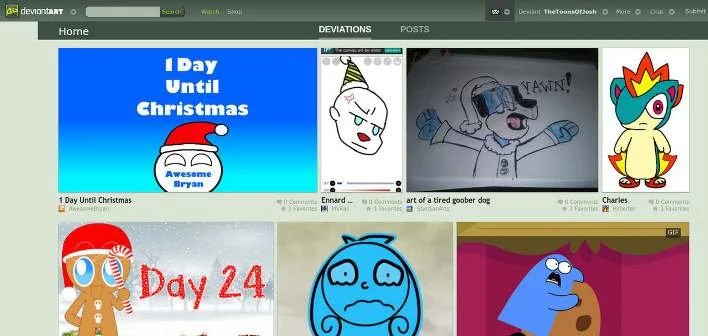
Early Online Art Forums: In the late 1990s and early 2000s, internet forums like Elfwood (for fantasy art) and DeviantArt were gathering places for hobbyist artists. Many of these artists were young, learning, and often working with whatever tools they had, perhaps a scanner and a ballpoint pen, or a mouse and MS Paint. These constraints naturally led to a certain look: clean outlines, flat or no colors, relatively simple compositions. Rather than seeing thousands of similar-looking drawings as a drawback, these communities leaned into it. A “clean lineart + flat colors” style became a celebrated norm. Artists would even upload blank line art for others to download and color, an activity that only works well if the line art is clear and uniform. Getting smooth monoline outlines with a mouse was a skill to be proud of, and people would share tips (“use the pen tool in Photoshop” or “zoom in 800%”). The limitation (no fancy tablet or variable brush) united them in a common visual language. Looking back, the art from that era (whether it was anime or cartoon fan characters or original characters) often has a distinctive monoline quality. It wasn’t mandated from anywhere; it emerged because that’s what the tools and the community values produced. Many artists who grew up in that environment (some of whom are now professionals) still carry a fondness for the style, and you can spot its influence in their more polished works.

Memes and DIY Comics: Around the same time, another corner of internet culture was turning monoline drawing into an identity marker: the world of memes and webcomics. A classic example is the “Rage Comics” phenomenon of the late 2000s. These were simple comics shared on forums and sites like 4chan and Reddit, characterized by stick-figure characters and a set of crudely drawn facial expressions (the “rage faces”). By any artistic standard, they were extremely basic, usually black line drawings on a white background with maybe a bit of fill… But that was the point. The art was intentionally amateurish and uniform, which sent a message: anyone can join in and make these; it’s about the humor, not the art. The consistency of the monoline stick-figure style became the visual identity of that meme culture. It was a shared constraint that signaled membership: if you could distill your joke into this simple format, you were part of the club. This is a perfect illustration of our third question on community identity. The limitation (only MS Paint-level drawing allowed, essentially) turned into a proud tradition. Even a novice could contribute a funny, crude idea and the rough uniform lines gave it the “official” meme stamp of approval.
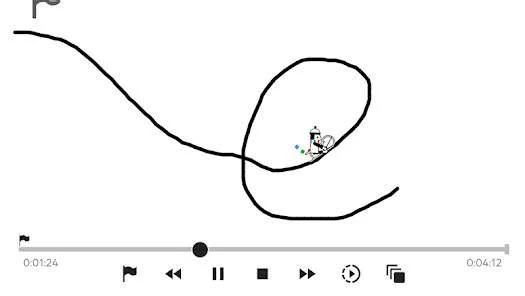
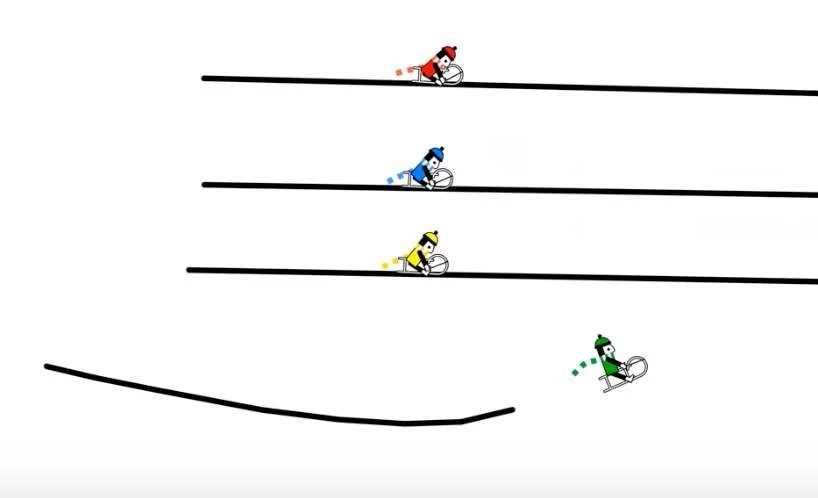
Another community example is Line Rider, a small Flash game/animation toy that became an internet craze around 2006. In Line Rider, you draw lines which a little sled character then rides along, like a sledding track. People became obsessed with creating elaborate tracks, which means creating elaborate drawings, since the track could loop and overlap creatively. Entire YouTube videos showcased intricate Line Rider courses synchronised to music, all essentially one big monoline drawing in motion. Some of those channels I still follow to this day, such as DoodleChaos. The community around it treated those continuous line drawings as artworks and challenges. Here again, a strict limitation was the foundation of a whole subculture of creators. Everyone understood the “language” of the line because they all used the same tool, and the thrill came from seeing just how complex and beautiful a line could become in the right hands.
The broader cultural takeaway is that constraints can foster creativity and community more than unlimited options do. Human beings seem to enjoy a good limitation as a puzzle to solve and as a collective identity to adopt. Monoline art, being such a clear and simple limitation, is the perfect catalyst for this phenomenon. It has effectively become a folk art of the digital age. Just as quilting circles or folk song groups would all abide by certain simple patterns that defined their tradition, online art communities use the uniform line as a common thread. They’ve proven that creativity isn’t about having the fanciest brush or infinite colors. Sometimes, the most creativity comes when you’re given one pencil and told, “make something that amazes us.” And time after time, people do, to the amazement of themselves and others.
In addressing our third key question, we see that online groups have indeed turned technological limitations into cultural badges. “We are the MS Paint cartoonists; we are the monoliners” such identities carry a mix of humor and pride. They democratize art, turning it into a participatory game rather than a spectator sport. And crucially, these cultural practices keep the monoline style evolving. Each new wave of participants might add a little twist, such as a certain way of drawing eyes or a trendy subject matter, but the lineage of the style can be traced all the way back to those first constraints we discussed in the introduction. In that sense, every casual doodler on Reddit working in monoline is connected to the legacy of pen-and-ink illustrators and pixel artists before them, whether they know it or not. The uniform line truly has become a folk emblem of various online subcultures, a simple mark that carries a century of creative history.