Pilgrimage
Slow Art as Journey and Experience. Sometimes, the process of getting to the art is part of the art. The pilgrimage lens of slow art highlights works and experiences that require time, travel, or sustained effort from the audience. In these cases, you can’t simply consume the art on demand; you must embark on a journey (literal or metaphorical) to earn the experience. This might mean traveling to a remote location, following a long trail, or waiting for the right moment in a distant place. The journey itself often heightens the appreciation of the artwork, as the investment of time and energy becomes intertwined with the aesthetic or spiritual impact. In a way, the audience’s dedication becomes a component of the piece. Pilgrimage in art draws inspiration from religious or cultural pilgrimages (think of journeys to sacred sites like Mecca or Santiago de Compostela), but here the destination could be a remote earthwork sculpture, an isolated installation, or any site where slowness of approach is deliberate. This lens reminds us that art isn’t always a static thing to be encountered; it can be an experience stretched out in time and space, requiring movement and anticipation. In an era of instant digital access, pilgrimage art lures us back to the physical world, where one might have to drive, hike, or otherwise slow down to finally stand in the presence of something extraordinary (source).

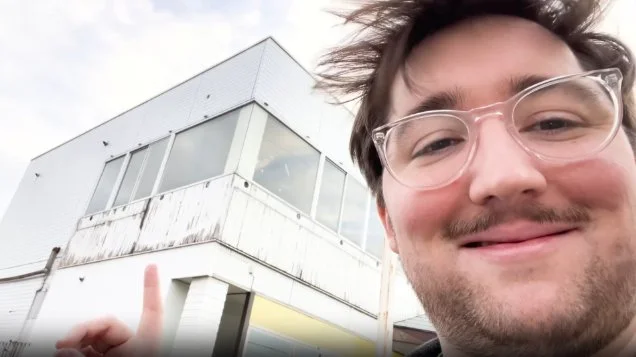
A compelling public example of the pilgrimage lens in slow art comes from an unexpected source: YouTube creator Nick Robinson, known for his quirky, investigative deep-dives into niche corners of internet and pop culture history (channel). Robinson’s videos often begin with a tiny mystery – an obscure app, a forgotten piece of media, or a surreal photo passed around the web – and balloon into sprawling, multi-part journeys that span continents and months of research. What sets his work apart isn’t just the subject matter, but the way he approaches it: not as content to be googled and rehashed from home, but as puzzles to be solved with actual movement, dedication, and presence. Take, for instance, his search for a lost augmented reality app released by Pizza Hut in partnership with the virtual pop idol Hatsune Miku. Most would dismiss it as a strange footnote in fast food marketing history, but Robinson made it a mission. After exhausting every online lead, he flew to Japan to physically investigate Domino’s HQ. What emerged was not just a video essay, but a pilgrimage. The final “artifact” (a copy of the lost app) became imbued with the effort it took to find it. In another case, Robinson set out to locate a bizarre electronics store spotted in a single blurry image online: “Michaelsoft Binbows.” Through digital sleuthing, such as Google Maps deep dives, street-view reconnaissance, and crowd-sourced clues, he narrowed it down to a remote location in Japan. But he didn’t stop there. He actually flew there, walked the streets, and peeked inside the storefront. What he found was both mundane and magical: a real place that somehow validated the strange image’s existence and his journey to reach it. Robinson’s work exemplifies how art (or in this case, digital storytelling) can demand something physical and temporal from both the creator and the audience. Watching his videos, you feel the weight of each journey. Months were spent following hunches, riding trains to the middle of nowhere, or writing hundreds of cold emails to potential leads. The final product is less about answering a question and more about honoring the process of seeking. His quests echo the spirit of traditional pilgrimage: a desire to witness something firsthand, to stand in a space and feel the intangible reward of having arrived, even if the destination is a rundown storefront or a dusty old phone loaded with a forgotten app. In this way, Robinson’s work draws audiences into a slower rhythm, resisting the “just Google it” mentality of digital culture. He reminds us that even in a world of instant access, some mysteries can only be solved the long way. He shows us by getting up, going out, and immersing oneself in the world with patience and intention.
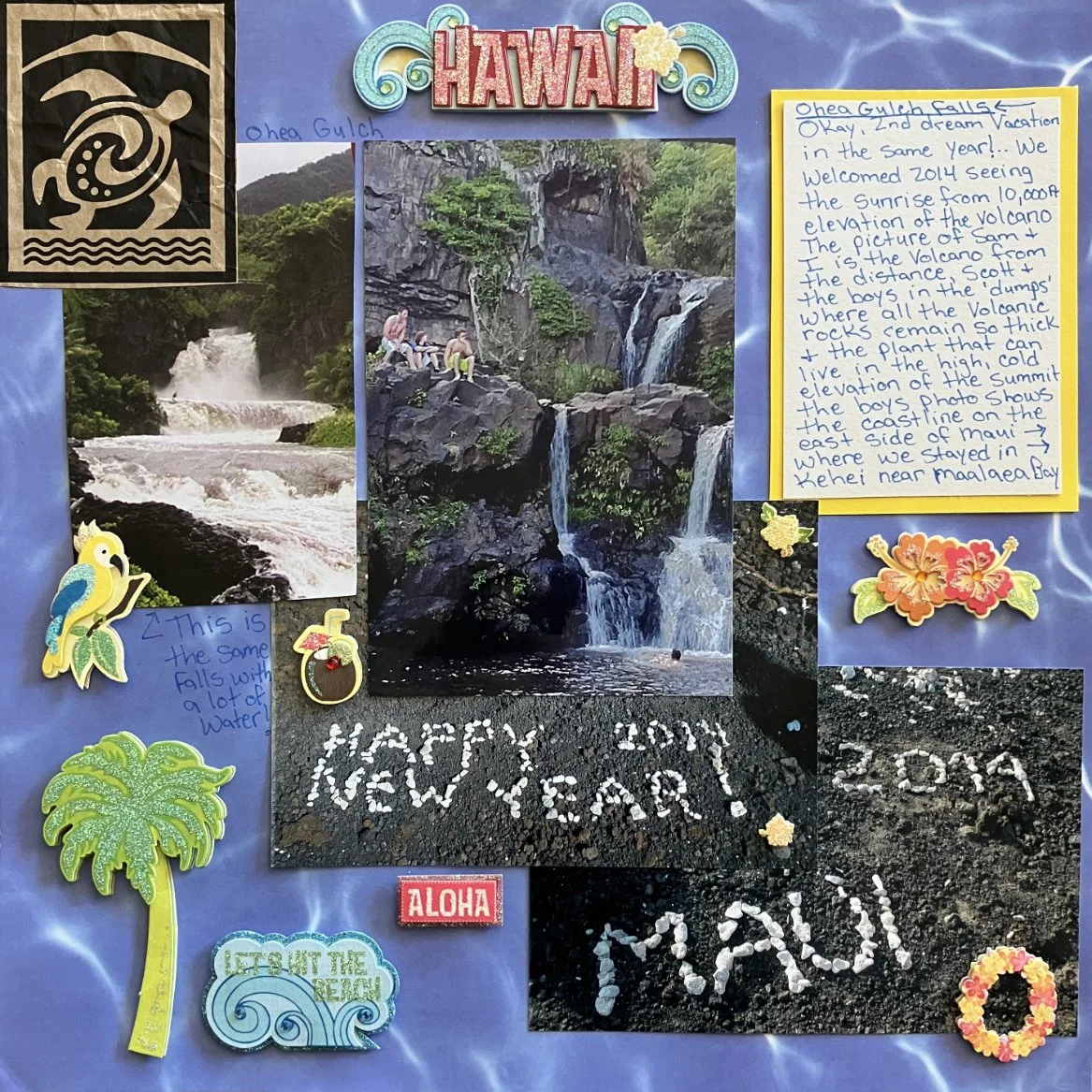
The Road to Hana: Journey as Destination: My most memorable encounter with the art of journeying wasn’t in a gallery at all, but on a winding road in Hawaii. A decade ago, I took a trip to Maui and we decided to drive the famous Road to Hana. For those unfamiliar, this is a coastal road that snakes along the island’s lush eastern side, boasting 620 curves and over 50 one-lane bridges. Hana is a small, tranquil town at the end of the highway, but everyone will tell you: the point of the trip isn’t to get to Hana, it’s the road itself – the waterfalls, jungles, and vistas you pass along the way. We set out early in the morning, my family in our little rental car, armed with snacks, a playlist of reggae, and a guidebook pointing out must-see stops. Very quickly, I realized that distance on the map meant nothing; it was the time that mattered. Around each bend was something new: a thundering waterfall a short hike from the road, a fruit stand where a local family sold unbelievably sweet pineapple, a vista of waves crashing on black lava rocks, a bamboo forest shimmering in the breeze. The road’s tight turns and occasional rough patches forced us to drive slowly, often 15 miles per hour or less. At first, impatient, younger me was like, “This is taking forever!” But then a kind of calm set in. We pulled over frequently, not wanting to miss a hidden pool or an overlook. Each stop became its own micro-adventure. At one point, we were hiking a short trail to a waterfall, and it struck me: I had been on the Road to Hana for hours already, and I was completely at peace with it. There was no rush to “arrive” anywhere. The journey was the experience. I can’t even recall if we arrived in Hana or just passed through, or turned around. But indeed, as promised, the destination was almost an anti-climax compared to the road. That day taught me something important: attitude transforms travel into pilgrimage. By deciding to treat the Road to Hana not as a chore but as a moving, slow-motion adventure, I had unwittingly practiced the ethos of slow art. I noticed details I’d otherwise miss. It was akin to walking a labyrinth or doing a long meditation walk: repetitive, winding, yet deeply reflective. Ever since, I’ve tried to infuse a bit of that pilgrimage mindset even in mundane journeys (like a long train ride: instead of burying myself in my phone, I’ll gaze out the window, treating the passing landscape as a kind of living movie). Have you ever undertaken a journey where the travel itself became the reward? Maybe it was a multi-day hike to a mountain peak, a road trip with dear friends where the roadside diners and sing-alongs mattered more than the final stop, or even a metaphorical journey like mastering a skill over years. What might change if you approached an upcoming trip or goal as a slow pilgrimage, relishing each bend in the road instead of fixating on the endpoint? You might find, as I did, that the long way round can be profoundly enriching.