Early Low-Poly 3D: Console Limitations Shaping an Aesthetic
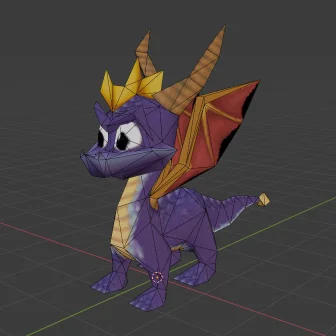
Hardware Constraints. The fifth-generation consoles (circa 1994–1999) were the first to handle real-time 3D, but with severe technical constraints. The PS1’s graphics chip could push only on the order of a few thousand polygons per frame (roughly 3,000–9,000 triangles per frame at 60 fps depending on shading and texturing), which meant each object or character could only be made of a few hundred polygons (overview). For example, the protagonist in Spyro the Dragon (1998) was in the range of only ~411 triangles (polygons) in-game (overview). Similarly, Crash Bandicoot’s model in the first PS1 game used just 512 triangles and even omitted textures to stay within budget. Along with low poly counts, these systems had very limited texture memory: on PS1 the largest texture size commonly used was only 128×128 pixels (256×256 was a rare max), and the Nintendo 64 famously had to fit textures into a 4 KB cache (often using 64×64 or smaller images) (overview). The result was chunky, angular models and blurred or pixelated textures, giving early 3D games a distinctive blocky look.
Visual Quirks. Beyond counts, the PS1 lacked graphical features we take for granted. It had no hardware z-buffer for depth, causing polygons to sometimes draw out of order (objects clipping through each other), and no perspective correction for textures; combined with whole-integer vertex locations, that led to the signature “wobbly” texture warping as surfaces moved. The console’s limited draw distance often forced developers to envelop worlds in fog or darkness to hide pop-in. All these limitations were simply the reality of mid-90s 3D gaming. At the time, creators pushed against these limits to realize their visions, but in doing so they unintentionally forged an aesthetic. Players of the era remember the charm of these primitive graphics: the imaginative leap required to interpret a clump of triangles as an enemy or beloved character, and the atmospheres conjured by technical tricks like fog. In hindsight, the PS1/N64 visuals formed a cohesive style defined by simplicity.