Audio: Theatre Mic Techniques for a Hybrid D&D Game
The second topic I explored revolves around audio, specifically microphone solutions. Here’s the scenario: I host a Dungeons & Dragons campaign where most of us are in person around a table, but we have one friend who joins remotely via video call. Up to now, our audio setup has been ad-hoc, usually just a laptop or a single blue Yeti mic trying to pick up everyone (with minor echo or feedback), and maybe using the TV speakers so the remote friend’s voice can be heard in the room. It’s been serviceable, but the sound is inconsistent. If someone is speaking softly or sitting a bit farther, the remote player struggles to hear. Meanwhile, if we turn up the speaker for the remote friend’s voice, we risk creating an echo or feedback loop (or worsening it). Being an audio enthusiast (I’ve always loved fiddling with sound equipment, my passion in home audio extended out to my car and now you can hear me driving down the road from the bass), I knew there had to be a better way. So I turned to the theatre world for inspiration: how do professionals mic multiple people and avoid feedback? And what gear at the USITT expo could help?
Theatre productions, from musicals to plays, deal with the challenge of capturing many voices on stage and delivering them clearly to an audience. In a musical, every performer often wears a lavalier or headset microphone hidden in their costume or hair. Those mics connect to wireless bodypack transmitters. In the sound booth, the engineer mixes all those wireless channels so that every line of dialogue or lyrics is heard, balanced, and EQ’d for clarity. They also manage monitor speakers and ensure there’s no feedback. For instance, stage monitors are often configured as mix-minus (they omit certain signals that would cause feedback). This setup is admittedly overkill for a casual D&D night, but the principles can scale down.
I learned about a company, Point Source Audio (PSA), thanks to USITT. Point Source had a booth (#1201) and was actually the official mic sponsor for the conference events. They specialize in the tiny mics: lavaliers, earset, and headset microphones. Their claim to fame is making ultra-durable, nearly invisible mics that sound great and solve the challenges of theater (sweat, costume concealment, quick changes, etc.). If I stopped by their booth, I’m sure I would have seen their Series8 and Series9 lavaliers and headsets.
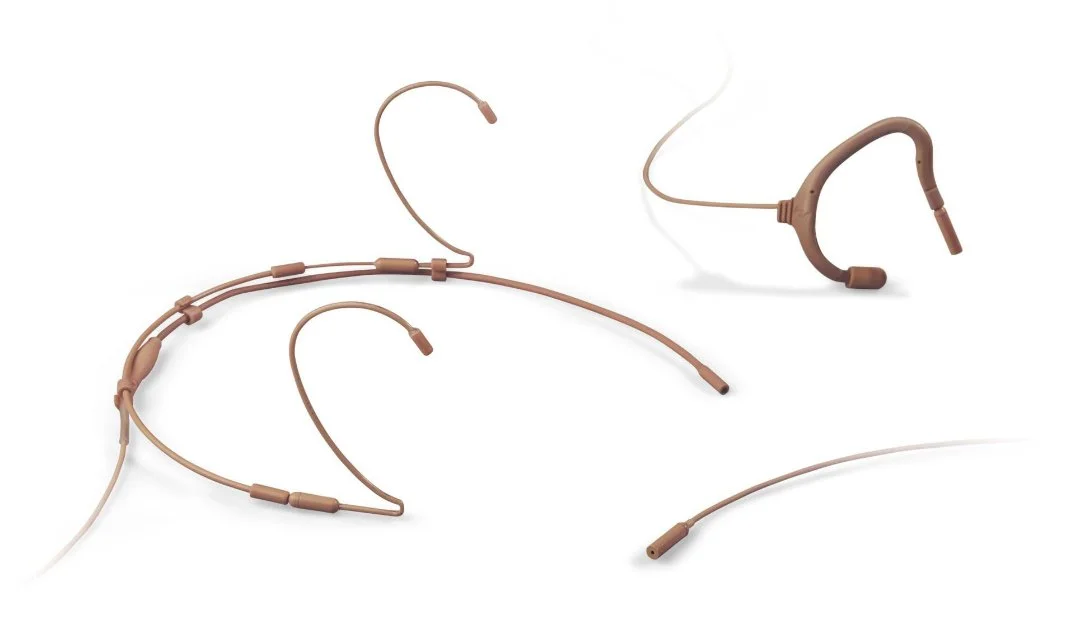
An alternative I considered (and that some might prefer for simplicity) is a boundary microphone or conference mic in the center of the table. That would avoid having to wire up everyone. It’s basically what we had been doing in a simpler form. The trouble is, boundary mics pick up all the room sound; they are convenient but you lose the isolation. One person laughing loud can drown out someone else. And the farther you sit, the thinner you sound. After learning about the theatre approach, I see why they mic everyone individually despite the complexity. The consistency is worth it. In our smaller context, I could start with maybe 2 boundary mics (one on each end of a long table) as a halfway measure, but my “dream” solution is indeed giving each player a lavalier. Since I have at most 4 players local, that’s manageable. I might even do it wired to keep cost low (four $30 wired lav mics and a basic mixer) if wireless packs are too pricey for a hobby. That said, seeing what Point Source offers makes me drool a little: Point Source’s mics are tiny. They have models that mount over the ear or in the hairline almost invisibly. And Sennheiser just came out with an ultra-compact bodypack (the SK 6212) that some Broadway shows are using on every actor. If money and tech were no object, I’d outfit each player like a Broadway actor!
I want our mics to be unobtrusive (players should focus on the game, not fight with equipment) and the sound to be clear (so our remote friend feels truly present). I should mention, this exploration also made me consider the fun theatricality of it: If I mic everyone up, our D&D sessions will feel like a little performance. Who knows, maybe that will make people speak in character more, knowing their voice is heard cleanly by all. It’s like each player is a voice actor on a show. Additionally, I learned about managing audio routing (the mix-minus concept) which is something theatre and broadcast folks do all the time but average users of Zoom might not think about. Now I certainly appreciate why sometimes on big Zoom meetings, you get echoes. It’s because a proper mix-minus wasn’t in place. I won’t let that happen on my watch!
In summary, my peek into the audio side of the expo (with companies like Point Source Audio) gave me concrete ideas to vastly improve our hybrid game nights. It’s a blend of professional techniques scaled down to a hobbyist level. And it reaffirms something I’ve always felt: good sound is just as important as good visuals in any experience. In theatre, bad sound can ruin an otherwise great show. In our D&D, bad sound was hampering the experience of the one remote person. But now I have a plan to solve it, and it involves some cool gear and knowledge gleaned from the pros.