Conclusion: Pop Spiritualists in a Connected Era
Over the years, FriendsWithYou has carved out a unique space at the intersection of fine art, design, entertainment, and spiritual praxis. What began as two friends sewing quirky plush dolls in Miami has grown into a global movement of happiness. They have been called “pop spiritualists” – artists who blend pop culture visuals with spiritual intent, and their influence is evident in myriad realms. In the context of contemporary art, their work aligns with the lineage of Participatory Art, echoing artists like Carsten Höller (who installed slides in museums) or Ragnar Kjartansson (whose performances bring people together) in the way they center the viewer's experience as the heart of the art. Yet, unlike many relational aesthetics practitioners who often cater to art-world audiences, FriendsWithYou pressed outward to find new audiences. By engaging with Post-Internet Art modalities, they acknowledged that the way people engage with art in the 21st century is as likely to be via Instagram or a VR headset as it is in a gallery. Their strategy of meeting people where they are – be it on a social feed or in a parade – has made their work exceedingly accessible.
Comparisons to peers further illuminate their impact. Takashi Murakami, with his Superflat theory, similarly merges commercial and fine art, and indeed FriendsWithYou's smiling daisies and rainbows feel at home in Murakami's technicolor universe. But whereas Murakami often injects subversive or dark historical commentary under his candy coating, FriendsWithYou operate more transparently in the register of positivity. One might say they flip the script of Jeff Koons. Koons, who pioneered balloon sculptures and shiny toy-like objects in galleries, did so with a layer of irony and commentary on consumerism. FriendsWithYou take the balloon aesthetic but remove the irony, embracing sincerity in a post-ironic age. In this way, they are closer to Yayoi Kusama's earnest pursuit of a polka-dotted unity. Kusama's Infinity Rooms inspire awe and contemplation; FriendsWithYou's Rainbow City did the same, but swapped the introspection for playfulness. They share Kusama's impulse to dissolve the ego into a larger whole, albeit through laughing rather than quiet reflection.
Their influence on children's media cannot be overstated: True and the Rainbow Kingdom shows how an avant-garde art concept can transform into a beloved educational show. In an era when creators aim to foster emotional intelligence in kids, FriendsWithYou's input (teaching empathy, bravery, and friendship through fantastical stories) is particularly resonant. The show's success (running multiple seasons and spin-offs) suggests that the collective's ideals found fertile ground with young audiences who will carry those values forward. Likewise, their design aesthetics have trickled into modern design and marketing – one can see echoes of FriendsWithYou in the friendly, flat design of tech company mascots, in the explosion of emoji culture (those smiling faces with spiritual undertones aren't far removed from Malfi and friends), and in the trend of wellness spaces using playful art to create calming atmospheres. Even healing environments like children's hospitals and schools are more and more incorporating bright, figurative artwork to improve mood – a practice that FriendsWithYou championed early on. In a sense, the collective anticipated and influenced the broader cultural embrace of “soft-power art” – art that heals, connects, and comforts.
As of mid-2025, FriendsWithYou show no signs of slowing. Their journey from Miami's underground art parties to the heights of the Macy's Parade and Netflix illustrates a rare narrative: an artist collective that managed to stay true to their ethos while constantly scaling up their reach. They have created a lexicon of love. A symbolic system in which a cloud means hope, a rainbow means unity, an orb means potential. And they shared it with millions. Critics at times have struggled with their work's refusal to be cynical. Some ask, “Are these gigantic blow-up sculptures really art?” The answer, as evidenced by their critical and popular acclaim, is yes – but they are art disguised as play. By harnessing the power of play, Sam Borkson and Arturo Sandoval III tapped into something primal and universal. People yearn for joy, for community, for a sense of something greater guiding the chaos of life. FriendsWithYou's genius was to package that yearning into cute, huggable characters and invite everyone to join the fun. They took the narrow, elite corridors of art and blew them wide open like an inflatable castle, saying “come on in, you are friends with us.” In the narrative of contemporary art, FriendsWithYou stands out as ambassadors of positivity, bridging the gap between the art world and the everyday world. Their artistic journey, from modest Miami origins to global participatory spectacles, reads almost like a modern fairy tale. It's the story of two friends who believed that even a humble doodle or toy could contain magic, and who dedicated their lives to convincing the rest of us of the same. As we bounce into the future alongside Little Cloud and its companions, the impact of FriendsWithYou can be felt in each smile shared, each stranger befriended in a bouncing crowd, and each moment we allow ourselves to see the world with a bit more wonder. In the end, their art asks very little of us. Perhaps just to pause, play, and remember that we are all friends. And that simple request, delivered in a burst of rainbow color, has proven to be profoundly powerful.
And for that, I am truly grateful.
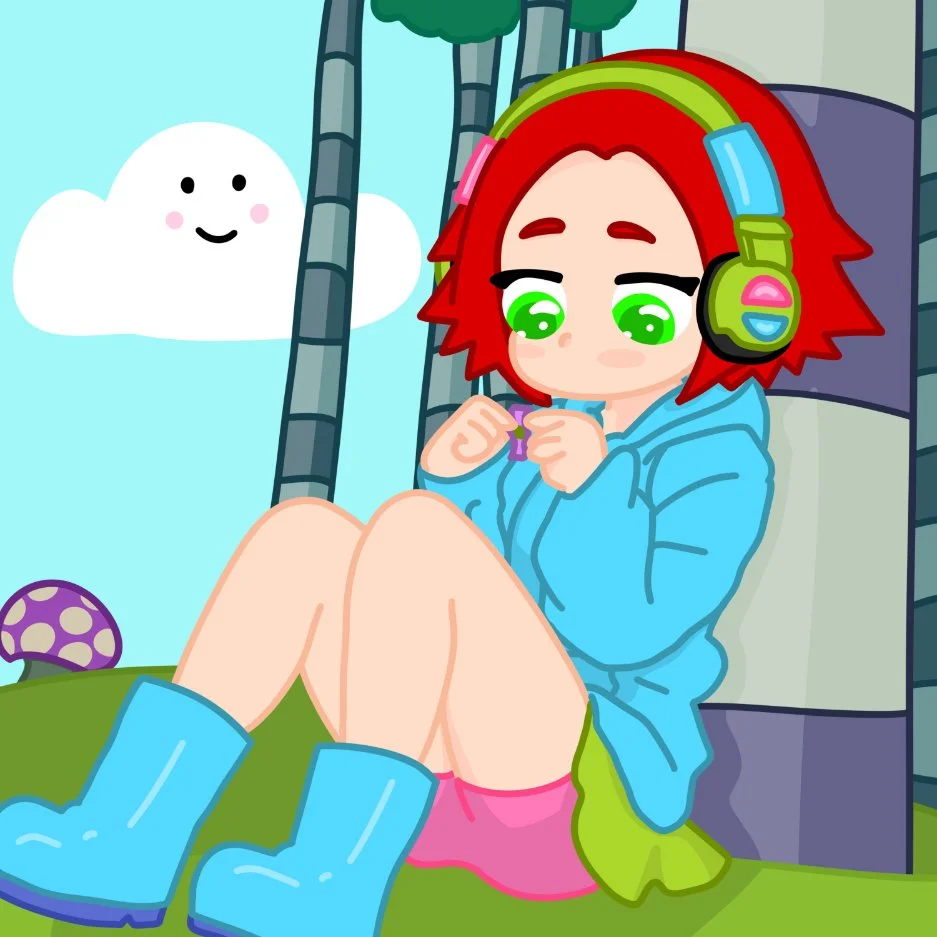
Photo of Fall, my True and The Rainbow Kingdom Original Character.