Page 1
Burnout is usually described as something that accumulates over time. Too much work, too little reward, sustained pressure, or an external force that never fully lets go. Creative burnout, in particular, is often framed as art block, a lack of inspiration, a drying well, a moment where nothing comes out no matter how much effort is applied. That framing used to make sense to me.
What I am experiencing now feels different.
Lately, I burnt out from drawing almost immediately when a new image generation model was released. This paper is not a carefully weighed argument, and it is not an attempt to balance opposing viewpoints. I have already written that paper (Dadaism and AI Art), and that work was intentionally constructed as a dichotomy, a kind of intellectual provocation meant to break down walls before asking which ones should be rebuilt. This paper is not that. This is a reaction rooted entirely in emotion, and the emotion is exhaustion.
My art has always been a hobby, and because of that, the first wave of consumer-facing AI tools never felt like a personal threat. I was academically interested, especially since I had been studying machine learning techniques only months before those models became widely available. At the time, I watched their emergence with curiosity rather than fear. Even my previous writing on the subject included AI assistance, and I could still imagine a narrow space where that relationship might remain sustainable, although even then it felt fragile and increasingly difficult to support under closer scrutiny.
Emotionally, that position no longer holds.
The novelty has worn off, and the reality has had time to settle. Much like how game developers warn that players will optimize the fun out of their own games if given the opportunity, I have found that the same optimization has quietly removed my creative hobby from my hands. The faster and more polished the results become, the less I feel involved in producing them. What was once an act of making slowly shifts into an act of selecting, refining, and discarding, and somewhere in that transition the joy disappears.
I want to return to the version of myself gripping a pencil too tightly, graphite occasionally ripping through paper (if not snapping and flying away), feeling the pain in my hand while still smiling because the act itself was enjoyable. The results were clumsy and often disappointing (in comparison to others, the thief of joy), but the process was engaging in a way that mattered. The process was not separate from the outcome, it was the point.
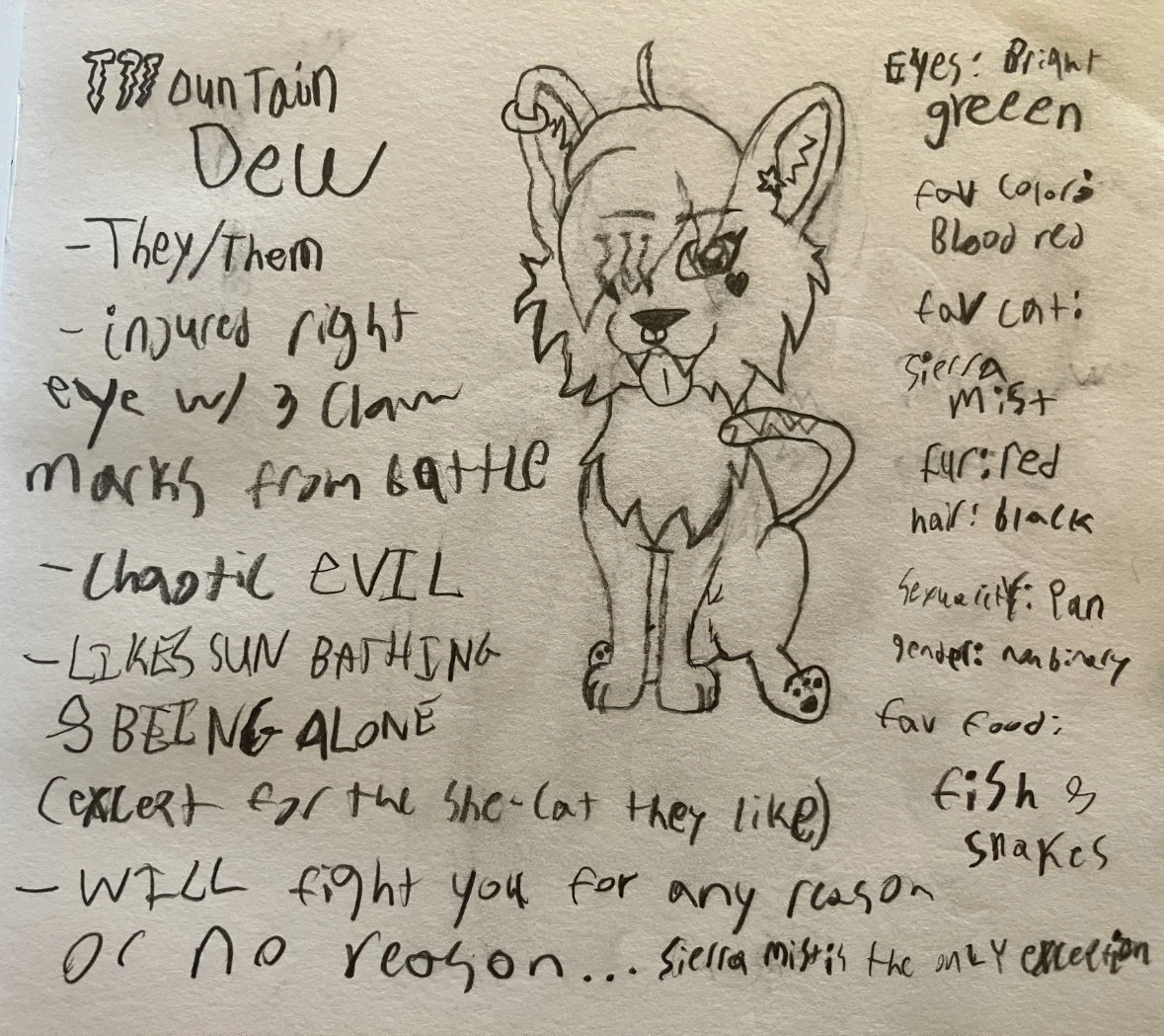
While archiving old artwork, I stumbled across pieces I had completely forgotten about. One of my long-standing goals has been to create an original character for every show / intellectual property I have loved, and buried among my trinkets were folders and sketchbooks with drawings that now carry an unexpected charm. Some were clearly tied to specific moments in my life that I could still place in time, while others felt entirely unfamiliar, almost like discovering work made by someone else. Technically, they were far worse than what I am capable of now, but emotionally they felt fuller, heavier with memory and context.
When AI assistance becomes so polished that it replaces my creative process, it is no longer creative. It is just a process. It becomes a sequence of steps rather than an experience, something to execute rather than inhabit. I am grateful that I never relied on generative tools when designing original characters for that long-term project, because every one of them originated in my own head. Even if I experimented with some AI assistance for some elements of my characters in the past, I doubt I should return to that workflow for my characters now. The results become the fixation, and once that slope appears… It does not matter how carefully I try to navigate it, I would slide anyway.
I stepped away for a while and moved into a space that consumer models have not fully overtaken yet, which for me was three-dimensional art. Current image generators operate by producing fixed outputs, arrays of pixels statistically reconstructed from training data, while three-dimensional modeling remains spatial, deliberate, and explicit. Nothing appears unless I place it there. Every line, surface, and proportion exists because I made a choice, and my hardware simply renders those choices at whatever resolution I desire.
During this break, I modeled a few characters from cartoons I watch, continuing a project I had started long before AI and even before COVID. I used character creator software rather than building everything from scratch, which meant I did not need to rig models or sculpt every asset manually. I combined existing components, adjusted colors, uploaded custom textures, and worked within constraints that still left room for expression. For example, I didn't need to make a t-shirt if there already was one in the program. But, I could turn it into a black tee shirt, and then draw and overlay a heart graphic on that tee shirt, like for Abby Hatcher.
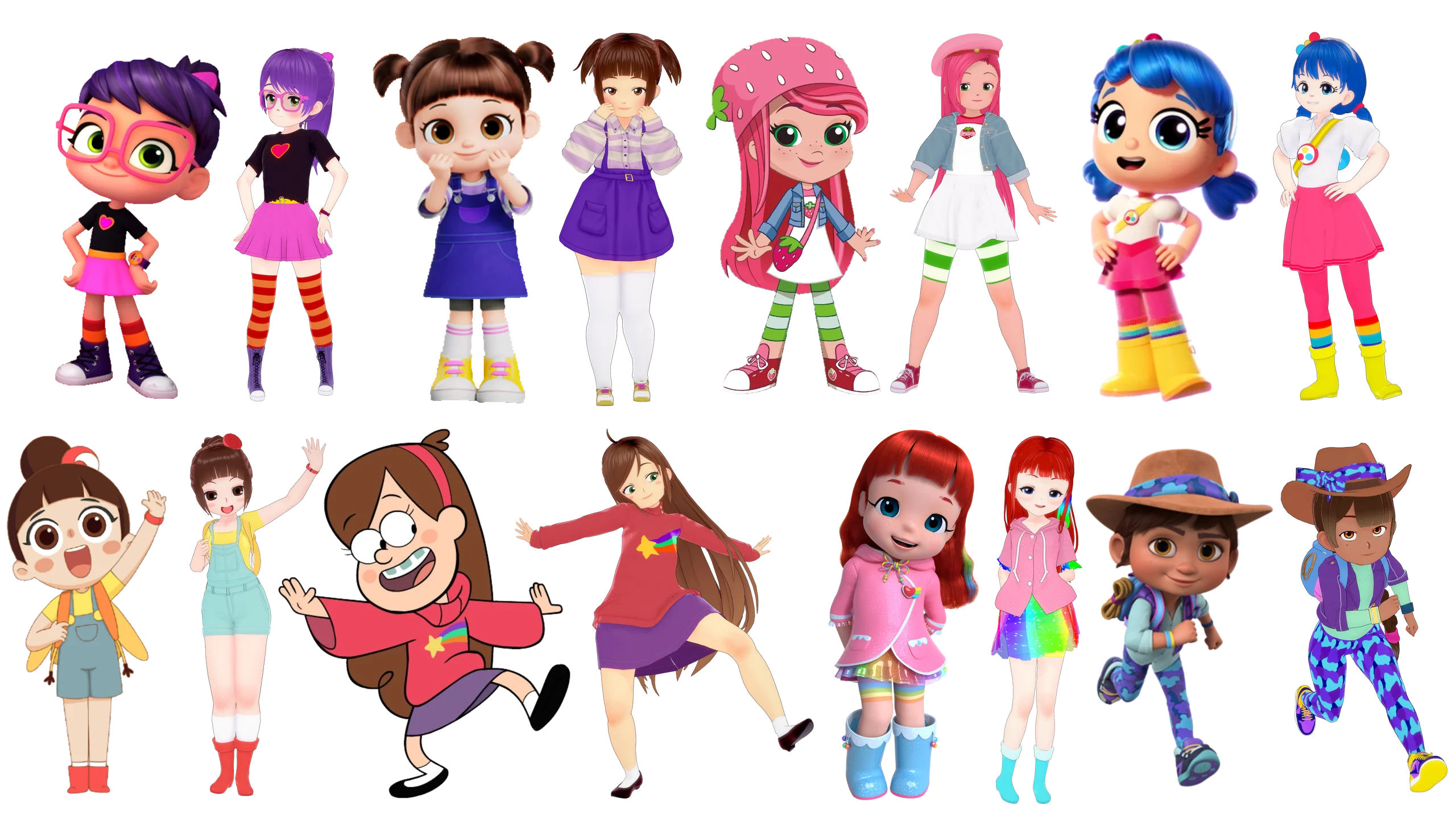
Community resources played a role as well, including prebuilt scenes, posed characters, and shared assets. Starting from someone else’s mock-up did not diminish the experience, because I still adjusted proportions, expressions, clothing, and composition until the result aligned with my vision. Assistance, in this context, did not remove agency. It worked alongside it, even sparking ideas and interest.
I have yet to burn out on writing, largely because it occupies a very different place in my life than my art does. My two-dimensional art, and now my three-dimensional art as well, is purely for fun, and sometimes as gifts to friends. Writing, on the other hand, is much closer to how I survive. It is therapeutic, it is social, and it feels inseparable from who I am. With that in mind, I recently listened to a podcast by an author I follow, Kevin Tumlinson, titled “I Stopped Typing My Novels — Here’s What Happened”. In it, he talks through one of his recent experiments, where he began writing chapters by hand on legal paper and then had ChatGPT translate them into digital text. Optical character recognition (OCR) accuracy is significantly increased when paired with a large language model, especially one with reasoning capabilities like ChatGPT, but the more interesting part was his workflow. He did not simply continue typing once the chapter was uploaded. Instead, after editing the text online, he returned offline and wrote the next chapter by hand, repeating the process and deliberately moving back and forth between those modes.
The goal was not efficiency, but presence, a way to slow down and sit with ideas before translating them into a different medium. That specific method is not accessible to me due to physical limitations, as I can only write two or three sentences before risking a flare up. But the underlying principle resonated strongly. Speech could be my alternative experiment. Speaking ideas engages the mind differently than typing (Socrates himself warning about the invention of the written word), and speech-to-text tools allow access to that alternative mode of thinking. Tumlinson also mentioned outlining, something he does not typically rely on, which struck me because outlining is central to how I work. I am inseparable from my outlines, even when they are messy, loosely structured, or scattered across documents. I return to them constantly, sometimes for direction, other times simply to check whether the emotional tone I intended is still intact.
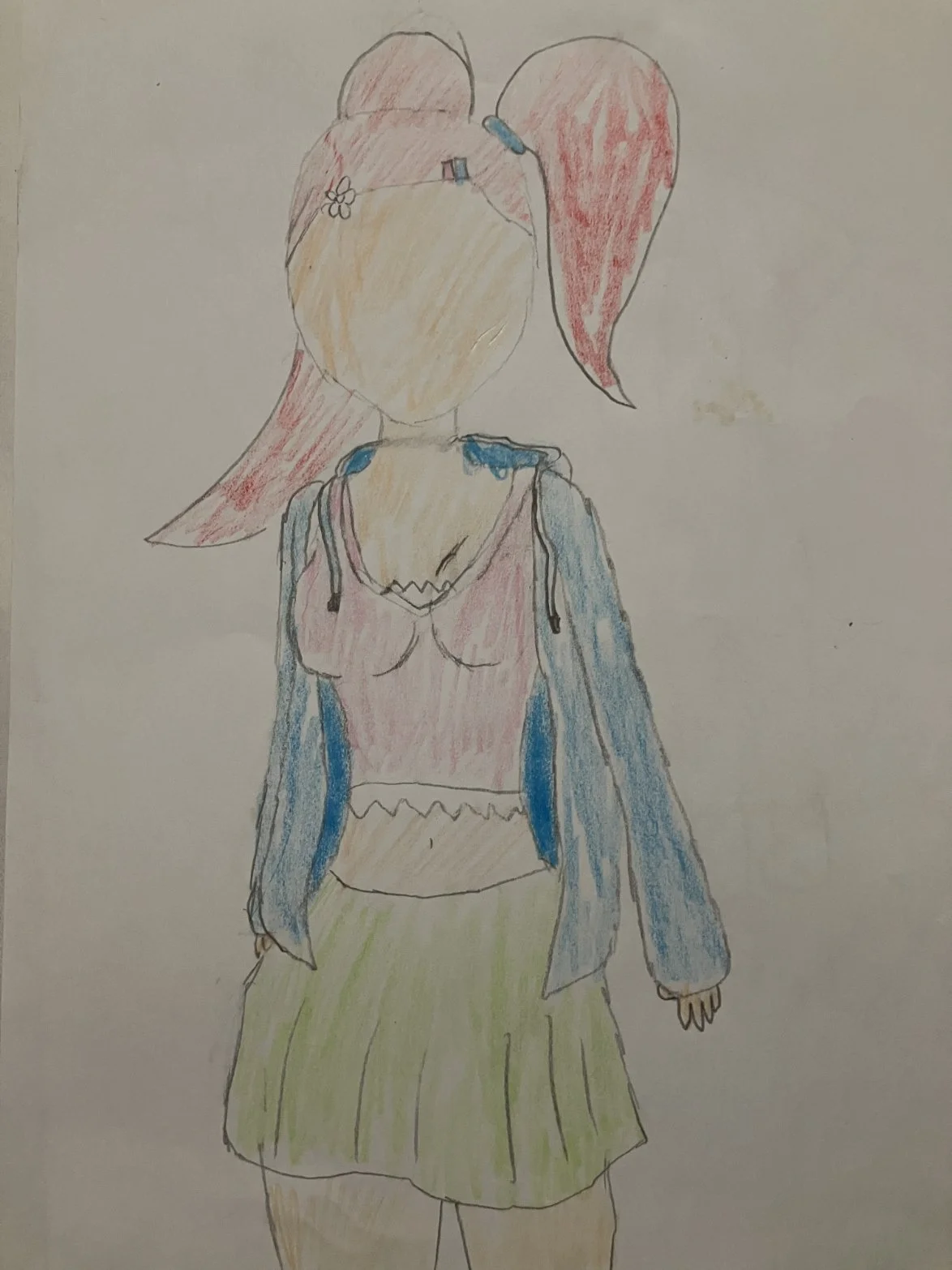
I spent nearly two years outlining my magnum opus, Virtual World, before typing a single word in the book. When I finally began, I typed over two hundred thousand words in roughly three months. The outline itself was only a couple thousand words long, but each word carried weight because I had lived with them for so long. A single note could expand into pages of narrative, explored through extremes, filtered through character interaction, or shaped by a particular emotional lens.
That is why large language models fit into my writing process the way they do. I do not use them to invent ideas, but to decompress ideas that already exist in dense, internal form. They translate shorthand into something legible, and I always take another pass through the output. Mistakes are expected, and when a model misunderstands me it becomes an opportunity to rethink phrasing, structure, or emphasis (something that Tumlinson also found out when ChatGPT would mis-read his written text).
My dependency on large language models comes almost entirely from a time-cost predicament of my own making. Tumlinson’s use of paper was meant to slow himself down, to give his thoughts space to settle before moving on. Some of his experiments revolved around speed, seeing whether he could type a story in a month, in two weeks, in ten days. One of his most well-received stories was written in a single day and then refined over the course of a month. All of these were framed as experiments designed to avoid burnout, to keep the process flexible and engaging rather than rigid.
In that sense, I find myself in a similar position to his, living between two modes of writing. I love my fantasy stories that go off on tangents, but the process I rely on elsewhere, outlining heavily, decompressing ideas with LLMs, and then refining them toward my intended vision, does not translate cleanly into creative work. It functions well in academic writing and coding, where I am an expert pursuing very specific nuance and can explain my intent concisely enough for effective decompression. Creatively, though, this split has started to feel limiting. Much like how I removed myself from my own two-dimensional art, I can feel that same boundary slowly encroaching on my fantasy writing. There was a brief surge of creative momentum when I blended nonfiction with fiction in projects like Prahlada and Malala, but even that was an experiment I did not have the willpower to continue, stopping at the first chapter despite having outlined seven more beyond it.
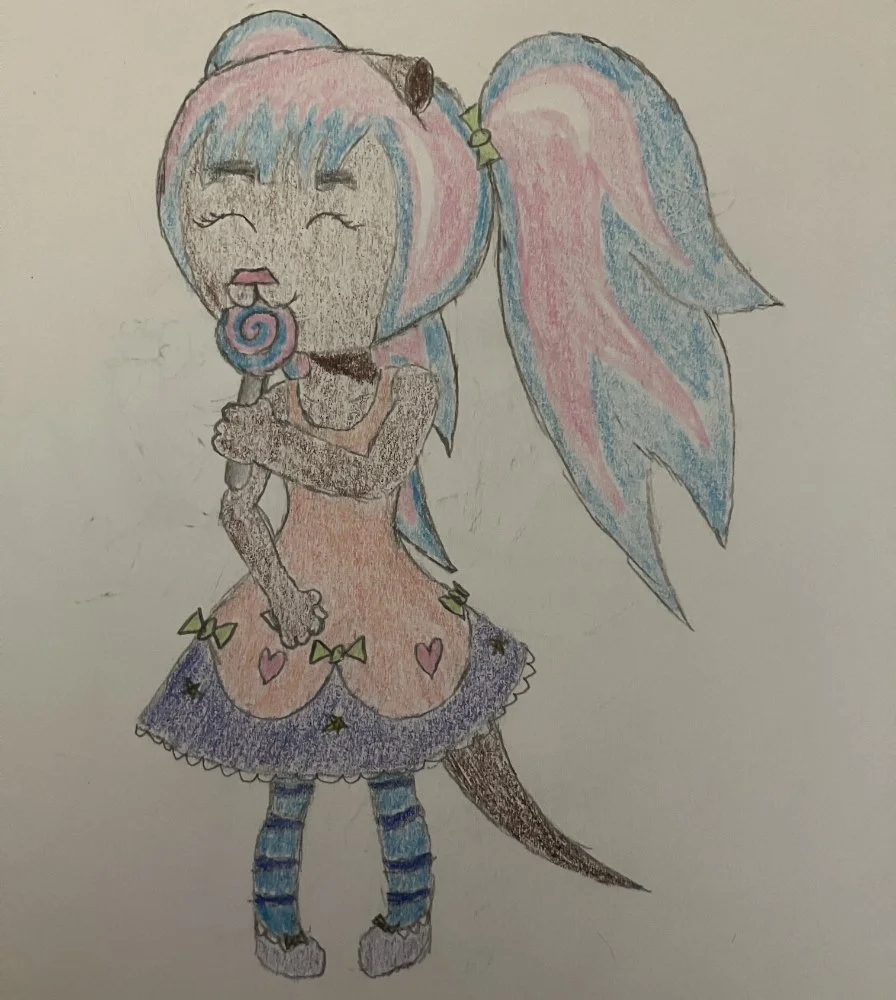
This kind of burnout does not come from doing too much. It comes from doing things too easily. When the distance between intention and output collapses, something essential disappears. Creativity becomes about arriving rather than becoming, and when arriving requires no journey, the desire to begin quietly fades.
I am not arguing for these tools, and I am not advocating for purity to toss them aside. I am observing that creativity requires friction, intention, and presence, and when those elements are removed, burnout follows quickly and without ceremony. That is what I am trying to understand now, not how to be more productive, but how to remain involved in the act of creating at all.