What My Journey Looks Like Now
Thus began my journey as a Crohn’s disease patient. I dove headfirst into learning everything I could about the condition. It’s my nature to research the heck out of things, especially when they concern me. I approached it academically, almost as if I were writing a research paper on my own life (in fact, this very essay fulfills that prophecy). Let me share a bit of what I learned, blending the clinical facts with my personal experience of grappling with this disease.
What causes Crohn’s disease? The honest answer is that we don’t fully know. It’s thought to arise from a combination of factors: genetics, an abnormal immune response, environmental triggers, and gut microbiome factors. If you have certain genetic predispositions and then some trigger flips your immune system into attack mode, you get ongoing inflammation in the gut. I learned that smoking is actually a risk factor that doubles the risk of Crohn’s and generally leads to more severe disease (fortunately I’ve never been a smoker). There’s no evidence that stress or diet cause Crohn’s, but they can certainly influence symptoms. For instance, during a flare, certain foods might worsen the situation, and stress might exacerbate pain. Over time I might have to identify specific triggers for my flares. The doctor did advise me to avoid NSAID pain relievers (like ibuprofen) unless absolutely necessary, as they can irritate the gut and possibly trigger flares. I also was advised to pay attention to diet and see if any patterns emerge with symptom worsening. There isn’t a single universal “Crohn’s diet,” because triggers vary from person to person, but common culprits are very high fiber raw foods, dairy (if lactose intolerant), greasy foods, or sometimes gluten for some people. If you know me, you know I would try my hardest not to give up dairy. I make my own ice creams, and luckily I have made it this far without becoming lactose intolerant.
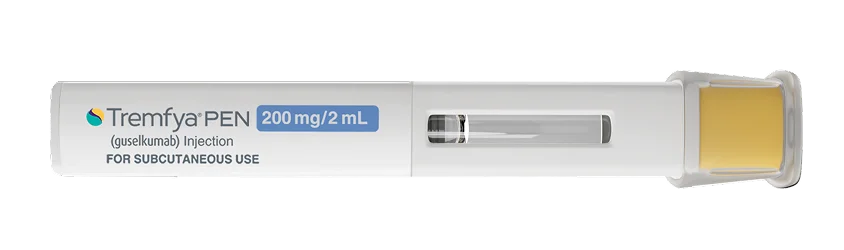
Starting Tremfya was straightforward. It’s administered as a subcutaneous injection (a shot under the skin, like an insulin shot). I actually self-inject it, after being taught by a nurse. The loading regimen was a double dose for the first 3 sets of 4 weeks, and then one for every 4 weeks beyond that for maintenance. I have to admit, giving myself a shot took some mental courage at first, but it’s amazing how quickly one adapts. The needle is small and it honestly doesn’t hurt much. And guess what it replaced? That’s right, I now have a new special occasion before my nightly watch. Instead of a burger, I give myself an injection, then watch an episode!
Within the first couple of months on Tremfya, my condition improved markedly. For the first time in a very long time, and around 1-2 days after a recent (fifth) injection, I felt hunger. Actual, honest-to-goodness hunger pangs, a rumbling in my stomach demanding food. It was such a foreign sensation to me that at first I didn’t even recognize it. As bizarre as it sounds, feeling hungry was a milestone. It meant my body was finally signaling for nourishment the way it should. It meant perhaps the inflammation that had quietly sapped my appetite for years was receding.
Of course, treating Crohn’s is not just about taking a medication. It’s a holistic process. I had to make some lifestyle adjustments: learning to manage stress better (stress doesn’t cause flares per se, but it can worsen symptoms), being mindful of what I eat (for example, during flares I’ll avoid raw veggies and go for low-fiber options to not irritate my gut), and ensuring I get good nutrition to make up for years of malabsorption. I also take supplements now, like vitamin B12, because the terminal ileum is where B12 is absorbed.
Another crucial aspect I learned was the importance of ongoing health maintenance.
Because I’m on an immunosuppressive medication (Tremfya dampens part of the immune system), I need to stay on top of vaccinations (to avoid infections) and regular screenings. For instance, since I’ll have Crohn’s long-term, periodic colonoscopies are recommended to monitor for colon cancer (IBD slightly raises that risk over many years). The good news is that with the inflammation under control, that risk is minimized. It’s a partnership with my healthcare team: I keep them updated on any new symptoms, and they keep me on track with preventative care.
It’s also worth reflecting on the health system that enabled all this. I’ve mentioned how California’s insurance mandate and drug cost cap were instrumental in me getting treatment. I’d like to expand on that for a moment because it’s a fine example of policy making a tangible difference in an individual’s life… My life. In 2019, the federal mandate for health insurance (from the Affordable Care Act) had its penalty zeroed out, but states like California decided to enact their own mandates. Since 2020, California law has required that residents maintain minimum essential health coverage or pay a penalty on their state taxes. It’s not just about penalizing though; it was coupled with robust state subsidies to make insurance more affordable. Because of this, I’ve consistently had coverage. The year I was diagnosed, I was on MediCal that covered the specialists and treatments I needed. Without insurance, there is no way I could have afforded the colonoscopy, MRI, lab work, let alone the biologic medication (yikes).
The healthcare system, as convoluted as it can be, genuinely saved my life and quality of life in this instance. From the emergency care that addressed the E. coli, to the advanced diagnostics that unveiled the Crohn’s, to the cutting-edge medication and insurance mechanisms that made it feasible… It all came together to alter my trajectory. It’s not lost on me that had any link in that chain failed (say I didn’t go to the ER, or I had no insurance, or I lived somewhere without access to these meds), I could be in a very different place: possibly suffering undiagnosed Crohn’s until a severe complication, or facing financial ruin from trying to pay for treatment out-of-pocket. I feel extraordinarily grateful for the safety net I had.
Perhaps the strangest silver lining in all of this is to recognize that getting that E. coli infection was a catalyst for a positive change. It sounds absurd on the surface… How could a vicious bout of food poisoning be anything but horrible? But in my case, it set off a chain of events that led to discovering a silent disease that was slowly eroding my health. There’s a term often used in medicine: an “incidental finding,” when a diagnostic test done for one reason incidentally finds an unrelated issue. My Crohn’s was essentially an incidental finding, caught because a CT scan done for E. coli colitis revealed something more. It’s like the universe gave me a very unpleasant nudge to uncover a truth I needed to face. Had that not happened, who knows how long until I would have been diagnosed? Maybe eventually the Crohn’s would have flared so badly I’d end up in surgery or with a serious complication. Instead, we caught it relatively early (no strictures or fistulas, thankfully) and I was able to start treatment to prevent it from worsening. In a very real sense, getting E. coli that night saved my life. It’s a perspective that helps me accept the randomness of that event. Sometimes, bad things lead to good outcomes in unexpected ways.