… / / The Video That Made Me Want to Write This
katsumimaki.com
General
  • Home
  • About
  • Methodologies
  • Start Here
Topics
  • Newsletters
    • Fanmade
      • Anti Group Tendencies
        • Page 1
        • Belonging & Community
        • Meaning & Purpose
        • Identity & Self-Definition
        • Structure & Certainty
        • Catharsis & Emotional Outlet
        • Leadership & Guidance
        • Life as an “Anti-Group”
        • Afterword
      • Burnout
        • Page 1
        • Afterword
      • Empathy
        • Page 1
        • Afterword
      • Friendswithyou
        • Origins in Miami: Seeds of a Playful Universe (2002–2004)
        • Building a World of Play: Interactive Installations (2005–2009)
        • Rainbow City: Exploding onto the Global Stage (2010–2012)
        • Animism, Art, and “Happy Virus”: A Philosophy of Play
        • Collaborations and Pop Culture Crossovers (2013–2017)
        • Post-Internet Explorations: From Virtual Worlds to NFTs (2015–2022)
        • Conclusion: Pop Spiritualists in a Connected Era
        • Afterword
      • From Dada Collages To Ai Art
        • Introduction and Personal Motivation
        • Dadaism: Collage and the Original “Anti-Art” Movement
        • AI-Generated Art: Algorithms as the New Collage
        • Comparing Dadaism and “AI-Artism”
        • Modality and Technique: Collage vs. Computation
        • Origins and Intentions: Art Movement vs. Tech Innovation
        • Reception and Cultural Impact: Anti-Art Manifesto vs. Existential Disruption
        • Outcomes and Future Trajectories: Lessons from Dada for AI Art
        • Conclusion: Art, AI, and Accessibility – A Personal Reflection
      • Healing from Trauma
        • Page 1
        • The Reaction Before the Origin Story
        • The Question I Cannot Fully Answer
        • The Earlier Papers, for Readers Who Are New Here
        • The Video That Made Me Want to Write This
        • The Trauma in the Middle
        • What Actually Healed
        • The Middle Path: Not Erasure, Not Perseveration
        • Afterword
      • Lights Sound Printing
        • Page 1
        • Lighting: High Color Fidelity vs. Spectral Restriction
        • Audio: Theatre Mic Techniques for a Hybrid D&D Game
        • Digital Fabrication: From Desktop 3D Printing to Stage-Size Scenery
        • Conclusion: Personal Reflections on Tech in Theatre
        • Afterword
      • Littlespaces
        • Overalls and Feeling Small
        • Voluntary vs. Involuntary Age Regression
        • Stress, Comfort, and Little Space
        • Age Regression vs. Age Play
        • The ABDL Identity and Spectrum
        • Community Norms, Safety, and Stigma
        • Unpacking Misconceptions
        • Afterword
      • Monoline
        • Origins, Purpose, and Brief History
        • Shel Silverstein’s Expressive Monoline Style
        • From Viral Outlines to Indie Cartoons: Monoline’s Digital Revival
        • Ghs
        • Joel Haver
        • Ginjaninjaowo
        • Matthew Mccleskey
        • Thatoneguysanimations
        • Uzumaki Tegaki Clip
        • Shermys Forest And A Kind Remark
        • Bridging Traditional and Digital: Community Art and Personal Practice
        • The Commercial and Algorithmic Appeal of Monoline
        • Communities and Culture: Constraints as a Creative Identity
        • Conclusion and Personal Reflections
        • Afterword
      • Never Have I Ever: Kinks
        • About Me
        • Aromantic Asexual Autonomy
        • A Space for Kink Exploration: Trials in Tainted Space
        • Consent and Customization in a Kinky Universe
        • From Kink Exploration to Relational Ethics
        • Doe Steele: The Trials in Tainted Space
        • Opening Up on Mhen’ga: Amber Changes the Game
        • Crew as Community
        • Relationship Anarchy Among the Stars
        • Afterword
      • Ps1lowpoly
        • Page 1
        • Early Low-Poly 3D: Console Limitations Shaping an Aesthetic
        • From Quirk to Art Form: Low-Poly Revival and Nostalgia
        • Modern Low-Poly in Contemporary Media and Art
        • Super Mario 64
        • Indie Animators and Series
        • Comedy Skits and Memes
        • Cozy vs. Creepy
        • Interview with an Appreciator
        • Conclusion
        • Afterword Fave (Interviewee)
      • Saved My Life
        • My Relationship With Food
        • My Trip to the Hospital
        • What My Journey Looks Like Now
        • Re-Learning My Purpose
        • Afterword
      • Slowart
        • Page 1
        • Additive
        • Subtractive (Decay)
        • Performative
        • Slow-Change (Growth)
        • Latent Activation
        • Pilgrimage
        • Witnessing
        • Conclusion: Embracing the Art of Slow Moments
      • The Life Death And Afterlife Of Mannequins
        • I. The Enduring Allure of Mannequins
        • II. The Material and Historical Trajectory of Mannequins
        • Evolution from Functional Forms to Lifelike Figures
        • The Fiberglass Revolution: Durability and Mass Production
        • III. Mannequins as Cultural Artifacts: From Discarded to Desired
        • The Paradox of Invisibility and Persistent Presence
        • Sustainable Second Lives: The Mannequin Madness Model (Judi Henderson)
        • Case Studies Of Mannequin Reuse
        • The Uncanny Valley: Mannakin Hall as Experiential Art (Roz Edwards)
        • IV. Mannequins in the Human Imagination: Companionship and Projection
        • V. Reflections on Mannequin Endurance: A Personal Synthesis
      • Valentine
        • Page 1
        • A Sweet Gesture After Lockdown
        • Yearning vs. Attraction
        • Thought Experiments with a Safety Net
        • The Fun of Shipping (Even for the Aro-Ace Crowd)
        • Conclusion: Choose Your Own Valentine
        • Afterword
    • Original
      • 2024-09 September
      • 2024-10 October
      • 2024-11 November
      • 2024-12 December
      • 2025-01 January
      • 2025-02 February
      • 2025-03 March
      • 2025-04 April
      • 2025-05 May
      • 2025-06 June
      • 2025-07 July
      • 2025-08 August
      • 2025-09 September
      • 2025-10 October
      • 2025-11 November
      • 2025-12 December
      • 2026-01 January
      • 2026-02 February
      • 2026-03 March
      • 2026-04 April
  • Stories
    • Fanmade
      • Daggerheart
        • CiCi
          • Page 1
          • Page 2
      • Dnd
        • Azurion Nightfall
          • Page 1
        • Little
          • Page 1
      • History
        • Prahlada and Malala
          • Page 1
          • Page 2
          • Page 3
          • Page 4
          • Page 5
          • Page 6
          • Page 7
          • Page 8
          • Page 9
          • Page 10
      • My Little Pony
        • Stellar Redux
          • Page 1
          • Page 2
          • Page 3
          • Page 4
      • Pathfinder
        • Occupation on Vesk 3
          • Page 1
          • Page 2
          • Page 3
          • Page 4
      • Satisfactory
        • Everroot
          • Page 1
        • Reaper and ADA
          • Chapter 1
          • Chapter 2
          • Chapter 3
          • Chapter 4
          • Chapter 5
          • Chapter 6
          • Chapter 7
          • Chapter 8
      • Star Trek
        • USS Mesa
          • Page 1
          • Page 2
          • Page 3
      • Star Wars
        • Protocols and Princesses
          • Page 1
        • Shakka'Dira
          • Page 1
          • Page 2
          • Page 3
          • Page 4
          • Page 5
          • Page 6
          • Page 7
          • Page 8
          • Page 9
      • Trolls
        • Rave and Relaxation
          • Page 1
    • Original
      • Neon Fairy Lights
        • Main Story
          • Page 1
          • Page 2
          • Page 3
          • Page 4
          • Page 5
          • Page 6
          • Page 7
          • Page 8
          • Page 9
          • Page 10
          • Page 11
          • Page 12
          • Page 13
          • Page 14
          • Page 15
      • Northern Lights
        • Main Story
          • Page 1
          • Page 2
          • Page 3
          • Page 4
          • Page 5
          • Page 6
      • Virtual World
        • Commands
          • 01 Bash
          • 02 Cat
          • 03 Ping
          • 04 Mint
          • 05 Vi
          • 06 Echo
          • 07 Dig
          • 08 Tar
          • 09 Sudo
          • 10 Kali
          • 11 Nano
          • 12 RPM
          • 13 Tail
          • 14 Grep
          • 15 Cron
          • 16 Alma
          • 17 Shell
          • 18 Yaml
          • 19 Sed
          • 20 Curl
        • Five Stories
          • 01 Cautious 01
          • 02 Desperate 01
          • 03 Fading 01
          • 04 Cautious 02
          • 05 Indifferent 01
          • 06 Gentle 01
          • 07 Cautious 03
          • 08 Desperate 02
          • 09 Fading 02
          • 10 Cautious 04
          • 11 Indifferent 02
          • 12 Gentle 02
          • 13 Cautious 05
          • 14 Desperate 03
          • 15 Fading 03
          • 16 Cautious 06
          • 17 Indifferent 03
          • 18 Gentle 03
          • 19 Cautious 07
          • 20 Desperate 04
          • 21 Fading 04
          • 22 Cautious 08
          • 23 Indifferent 04
          • 24 Gentle 04
          • 25 Cautious 09
          • 26 Desperate 05
          • 27 Fading 05
          • 28 Cautious 10
          • 29 Indifferent 05
          • 30 Gentle 05
          • 31 Cautious 11
          • 32 Desperate 06
          • 33 Fading 06
          • 34 Cautious 12
          • 35 Indifferent 06
          • 36 Gentle 06
        • Main Story
          • Page 1
          • Page 2
          • Page 3
          • Page 4
          • Page 5
          • Page 6
          • Page 7

The Video That Made Me Want to Write This

The immediate reason I wanted to write this paper was, bizarrely enough, a GameTheory YouTube video about a horror indie game, which feels very on-brand for me because apparently my brain is most willing to approach its own trauma when it is routed through fictional symbolism, game mechanics, and some poor digital boy being sent into the architecture of his own mind. The game was called Subliminal, and I encountered it through a psychology-oriented discussion of the game’s endings, which is the exact kind of framing that usually hooks me because it gives me enough narrative distance to think about unbearable subjects without feeling like I have been asked to stare directly into the sun.

The premise, as I understood it from the video, is that a boy is sent into his own mind to deal with trauma, and immediately I started connecting it to other games that use internal landscapes as emotional architecture. It reminded me of Figment, that isometric game where the mind becomes a world you can literally walk through, full of fears and anxieties and personified fragments of thought, except Subliminal leans much harder into horror and mascot-horror aesthetics, which honestly may have made it more effective for this subject. Trauma does not always feel like a tasteful metaphor. Sometimes it feels like something wearing a cartoon face chasing you through a hallway, and while that sounds absurd, it also feels more emotionally accurate.
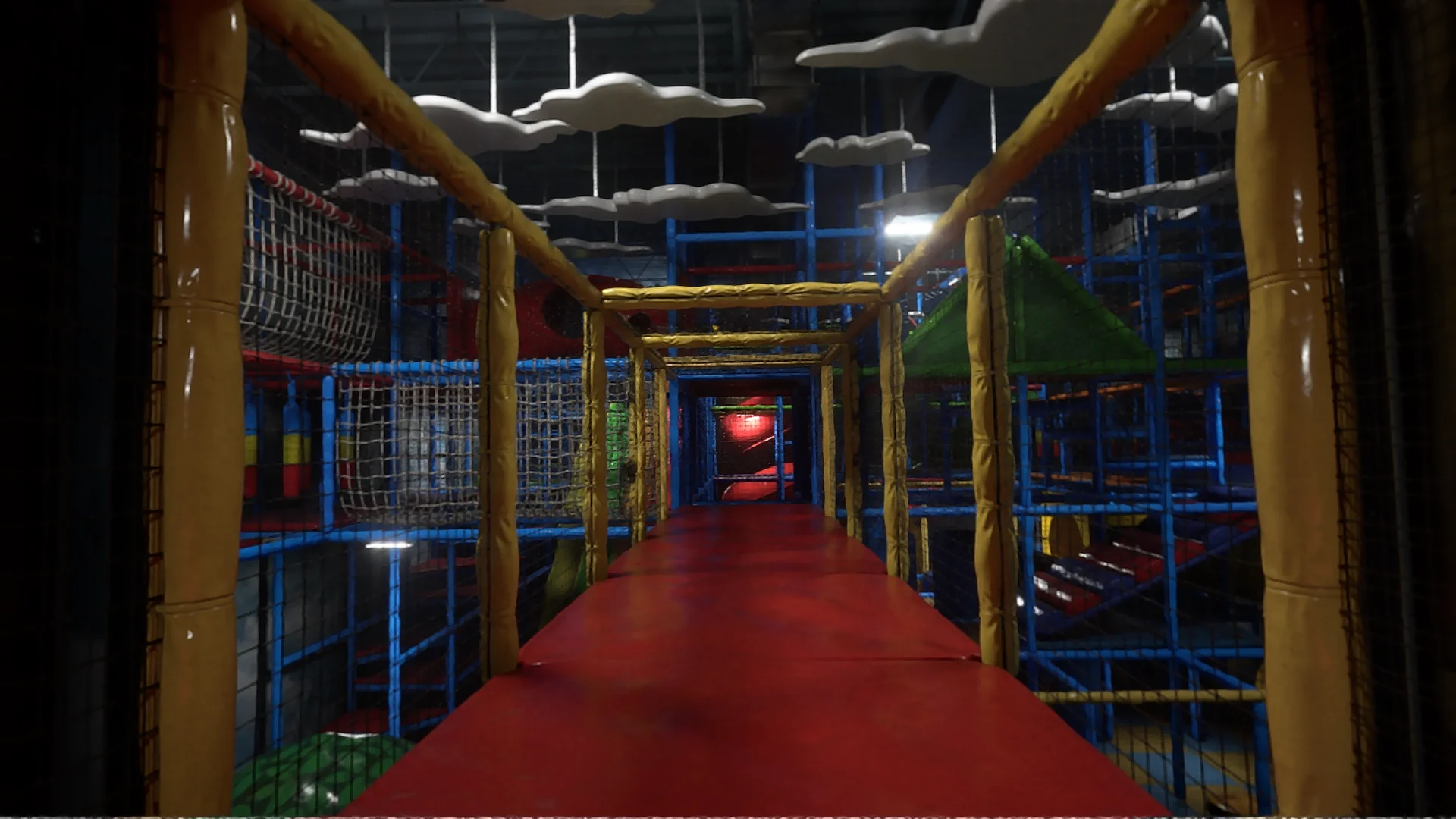
healing-from-trauma-subliminal-gym.png

What struck me most was not just that the game was about trauma, but that its endings seemed to map onto different ways of dealing with traumatic memory. One path, if I am remembering the video’s framing correctly, involved going against the urges of the “conscious mind,” or at least against the narrator-like voice that tries to direct you, and the result was a kind of unhealthy perseveration. The character remains consumed by the subject, returning to it over and over, not because they are meaningfully processing it but because they cannot stop circling it. That ending felt uncomfortably familiar to me, not because I have literally trapped myself in a symbolic horror-game mind palace (though, spiritually, who among us), but because I know what it is like to think you are “working through” something when really you are just touching the bruise repeatedly to confirm that, yes, it still hurts. There is a difference between processing and picking at the wound, and I do not always notice the difference quickly enough.

Another ending was about forgetting, or erasing memories, using these erase levers until the character ends up with amnesia or difficulty maintaining long-term memory. That one bothered me in a different way, because forgetting can look peaceful from a distance, especially when the alternative is being eaten alive by the thing you remember. I have wondered before, in the more spiraling parts of this whole subject, whether I could have forgotten something important, whether some part of my mind might have hidden an origin point from me so effectively that I am left only with the alarm system and none of the original fire. But the forgetting ending also made that possibility feel less like a secret solution and more like its own kind of horror. If the mind survives by erasing too much, what else gets taken with it? What parts of continuity, identity, memory, and self-trust get damaged when forgetting becomes the main strategy? I do not think I have trained my brain to forget broad swaths of my life, because I actually think my long-term memory is decent in many ways, but the idea still hooks into that old fear of “what if I do not know myself as well as I think I do?” And that is a frightening thought for someone whose whole survival strategy has often been built around self-knowledge.

Then there was the third path, the one the video connected to something like exposure therapy or at least to confronting the traumatic figure without either obsessing over it forever or destroying memory to escape it. The character confronts the demon, or the thing standing in for the trauma, but the key difference seems to be that confrontation is not the same as perseveration. It is not just staring at the monster until your eyes burn. It is approaching, unpacking, integrating, and somehow refusing both extremes: refusing to be consumed by the memory and refusing to erase it out of yourself entirely. That framing landed in me so hard that it basically lit up a whole section of my brain I had been avoiding, because I realized that this is, in a strange and accidental way, what Never Have I Ever: Kinks had been for me.

Not formal exposure therapy, to be clear. I want to say that carefully because exposure therapy is a real therapeutic approach, and the responsible version of it is guided, paced, ethically structured, and not just “throw yourself at whatever scares you until you stop having feelings,” which is a horrible idea and also exactly the kind of thing people sometimes mistake for bravery. What happened with me and TiTS was more coincidental, self-directed, and filtered through fictional distance. I did not begin playing that game with a paper in mind, and I definitely did not begin it thinking, “Ah yes, today I shall treat my trauma through erotic sci-fi roleplay.” I started because I was curious, because the game had a reputation for enormous branching content, because I was intellectually fascinated by kink from the outside, and because the structure of the game gave me enough control to approach sexual material without feeling trapped by it. Only afterward did I realize that the experience had functioned like a careful, self-paced exposure to adjacent subjects, not to the exact center of my fear, but close enough to loosen some of the rigid associations around it.
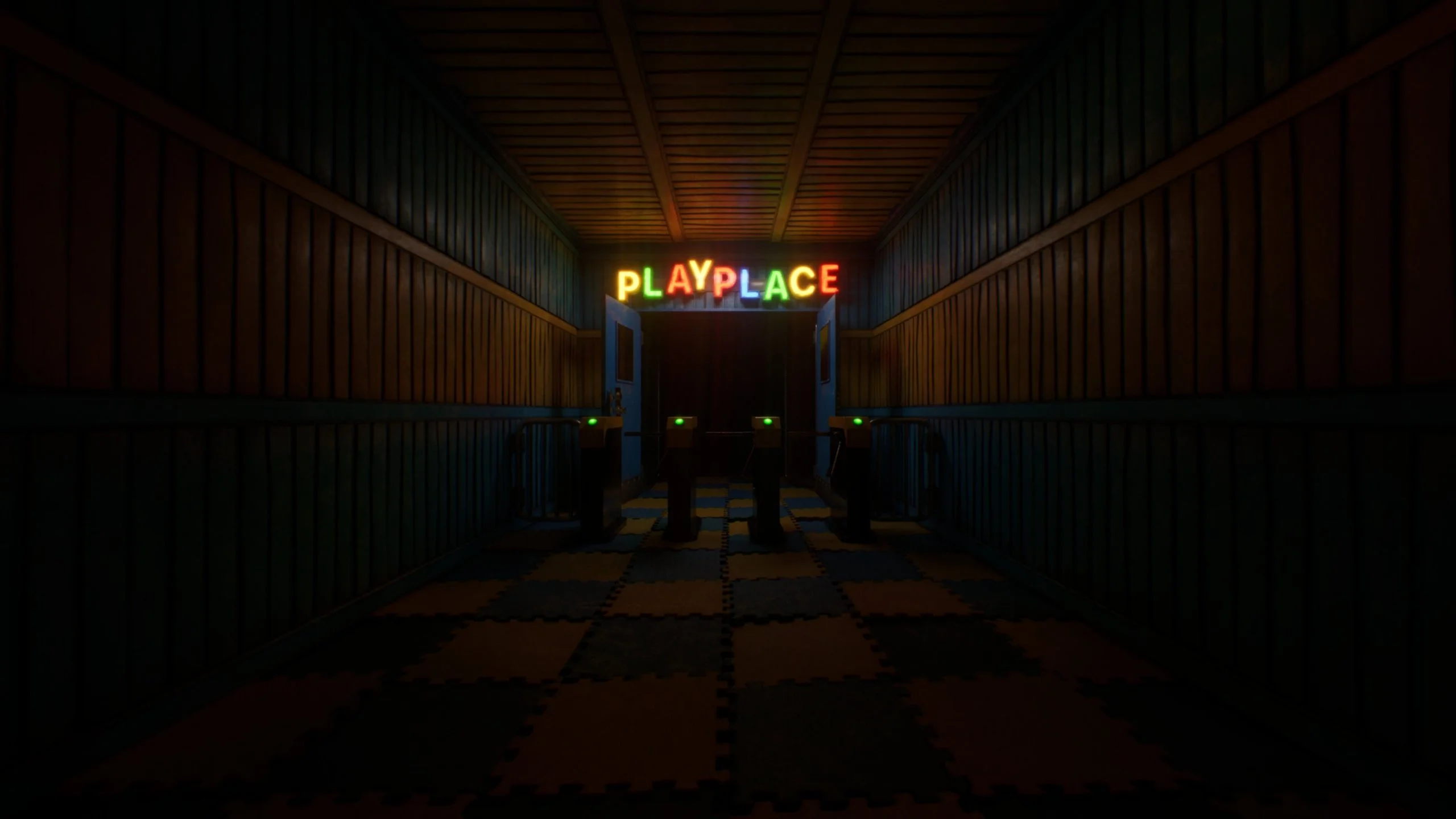
healing-from-trauma-subliminal-play-place.jpg

The video made me see that difference more clearly. There is a version of writing this paper that would be perseveration, where I just keep returning to the trauma and the anger and the betrayal until the paper becomes less a piece of communication and more a record of me repeatedly slamming my hand on the same stove to prove that it is hot. There is another version where I avoid the subject entirely, where I retreat into the safer parts of the earlier papers and say, “Look, I learned about relationship anarchy and fictional consent systems and that is enough,” while leaving the actual wound unnamed. But what I want this paper to do, what the video helped me understand I wanted this paper to do, is something closer to the third path. I want to confront the subject without letting it become the only subject. I want to remember without making memory into a prison. I want to explain the fear without turning the paper into a panic attack that the reader has to survive with me.

That is a hard balance, because the moment I begin writing about the actual trigger cluster, I can feel my language destabilize. When I try to say the direct words for certain group sexual dynamics, my brain does this awful skidding motion, like a car trying to brake too late on gravel. The sentence loses traction. I delete the phrase. I replace it. I delete it again. Then I realize there is not really a more accurate way to say it, so I put it back and sit there feeling ridiculous because a few words on a screen should not have that much power over me, and yet here we are.

What the Subliminal video gave me was not a solution, but a metaphor I could use to understand the risk of the paper itself. Writing can be a way of integrating an experience, but it can also become a way of looping it. Research can be healing, but it can also become an excuse to keep touching the dangerous thing because now I have given the touching a bibliography. Forgetting can protect, but it can also hollow out the continuity of the self. Confrontation can heal, but only if it is done with enough pacing and containment that the person doing the confronting is still allowed to leave the room, drink water, listen to a comfort song on repeat, come back later.