Matthew McCleskey – A Rotoscope Protégé
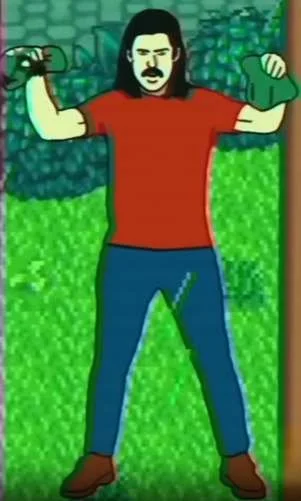
The ripple effects of Joel Haver’s rotoscope-with-monoline innovation can be seen in creators like Matthew McCleskey, an American animator who went from being a fan to a notable creator in his own right. McCleskey discovered Haver’s technique during the pandemic in 2020 and immediately recognized it as “the perfect medium” to bring his own comedy sketches to life on a shoestring budget. Armed with a digital camera, basic drawing software, and EbSynth (the same tool Haver uses), he set out to make animated shorts by filming himself or friends acting out scenes and then tracing them with simple outlines and flat colors. In doing so, he essentially followed Haver’s playbook: reduce the visual approach to consistent lines and colors so that one person can animate an entire short film efficiently.
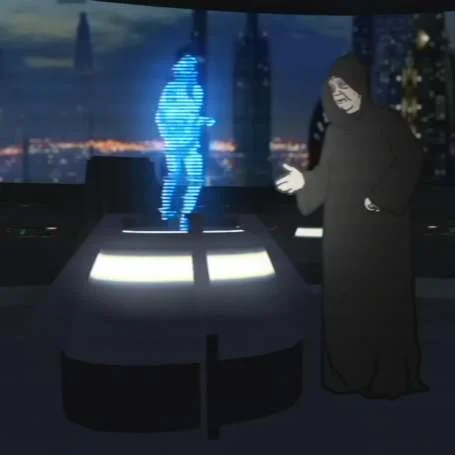
Some of McCleskey’s early hits were affectionate parodies of video games like Stardew Valley. By reinterpreting characters from these games with wobbly monoline outlines and injecting deadpan humor, he attracted the attention of those fan communities, even being invited to fan events as his animations gained popularity. Over time, he branched out to other geek culture topics (Minecraft, Star Wars, etc.), all animated in his now-signature style that looks like a cross between a coloring book and a comic strip in motion. Though his subscriber count is more modest (in the hundred-thousands range) compared to the big channels, McCleskey’s work shows how technology democratizes style. The same simple toolset that shaped Haver’s art empowered McCleskey to start a creative career. The consistent lines are not just a visual quirk; they are what make it feasible for a solo creator to animate complex scenes without a team.

McCleskey’s journey reinforces the notion that a technological constraint can kickstart a community trend. His work clearly pays homage to Haver, and in turn it has inspired others who see his success and think, “I could do that too!” This is how a movement grows around a monoline aesthetic, as one artist’s creative solution becomes another artist’s toolkit, and before long you have a network of creators all riffing on the style in their own way. This answers our third question about community: what started as Haver’s individual constraint evolved into a shared ethos among a subset of animators. It’s an example of an online trend becoming a mini-movement, with the uniform line as the thread that ties them together.