… / / III. Gendered Dress Codes and the Social Friction of Events
katsumimaki.com
General
  • Home
  • About
  • Methodologies
  • Start Here
Topics
  • Newsletters
    • Fanmade
      • Anti Group Tendencies
        • Page 1
        • Belonging & Community
        • Meaning & Purpose
        • Identity & Self-Definition
        • Structure & Certainty
        • Catharsis & Emotional Outlet
        • Leadership & Guidance
        • Life as an “Anti-Group”
        • Afterword
      • Burnout
        • Page 1
        • Afterword
      • Clothes Are Clothes
        • Introduction: Clothing, Naming, and the Problem of Categories
        • I. Crossdressing, Feminine Clothes, and the Accuracy of the Words
        • II. Aesthetic Practice Rather Than Gender Performance
        • III. Gendered Dress Codes and the Social Friction of Events
        • IV. Being Read as Male, Being Misread, and Pronouns
        • V. Inclusive Language, Humor, and Reducing Social Friction
        • VI. Assumptions, Origin Stories, and the Stakes of "Just Wear Pants"
        • VII. What I Want to Claim
      • Empathy
        • Page 1
        • Afterword
      • Friendswithyou
        • Origins in Miami: Seeds of a Playful Universe (2002–2004)
        • Building a World of Play: Interactive Installations (2005–2009)
        • Rainbow City: Exploding onto the Global Stage (2010–2012)
        • Animism, Art, and “Happy Virus”: A Philosophy of Play
        • Collaborations and Pop Culture Crossovers (2013–2017)
        • Post-Internet Explorations: From Virtual Worlds to NFTs (2015–2022)
        • Conclusion: Pop Spiritualists in a Connected Era
        • Afterword
      • From Dada Collages To Ai Art
        • Introduction and Personal Motivation
        • Dadaism: Collage and the Original “Anti-Art” Movement
        • AI-Generated Art: Algorithms as the New Collage
        • Comparing Dadaism and “AI-Artism”
        • Modality and Technique: Collage vs. Computation
        • Origins and Intentions: Art Movement vs. Tech Innovation
        • Reception and Cultural Impact: Anti-Art Manifesto vs. Existential Disruption
        • Outcomes and Future Trajectories: Lessons from Dada for AI Art
        • Conclusion: Art, AI, and Accessibility – A Personal Reflection
      • Healing from Trauma
        • Page 1
        • The Reaction Before the Origin Story
        • The Question I Cannot Fully Answer
        • The Earlier Papers, for Readers Who Are New Here
        • The Video That Made Me Want to Write This
        • The Trauma in the Middle
        • What Actually Healed
        • The Middle Path: Not Erasure, Not Perseveration
        • Afterword
      • Lights Sound Printing
        • Page 1
        • Lighting: High Color Fidelity vs. Spectral Restriction
        • Audio: Theatre Mic Techniques for a Hybrid D&D Game
        • Digital Fabrication: From Desktop 3D Printing to Stage-Size Scenery
        • Conclusion: Personal Reflections on Tech in Theatre
        • Afterword
      • Littlespaces
        • Overalls and Feeling Small
        • Voluntary vs. Involuntary Age Regression
        • Stress, Comfort, and Little Space
        • Age Regression vs. Age Play
        • The ABDL Identity and Spectrum
        • Community Norms, Safety, and Stigma
        • Unpacking Misconceptions
        • Afterword
      • Mannequins
        • I. The Enduring Allure of Mannequins
        • II. The Material and Historical Trajectory of Mannequins
        • Evolution from Functional Forms to Lifelike Figures
        • The Fiberglass Revolution: Durability and Mass Production
        • III. Mannequins as Cultural Artifacts: From Discarded to Desired
        • The Paradox of Invisibility and Persistent Presence
        • Sustainable Second Lives: The Mannequin Madness Model (Judi Henderson)
        • Case Studies Of Mannequin Reuse
        • The Uncanny Valley: Mannakin Hall as Experiential Art (Roz Edwards)
        • IV. Mannequins in the Human Imagination: Companionship and Projection
        • V. Reflections on Mannequin Endurance: A Personal Synthesis
      • Monoline
        • Origins, Purpose, and Brief History
        • Shel Silverstein’s Expressive Monoline Style
        • From Viral Outlines to Indie Cartoons: Monoline’s Digital Revival
        • Ghs
        • Joel Haver
        • Ginjaninjaowo
        • Matthew Mccleskey
        • Thatoneguysanimations
        • Uzumaki Tegaki Clip
        • Shermys Forest And A Kind Remark
        • Bridging Traditional and Digital: Community Art and Personal Practice
        • The Commercial and Algorithmic Appeal of Monoline
        • Communities and Culture: Constraints as a Creative Identity
        • Conclusion and Personal Reflections
        • Afterword
      • Never Have I Ever: Kinks
        • About Me
        • Aromantic Asexual Autonomy
        • A Space for Kink Exploration: Trials in Tainted Space
        • Consent and Customization in a Kinky Universe
        • From Kink Exploration to Relational Ethics
        • Doe Steele: The Trials in Tainted Space
        • Opening Up on Mhen’ga: Amber Changes the Game
        • Crew as Community
        • Relationship Anarchy Among the Stars
        • Afterword
      • Ps1lowpoly
        • Page 1
        • Early Low-Poly 3D: Console Limitations Shaping an Aesthetic
        • From Quirk to Art Form: Low-Poly Revival and Nostalgia
        • Modern Low-Poly in Contemporary Media and Art
        • Super Mario 64
        • Indie Animators and Series
        • Comedy Skits and Memes
        • Cozy vs. Creepy
        • Interview with an Appreciator
        • Conclusion
        • Afterword Fave (Interviewee)
      • Saved My Life
        • My Relationship With Food
        • My Trip to the Hospital
        • What My Journey Looks Like Now
        • Re-Learning My Purpose
        • Afterword
      • Slowart
        • Page 1
        • Additive
        • Subtractive (Decay)
        • Performative
        • Slow-Change (Growth)
        • Latent Activation
        • Pilgrimage
        • Witnessing
        • Conclusion: Embracing the Art of Slow Moments
      • Valentine
        • Page 1
        • A Sweet Gesture After Lockdown
        • Yearning vs. Attraction
        • Thought Experiments with a Safety Net
        • The Fun of Shipping (Even for the Aro-Ace Crowd)
        • Conclusion: Choose Your Own Valentine
        • Afterword
    • Original
      • 2024-09 September
      • 2024-10 October
      • 2024-11 November
      • 2024-12 December
      • 2025-01 January
      • 2025-02 February
      • 2025-03 March
      • 2025-04 April
      • 2025-05 May
      • 2025-06 June
      • 2025-07 July
      • 2025-08 August
      • 2025-09 September
      • 2025-10 October
      • 2025-11 November
      • 2025-12 December
      • 2026-01 January
      • 2026-02 February
      • 2026-03 March
      • 2026-04 April
      • 2026-05 May
      • 2026-06 June
  • Stories
    • Fanmade
      • Daggerheart
        • CiCi
          • Page 1
          • Page 2
      • Dnd
        • Azurion Nightfall
          • Page 1
        • Little
          • Page 1
      • History
        • Prahlada and Malala
          • Page 1
          • Page 2
          • Page 3
          • Page 4
          • Page 5
          • Page 6
          • Page 7
          • Page 8
          • Page 9
          • Page 10
      • My Little Pony
        • Stellar Redux
          • Page 1
          • Page 2
          • Page 3
          • Page 4
      • Pathfinder
        • Occupation on Vesk 3
          • Page 1
          • Page 2
          • Page 3
          • Page 4
      • Satisfactory
        • Everroot
          • Page 1
        • Reaper and ADA
          • Chapter 1
          • Chapter 2
          • Chapter 3
          • Chapter 4
          • Chapter 5
          • Chapter 6
          • Chapter 7
          • Chapter 8
      • Star Trek
        • USS Mesa
          • Page 1
          • Page 2
          • Page 3
      • Star Wars
        • Protocols and Princesses
          • Page 1
        • Shakka'Dira
          • Page 1
          • Page 2
          • Page 3
          • Page 4
          • Page 5
          • Page 6
          • Page 7
          • Page 8
          • Page 9
      • Trolls
        • Rave and Relaxation
          • Page 1
    • Original
      • Motes and Mycelium
        • Main Story
          • Page 1
          • Page 2
          • Page 3
          • Page 4
          • Page 5
          • Page 6
          • Page 7
          • Page 8
      • Neon Fairy Lights
        • Main Story
          • Page 1
          • Page 2
          • Page 3
          • Page 4
          • Page 5
          • Page 6
          • Page 7
          • Page 8
          • Page 9
          • Page 10
          • Page 11
          • Page 12
          • Page 13
          • Page 14
          • Page 15
      • Northern Lights
        • Main Story
          • Page 1
          • Page 2
          • Page 3
          • Page 4
          • Page 5
          • Page 6
      • Virtual World
        • Commands
          • 01 Bash
          • 02 Cat
          • 03 Ping
          • 04 Mint
          • 05 Vi
          • 06 Echo
          • 07 Dig
          • 08 Tar
          • 09 Sudo
          • 10 Kali
          • 11 Nano
          • 12 RPM
          • 13 Tail
          • 14 Grep
          • 15 Cron
          • 16 Alma
          • 17 Shell
          • 18 Yaml
          • 19 Sed
          • 20 Curl
        • Five Stories
          • 01 Cautious 01
          • 02 Desperate 01
          • 03 Fading 01
          • 04 Cautious 02
          • 05 Indifferent 01
          • 06 Gentle 01
          • 07 Cautious 03
          • 08 Desperate 02
          • 09 Fading 02
          • 10 Cautious 04
          • 11 Indifferent 02
          • 12 Gentle 02
          • 13 Cautious 05
          • 14 Desperate 03
          • 15 Fading 03
          • 16 Cautious 06
          • 17 Indifferent 03
          • 18 Gentle 03
          • 19 Cautious 07
          • 20 Desperate 04
          • 21 Fading 04
          • 22 Cautious 08
          • 23 Indifferent 04
          • 24 Gentle 04
          • 25 Cautious 09
          • 26 Desperate 05
          • 27 Fading 05
          • 28 Cautious 10
          • 29 Indifferent 05
          • 30 Gentle 05
          • 31 Cautious 11
          • 32 Desperate 06
          • 33 Fading 06
          • 34 Cautious 12
          • 35 Indifferent 06
          • 36 Gentle 06
        • Main Story
          • Page 1
          • Page 2
          • Page 3
          • Page 4
          • Page 5
          • Page 6
          • Page 7

III. Gendered Dress Codes and the Social Friction of Events

The strongest place where clothing stops being just clothing is the event dress code. When an event gives "men's dress code" and "women's dress code," I experience it very clearly as an unwelcoming space, even when I do not think the creators sat around plotting against me. Regardless of intent, someone is still crafting the event without much recognition of queer or trans experience. Like I mentioned previously, I lean more on the queer experience. Though I know enough about seeing things through a trans lens (that is, how we perceive and experience gender, embodiment, and identity) to know that it is restricting across too many axes to be coded in a friendly way. But even through my queer experience, I see the limited choices, choices that I had previously been constricted by (at least socially in early life), rearing their heads again and I feel that as friction to attending the event. It sometimes manifests itself as me daydreaming to take the "woman" category to heart and choose items from their category on purpose (again back to the language of crossdressing). But more than not, I simply do not attend. I'm sorry if I missed your dress-coded marriage, your formal institutional event, or what have you. It's not you, it's me, and also it's you for not thinking of me (or people like me).

I am not affected as directly or as painfully as others can be by binary categories. Being cisgender and occasionally identifying as agender, I acknowledge that the categories are still prevalent, and that for some people they are not just annoying boxes but sources of misgendering, exclusion, or danger. When I identify as agender, I see it, for me personally, as a way to reject the binary by not associating with it, rather than as a category I need others to acknowledge in the same way someone else might. Because of that, I do not take offense to the existence of the categories themselves, since they are so far from what I care about at the time, and I can even include them in my humor as a way to understand my gender / agenderness (such as being gender apathetic).

I can appreciate when places adjust to include others. Other than fashion choices, which are rarely directly enforced, I usually have to calculate whether a space will turn the outfit into friction or connection. Some spaces create no additional friction at all, and some can even make the outfit a bonding or self-expression point.

This is where constrained choice matters. If the event technically permits me to choose either category, it would still be binary, but I would be more inclined to both choose from the "woman" category and attend the event if they made a sort of announcement that anyone can dress up in items from either category (or, gasp, removing the categories and just listing them all under one label of permissible clothing). I still think that dressing up in matching or codified clothing isn't interesting to me, since I'm the type of person that wears what I want regardless if I stand out, so any restriction is more restriction than I personally desire.

Describing the options by garment type instead of gender would help. I would appreciate this reduction in categorization (or offset in categorization, since it's offsetting the issue to a neutral ground rather than a contested ground). I would say: "I was choosing the women's dress-code option, not identifying as a woman." Choosing from that category would not mean I identify as a woman or have experienced misogyny. I may experience different things when dressing up in women's clothes while identifying as and portraying myself as a man. I would also say: "The dress code gave me two bins, and I picked the one with the clothes I actually wanted." Clothing being expressed through gender is not aligned with how I utilize clothing. I know this divide, and when I purposefully challenge it, I am usually challenging the pressure to dress up as what others would assume I should dress up in.

A caveat I should write before continuing: for some trans people, choosing clothing that is read as conventionally feminine or masculine may not be merely aesthetic or optional in the same way I am describing my own experience. It can be part of passing, reducing misgendering, feeling affirmed, staying safe, or navigating the expectations attached to gender-affirming care. I do not want to treat that as universal, because trans people's relationships to clothing are as varied as anyone else's. But I also do not want my argument to erase the fact that gendered clothing can carry different stakes for people whose bodies, identities, safety, and access to care are being judged through those categories. My point is not that clothing never relates to gender. My point is that no one should assume the relationship before listening.

Returning to my own navigation: weighing my options whether or not to crossdress depends on the event and even location. I fully recognize and have to navigate areas of my city where I don't feel inclined to wear skirts or dresses. My comfort level is dictated by those around me and the context in which I am visiting those spaces. There have been times when I have been out of place without a change of clothes, unable to leave on my own, and left to bear the anxiety of being seen as out of place and misunderstood.

That kind of friction is the part I dislike, though I can handle small amounts and often ignore or be oblivious about the stares I get. I think it's funny when kids, who are known for speaking their mind, will ask the adults around them or even me, "why is that boy wearing a skirt" loudly. I usually don't really feel like answering in any complex way discussed in this paper, but I will often say that it's because I simply want to or that I like the fashion. I just hope that the adults answering the question have an answer that will help foster a more inclusive understanding of the world for the child's development into a person that has to navigate the next world. It's often that the parent teaches the child how to navigate the parent's world, but by the time the kid grows up, it's more often than not that they have to continually learn and sometimes make the decision to set the parent's world behind them, as those tools may not be the right ones for the world they are inheriting.
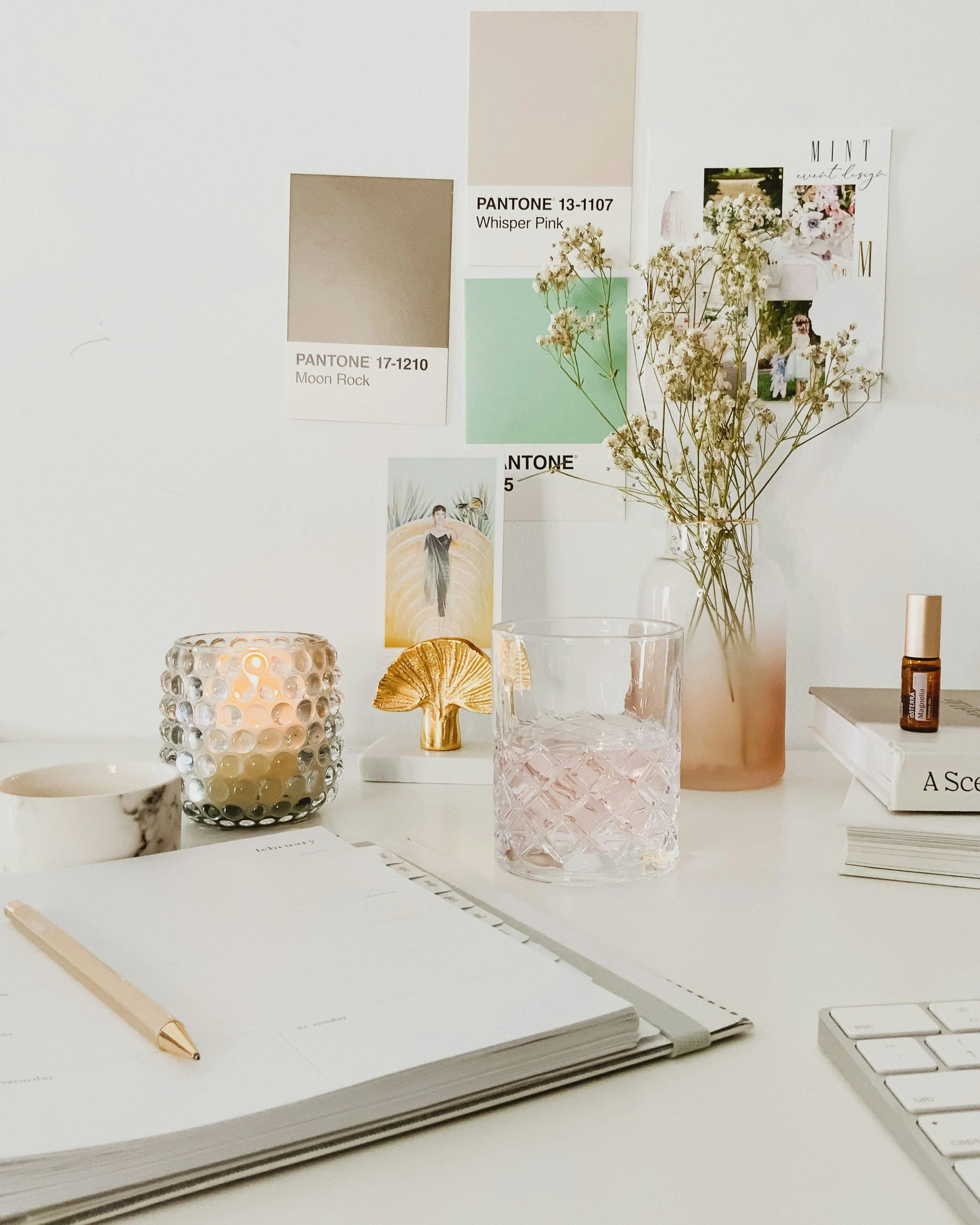
Moodboard example with color pallette.

An ideal event dress code would read more as moodboards. Get people in the same genre, sure I understand that. But with being able to recognize that wardrobes, comfort levels, self-expression, and interpretation is extremely unique for each person. A moodboard would give a sense of the color pallette, give ideas to allow for experimentation, and most importantly, not be ostracizing.